

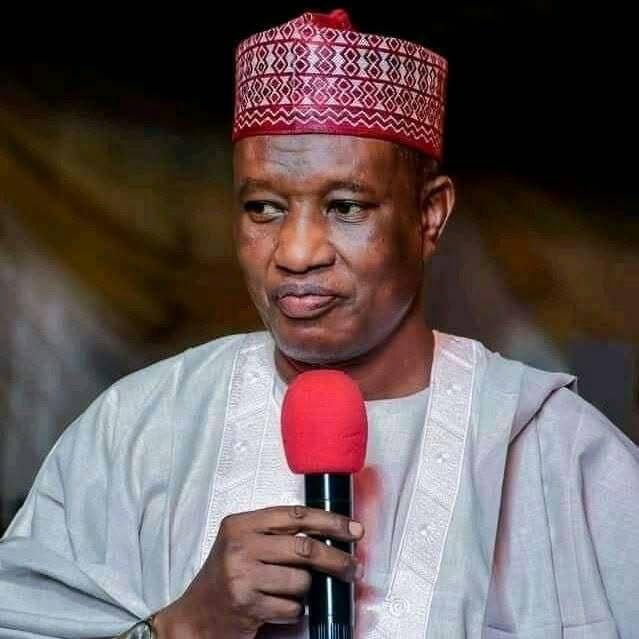

The Deputy Governor of Kano State, Aminu Abdussalam Gwarzo, has resigned from office. The resignation was confirmed on Friday by his chief press secretary, Ibrahim Shuaibu, who disclosed that the deputy governor had stepped down from his position.
Gwarzo had served as deputy governor since May 29th, 2023, when he was elected alongside Governor Abba Kabir Yusuf on the New Nigeria Peoples Party platform. The administration assumed office following the 2023 general elections and quickly became associated with the political movement led by former Kano governor, Rabiu Musa Kwankwaso.
Before his emergence as deputy governor, Gwarzo had built a long career in Kano politics. Born in 1960, he previously served as chairman of Gwarzo Local Government Area and later became commissioner for state affairs during the administration of Kwankwaso between 2011 and 2015. Over the decades, he maintained a strong presence in the state’s political structure and was widely seen as one of the key figures within the Kwankwasiyya political movement that has dominated Kano’s opposition politics in recent years. 
His resignation comes after weeks of mounting tension that culminated in a significant political realignment. Earlier in 2026, Governor Yusuf announced his defection from the New Nigeria Peoples Party to the ruling All Progressives Congress at the federal level. This defection immediately generated controversy, leading some government officials to call for the deputy governor to step aside if he could not politically align with the governor’s new party direction.
Officials within the Kano State government argued at the time that effective governance requires political trust and alignment between the governor and deputy governor. The state commissioner for information and internal affairs publicly suggested that it would be difficult for a deputy governor who was not politically aligned with the governor to remain part of key executive council deliberations.
The political standoff continued for months and began to spill into other areas of governance. Reports indicated that relations between the deputy governor and other members of the executive council had grown increasingly strained. In some instances, the deputy governor was absent from key state executive council meetings, a development that fuelled speculation about the stability of the administration and raised concerns among observers about the potential impact on governance in the state. 
In addition to political disagreements, the deputy governor had also been facing legal and legislative pressure. The Kano State House of Assembly had initiated moves toward impeachment proceedings against him over allegations of misconduct and other administrative issues, adding another layer of uncertainty to the already tense political environment. The matter had been taken to court, where legal efforts were made to halt the process, but the dispute remained unresolved as political tensions escalated. 
The resignation announced on Friday is widely seen as the culmination of the crisis. By stepping down, Gwarzo ends the standoff that had pitted different factions within the state’s political structure against each other, bringing this turbulent chapter to a close.
Samuel Aina