

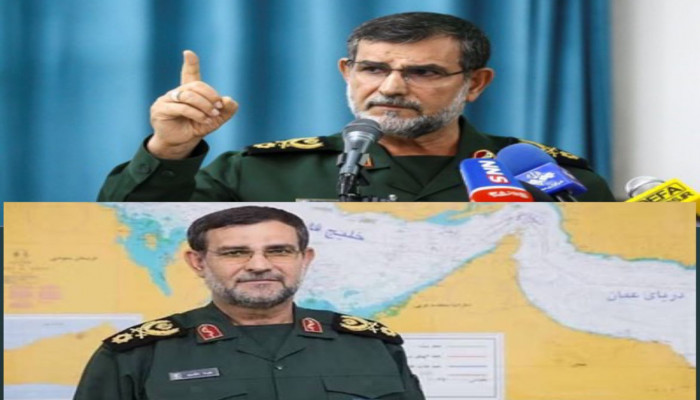

Israel has publicly declared that its forces have killed a high‑ranking Iranian naval commander who was reportedly overseeing the blockade of the Strait of Hormuz, the narrow and strategically vital waterway through which a significant portion of the world’s oil supply must pass. The announcement, made as regional tensions continue to escalate and military strikes persist across the Middle East, highlights how the conflict has increasingly drawn in direct confrontations between opposing forces.
According to Israeli Defence Minister Israel Katz, the Iranian commander, identified as Alireza Tangsiri, was a senior naval leader within the Islamic Revolutionary Guard Corps (IRGC) and played a central role in restricting access to the strait. Katz emphasized the importance of this figure in Iran’s military strategy around the blockade, stating that Tangsiri “was directly responsible” for blocking the Strait of Hormuz a waterway that is one of the world’s busiest transit corridors for crude oil and liquefied natural gas and that he had been “blown up” during targeted operations.
While Israel’s defence leadership has been explicit in its claim, Iranian authorities have not independently confirmed Tangsiri’s death, and there remains uncertainty in regional reporting about the immediate consequences and how Tehran will respond to the loss of such a key military leader.
The backdrop to this announcement is the broader disruption of the Strait of Hormuz itself, which has been effectively impeded by Iranian forces since the outbreak of full‑scale hostilities last month, following strikes by the United States and Israel on Iranian targets. The disruption of the strait has intensified global economic concerns because of its outsized role in energy markets; a leading international policy group noted earlier that the ongoing blockade and uncertainty surrounding safe passage “raising costs, weighing on demand and adding to inflationary pressures” worldwide as global markets grapple with energy supply instability. The slowing of tanker traffic, skyrocketing insurance costs for vessels that attempt to transit the waterway, and the spectre of extended closure have all contributed to rising fuel prices, increased transportation costs, and added uncertainty in markets already strained by economic pressures from the conflict.
In the midst of these military developments, diplomatic tensions between the United States and Iran have also grown more strained. United States President Donald Trump, speaking publicly about the state of negotiations and the military balance, claimed that Iran had been “militarily obliterated,” framing the U.S. campaign as overwhelmingly effective on the battlefield. Trump went further, asserting that Iranian negotiators had been “begging” to reach a deal to end the war, a characterization that Tehran has strongly rejected.
Iranian officials have insisted that no formal talks with Washington are currently taking place, pushing back against the notion that Iran is seeking a negotiated settlement under current terms. Despite these denials, reports emerged that Tehran had received a 15‑point peace proposal from the United States, and on Wednesday an Iranian official outlined five conditions for ending the war in response to those reports, although the details of these conditions and how they might influence future diplomacy remain unclear.
The conflict itself continues to flare across multiple fronts, not only within Iranian territory but also in neighbouring regions, demonstrating how the war has spilled over beyond a single theatre of combat. In Lebanon, hostilities persist as Iranian‑linked militias and other groups maintain pressure on Israeli positions, while a stark reminder of the regional impact was seen in Abu Dhabi, where two people were killed by debris from an intercepted missile that analysts believe was launched by Iranian forces.