

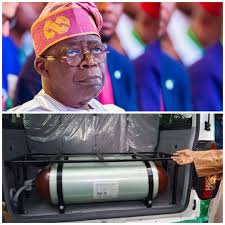

In a decisive move to reposition Nigeria’s energy and transportation landscape, President Bola Tinubu has approved a comprehensive expansion of the Presidential Initiative on Compressed Natural Gas (PiCNG), reflecting a broader commitment to clean, cost-effective, and environmentally sustainable mobility. According to a statement released on Thursday by presidential spokesperson Bayo Onanuga, the initiative will henceforth operate under a new mandate and title: the Presidential Initiative on Compressed Natural Gas and Electric Vehicles (PiCNG & EV). The development signals a strategic pivot by the federal government to integrate electric vehicle deployment into existing efforts to modernize Nigeria’s transport sector while harnessing the nation’s abundant natural gas resources.
President Tinubu has charged the Executive Chairman of PiCNG & EV, Ismael Ahmed, with the immediate establishment of a coordinated framework to accelerate the deployment of vehicle conversion kits nationwide. “The kits must be made accessible to Nigerians at a cost that is not burdensome,” the presidential directive emphasized, underscoring the administration’s intent to ensure that the benefits of cleaner transportation solutions are widely shared.
To achieve this, PiCNG & EV has been instructed to collaborate with financial institutions, including CreditCorp Nigeria, and other relevant partners to design financing structures that allow vehicle owners across the country to adopt compressed natural gas (CNG) conversions affordably. The government believes that cost-effective financing is crucial to achieving broad public adoption and sustaining momentum in the nation’s transition toward cleaner fuels.
The President also called for the accelerated deployment of Mobile Refuelling Units (MRUs) as part of a dual strategy to expand access to CNG while permanent infrastructure is scaled nationwide. These units, he noted, are essential to bridging gaps in fuel availability, particularly in areas where Mother and Daughter Stations or Integrated Refuelling Units are yet to be operational. With these measures, PiCNG & EV is expected to lead and coordinate Nigeria’s clean mobility strategy comprehensively, covering both gas-powered and electric vehicles, as well as supporting infrastructure development across all regions of the country.
Under the expanded mandate, PiCNG & EV will continue to drive the deployment of key CNG infrastructure, including stations, refuelling equipment, and vehicle conversion programs. Simultaneously, it will anchor the development of electric vehicle technology, charging networks, and related nationwide investments, ensuring a synchronized approach to modern, sustainable mobility.
“Gas remains a competitive and strategic fuel for transportation, leveraging Nigeria’s abundant resources to lower costs, strengthen energy security, and conserve foreign exchange,” the release stated. The integration of electric vehicles into the initiative is expected to further enhance the government’s agenda of promoting affordable, efficient, and environmentally responsible transportation, while positioning Nigeria as a leader in clean energy adoption in Africa.
Analysts have noted that the PiCNG & EV initiative represents a significant step toward reducing reliance on petroleum fuels, lowering transport costs for citizens, and mitigating environmental impacts associated with fossil fuel consumption. By combining natural gas and electric mobility solutions, the government aims to offer a practical pathway to cleaner urban transport, energy security, and the creation of green jobs, particularly in vehicle conversion, infrastructure maintenance, and electric vehicle servicing.