

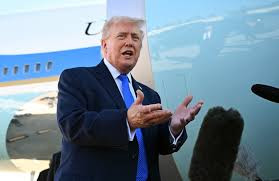

United States President Donald Trump has said that Iran has agreed it will never possess a nuclear weapon, as talks between Washington and Tehran continue amid heightened tensions and ongoing diplomatic engagement between the two long-time adversaries. Speaking to reporters in the Oval Office, Trump said Iran had indicated a shift in its stance during ongoing discussions with American officials, suggesting that diplomatic pressure and military developments had influenced Tehran’s position.
Trump stated that Iran has “agreed they’ll never have a nuclear weapon,” adding that Tehran was engaging constructively with the United States and that discussions were moving in a positive direction despite years of hostility, sanctions, and diplomatic breakdowns between the two countries.
Trump said Iran was currently talking to Washington and “they’re talking sense,” indicating that the tone of the negotiations had changed compared to previous years when talks between both countries frequently collapsed over disagreements on sanctions, nuclear inspections, and regional security issues. When asked whether he would send envoys Steve Witkoff and Jared Kushner to pursue peace talks with Iranian officials, Trump replied: “We’re in negotiations right now. They’re doing it along with Marco, JD. The other side, I can tell you, they’d like to make a deal. Who wouldn’t if you were them? Their navy’s gone, their air force is gone, their communications… all of their anti-aircraft, their missiles. Can you name a single thing that’s not gone? Or one thing that’s doing well?”
His comments suggested that the United States believed Iran’s military capabilities had been significantly weakened by recent conflict and sustained sanctions, a claim that could not be independently verified but reflects Washington’s assessment of the balance of power following recent hostilities.
Trump also made a striking declaration about U.S. military dominance, saying, “We are roaming free over Tehran. We can do whatever we want,” a statement likely to provoke strong reactions internationally and further complicate already fragile diplomatic efforts. His remarks come at a time when negotiations over Iran’s nuclear programme have once again become a central issue in global security discussions. For more than two decades, the United States and its allies have sought to limit Iran’s nuclear capabilities amid fears that Tehran could develop nuclear weapons, an allegation Iran has repeatedly denied, insisting that its nuclear programme is for peaceful purposes such as energy production and medical research.
The issue of Iran’s nuclear programme has been a major point of conflict between Washington and Tehran since the early 2000s, leading to multiple rounds of sanctions imposed by the United States and international partners. A major breakthrough came in 2015 with the Joint Comprehensive Plan of Action (JCPOA), an agreement between Iran and world powers that placed limits on Iran’s nuclear activities in exchange for sanctions relief.
However, the United States withdrew from the agreement in 2018 during Trump’s presidency, reimposing sanctions and triggering a gradual breakdown of the deal as Iran began scaling back its compliance with nuclear restrictions. Since then, efforts to revive or renegotiate a nuclear agreement have faced repeated setbacks due to disagreements over sanctions relief, uranium enrichment limits, and regional security issues involving Iran and its allies across the Middle East.
Analysts say the latest comments from Trump may signal a potential shift toward a new agreement or framework aimed at preventing Iran from acquiring nuclear weapons while addressing broader security concerns in the Middle East, including missile development and Iran’s relationships with armed groups in the region. However, experts also caution that statements made during negotiations do not necessarily reflect final agreements, as talks between the United States and Iran have historically been complex, secretive, and subject to sudden changes.
If Iran has indeed agreed that it will never possess a nuclear weapon, it could represent a significant diplomatic development with major implications for global security, oil markets, and political stability in the Middle East, though details of any potential agreement, verification mechanisms, or sanctions relief arrangements have not yet been made public.