

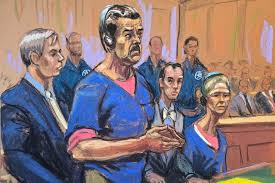

Ousted Venezuelan President Nicolás Maduro is set to return to a Manhattan federal court on Thursday in a high-stakes legal battle in which he will argue that drug trafficking charges brought against him by the United States should be dismissed, more than two months after he and his wife, Cilia Flores, were captured in a dramatic U.S. military raid in Caracas and transferred to New York to face prosecution. The court hearing, scheduled to begin at 11 a.m. EDT (1500 GMT), marks a critical stage in a case that has drawn global attention due to its legal, political and geopolitical implications.
Maduro and Flores, who are currently being held in a federal detention facility in Brooklyn pending trial, have both pleaded not guilty to multiple charges, including narcoterrorism conspiracy, and are seeking to have the case thrown out on constitutional grounds. Their return to court follows an earlier appearance in January, when they were transported by helicopter from the detention facility to Manhattan under heavy security, underscoring the extraordinary nature of the proceedings and the high-profile status of the defendants.
At the centre of Maduro’s legal argument is a dispute over his ability to fund his defence, with his legal team contending that U.S. sanctions imposed on Venezuela have effectively prevented the Venezuelan government from paying for his legal representation, thereby violating his constitutional rights. Maduro and Flores have asked U.S. District Judge Alvin Hellerstein to dismiss the charges, arguing that their inability to access state funds interferes with their Sixth Amendment right to retain counsel of their choosing.
According to their lawyers, the couple lacks the personal financial resources required to sustain a private legal defence in what is expected to be a lengthy and complex trial. Maduro’s lead attorney, Barry Pollack, has warned that he may withdraw from the case if the charges are not dismissed or if the issue of payment is not resolved, signalling a deepening legal impasse. Pollack, who previously represented WikiLeaks founder Julian Assange, has argued that continued restrictions on funding could compromise the fairness of the trial and undermine the defendants’ right to adequate representation.
U.S. prosecutors, however, have strongly opposed the motion to dismiss, maintaining that Maduro and his wife are not entitled to have their legal fees paid by the Venezuelan government. They argue that because the United States has not recognised Maduro as Venezuela’s legitimate president since 2019, he cannot expect Washington to authorise the use of Venezuelan state funds for his defence. Instead, prosecutors say that if Maduro and Flores are unable to afford private counsel, they can be assigned public defenders in accordance with U.S. law. The prosecution further contends that sanctions policy must be upheld and that granting exceptions in this case would set a precedent inconsistent with broader U.S. foreign policy objectives.
Maduro is facing four felony charges, including narcoterrorism conspiracy, a rarely used statute that criminalises drug trafficking activities intended to finance organisations or actions designated as terrorism by the United States. Legal analysts note that the statute has been infrequently tested in court and has produced mixed outcomes, with some convictions later overturned due to issues related to witness credibility and evidentiary standards.
The charges against Maduro stem from longstanding U.S. allegations that he oversaw or enabled state-linked drug trafficking networks during his time in power, accusations he has consistently denied. In earlier court appearances, Maduro insisted on his innocence, declaring, “I am innocent. I am not guilty. I am a decent man. I am still president of my country,” as he challenged both the charges and the circumstances of his arrest.
The case has unfolded against the backdrop of deeply strained relations between Washington and Caracas, which deteriorated significantly during the administration of former U.S. President Donald Trump. During his time in office, Trump imposed sweeping sanctions on Venezuela, citing allegations that Maduro’s government was corrupt, engaged in human rights abuses and undermined democratic institutions.
The United States also rejected the legitimacy of Maduro’s 2018 re-election, describing it as fraudulent and imposing further economic and political pressure on his administration. Maduro has repeatedly dismissed these accusations, describing them as politically motivated and part of a broader U.S. strategy to exert control over Venezuela’s vast oil reserves, among the largest in the world. He has also characterised his capture by U.S. forces as unlawful, referring to it as a “kidnapping” and questioning the legal basis for his prosecution in a foreign court.
Maduro and Flores were captured on January 3 in a surprise U.S. special forces raid on their residence in Caracas, an operation that marked a dramatic escalation in U.S. efforts to hold Venezuelan leadership accountable for alleged criminal activities and has since sparked intense debate over sovereignty, international law and the reach of U.S. jurisdiction. Following their arrest, the couple was flown to New York, where they were formally charged and remanded in custody. The operation and subsequent prosecution have had significant geopolitical repercussions, further straining relations between the United States and Venezuela while raising broader questions about the use of military force in cross-border law enforcement actions.