

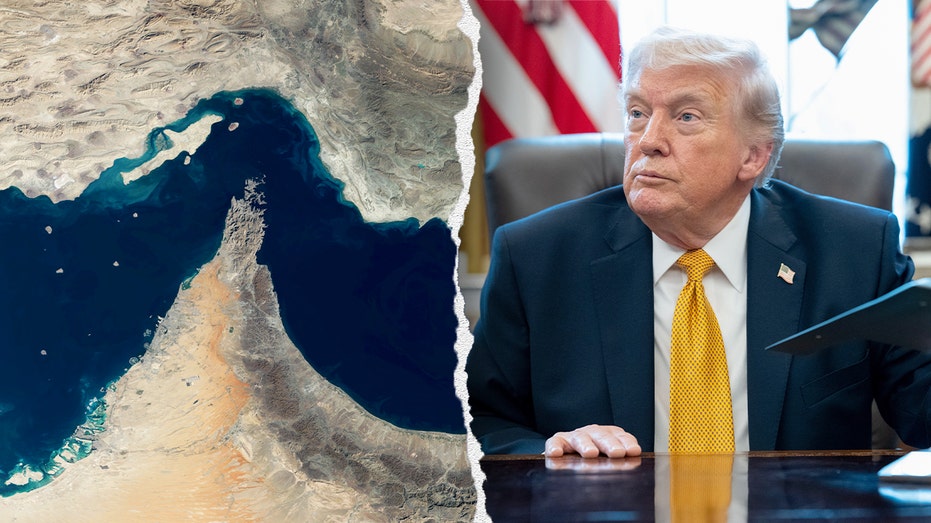

Iran’s military on Sunday issued a stark threat to completely shut down the vital Strait of Hormuz if US President Donald Trump carries out his ultimatum to target Iranian energy infrastructure, dramatically escalating tensions in the region as the ongoing conflict enters its fourth week.
Tehran’s warning came after Trump gave Iran 48 hours to fully reopen the strait — a waterway through which roughly 20 per cent of the world’s crude oil and liquefied natural gas normally passes after it had been effectively closed since the outbreak of war following the joint US‑Israeli bombardment of Iranian territory on February 28, an assault that triggered retaliatory drone and missile strikes by Iran against Israeli and US interests across the Middle East.
In a statement carried by state television and attributed to the military’s operational command, Khatam Al‑Anbiya, Iran asserted that “If the United States’ threats regarding Iran’s power plants are carried out… the Strait of Hormuz will be completely closed, and it will not be reopened until our destroyed power plants are rebuilt,” underscoring Tehran’s readiness to use control of the strait as leverage in the standoff over navigation rights and military escalation.
Iran’s military further insisted that it would extend its retaliatory measures beyond the strait itself, threatening to strike Israel’s “power plants, energy, and information and communications technology (ICT) infrastructure,” as well as facilities in neighbouring countries hosting US bases or involving companies with US shareholders, asserting the actions were necessary “to defend our country and the interests of our nation.”
Traffic through the strait, a narrow maritime chokepoint connecting the Persian Gulf and the Gulf of Oman, has been brought to a near standstill as a result of the conflict, compounding global energy market disruption and heightening fears of broader economic fallout including sharp rises in oil and gas prices — as insurers and shipping firms avoid the high‑risk zone, which has seen tanker traffic collapse and thousands of mariners stranded.
President Trump’s warning itself marked a significant intensification of US rhetoric and military posture toward Iran. Using his social media platform, Trump set a 48‑hour ultimatum demanding that Tehran reopen the Strait of Hormuz or face strikes on Iranian power plants, including a threat to hit the largest facilities first, a step that represented one of the most direct threats against Iran’s civilian energy infrastructure in the conflict to date.
According to reports, Trump asserted that the United States would begin by “obliterating” Iranian power plants if the strait remained closed, framing the reopening as a necessity for safeguarding global energy supplies and pressing allied nations to assist in securing the waterway, though many major powers have hesitated to join a US‑led military campaign.
The ultimatum followed earlier comments from Trump in which he expressed growing frustration over the blockage of the strait and the reluctance of allies to commit fully to a military operation aimed at reopening it, even as he criticised NATO partners for insufficient support and insisted that allied countries should bear a greater share of the responsibility for securing the critical passageway.
The backdrop to these threats is a broader geopolitical crisis that has seen the closure of the strait — effectively halting about a fifth of global oil transit after Iran’s Revolutionary Guard Corps declared that it would prohibit passage of US‑linked vessels and declared the strait inoperable for hostile ships.
Iran’s actions have been described as part of its response to joint US‑Israeli military strikes that have targeted Iranian military and strategic sites, including attacks that reportedly eliminated senior Iranian officials. In response to the US ultimatum, Iranian authorities and allied voices have in turn issued counter‑threats of their own against energy and desalination infrastructure across the region, suggesting that any attack on Iran’s energy grid would prompt a wider campaign targeting critical systems used by the United States and its partners.
The situation has prompted intense debate among international security analysts and policymakers about the risks of further escalation, with attention focused not only on the immediate humanitarian and economic consequences of a potential full closure of the strait but also on the broader implications for regional stability and energy markets.
As Trump’s 48‑hour deadline approached, concerns mounted that a failure to resolve the stalemate could lead to an even larger military engagement, drawing in additional regional actors and further disrupting global energy supplies.
Observers have noted that the closure of the Strait of Hormuz — once just a flashpoint in broader tensions has become central to the conflict’s trajectory, underscoring both the strategic importance of the waterway and the potential consequences of military escalation for international trade and security.