

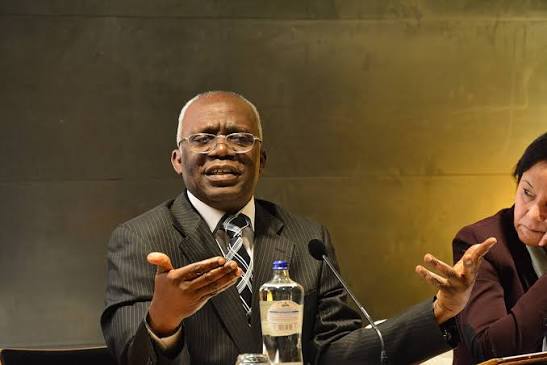

Human rights lawyer Femi Falana has strongly condemned the recent sanctions imposed by US President Donald Trump on Cuba, describing them as both illegal and unconstitutional. In a comprehensive statement, the senior advocate argued that Trump’s executive order, which targets Cuba’s energy supply chain, contravenes established constitutional principles and undermines international law.
Signed on January 29, 2026, the executive order imposes tariffs on countries supplying oil to Cuba, with the apparent aim of cutting off the island’s access to fuel and crippling its energy sector.
According to Falana, this policy, introduced under the International Emergency Economic Powers Act and the National Emergencies Act, has no legal foundation, particularly in light of a landmark Supreme Court ruling that limits presidential authority over tariffs.
Falana drew attention to the February 20 ruling in Learning Resources Inc. v. Trump, in which the Supreme Court explicitly held that the president cannot impose tariffs without congressional approval. “The court made it clear that tariffs constitute taxation powers reserved exclusively for Congress, and that the emergency powers law cited by the Trump administration does not authorise sweeping trade restrictions,” Falana explained.
He emphasised that the executive order targeting Cuba is therefore in direct violation of the Constitution. “It is therefore submitted that the imposition of tariffs on countries that supply oil to Cuba is illegal and unconstitutional,” he asserted, highlighting that the court’s decision effectively nullifies the legal justification for the administration’s action.
Beyond the legal dimension, Falana also criticised President Trump’s response to the judgment, noting that the president had launched attacks against the justices who ruled against him, despite the binding nature of their decision under the rule of law.
In addition to the constitutional argument, Falana linked the sanctions to a deepening humanitarian crisis in Cuba, stressing that the country’s economy has been severely disrupted by restrictions on oil imports. He cited a recent nationwide power outage, which occurred after the collapse of Cuba’s electricity grid, a situation attributed to prolonged fuel shortages caused by the sanctions.
While power has since been restored following the reconnection of the grid and the revival of a major oil-fired plant, Falana warned that the incident reflects the broader consequences of the US policy on ordinary Cubans.
He accused the United States of engaging in economic strangulation and criticised what he described as implicit threats of military action, arguing that such measures violate international norms and the sovereign rights of the Cuban people.
Falana further cautioned that any attempt by President Trump to initiate military action against Cuba without congressional approval would also be unconstitutional, reinforcing his broader call for adherence to the rule of law.
“US institutions must uphold the constitutional checks on executive power,” he said, insisting that both domestic law and international legal principles must guide the conduct of the United States in its relations with Cuba.
By combining legal analysis with a focus on the humanitarian consequences of the sanctions, Falana painted a comprehensive picture of what he described as an unlawful policy with profound implications, both for Cuba’s sovereignty and for the proper functioning of constitutional governance in the United States.