

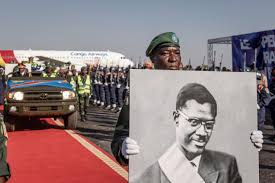

Belgian court on Tuesday ruled that 93‑year‑old former diplomat and European Commission vice‑president Étienne Davignon must stand trial for his alleged involvement in the 1961 killing of Patrice Lumumba, the first prime minister of the Democratic Republic of the Congo, marking a historic moment in the long‑running quest for accountability over one of the most notorious political murders of the decolonisation era. The ruling by the Brussels court sends the case toward a criminal trial though it is subject to appeal and positions Davignon as the only surviving member of the group of ten Belgians accused by Lumumba’s family in a complaint first filed in 2011. If the trial proceeds, he would be the first Belgian official to face justice in connection with the death of the Congolese leader more than six decades ago, an event that has continued to reverberate in debates over Belgium’s colonial past and broader international involvement.
Davignon, now 93, was a trainee diplomat in Kinshasa at the time of Congo’s independence in 1960 when the newly independent state plunged into political crisis; he later went on to high‑profile roles in European and global affairs, including serving as vice‑president of the European Commission and as a prominent figure in international energy and industrial sectors. Prosecutors allege in the indictment that his actions in the months leading up to Lumumba’s death amounted to “participation in war crimes,” including unlawful detention, degrading treatment and the transfer of Lumumba to authorities in the secessionist province of Katanga, where he was killed in January 1961. The other nine Belgians accused in the case have since died, leaving Davignon the sole figure left to face legal scrutiny over the assassination.
Patrice Émery Lumumba, born in 1925, remains one of the most consequential figures in African anti‑colonial history. After more than half a century of Belgian colonial rule, the Republic of the Congo gained independence on 30 June 1960, and Lumumba, whose nationalist movement had been central to the struggle for self‑rule, was appointed the country’s first prime minister. At the independence ceremony in Léopoldville (now Kinshasa), Lumumba gave an impromptu speech that sharply criticised Belgium’s long history of exploitation and oppression, rejecting the portrayal of independence as a generous grant from the former colonial power and asserting that Congolese freedom had been won by sacrifice and struggle. His address, broadcast widely, emphasised that Congo’s sovereignty was the product of its people’s efforts and called for genuine equality and mutual respect between Congo and Belgium.
Despite his historic role, Lumumba’s government was short‑lived. Intense political rivalries, Cold War geopolitics and internal divisions erupted into the Congo Crisis, and by September 1960 he was ousted in a coup supported by rival factions and external powers. The new authorities placed him under arrest, and on 17 January 1961, Lumumba, along with his political allies Maurice Mpolo and Joseph Okito, was executed by firing squad in Katanga with the backing of local secessionists and Belgian mercenaries. His body was never recovered and is widely believed to have been dissolved in acid, with only a gold‑capped tooth surviving as a grim testament to his death a tooth that was returned to his family by Belgian authorities decades later.
Belgium’s relationship to Lumumba’s death has been a subject of long‑running historical reckoning. A 2001 Belgian parliamentary commission concluded that the country bore “moral responsibility” for the conditions that led to his assassination, prompting official apologies from Belgian leaders to Lumumba’s relatives and to the Democratic Republic of Congo. Brussels and Congolese officials have acknowledged the painful legacy of colonial rule and taken symbolic steps toward reconciliation, but many advocates have pushed for full legal accountability.
Reactions to the court’s ruling reflect both relief and the weight of history. Mehdi Lumumba, a grandson of Patrice Lumumba, welcomed the decision as a long‑awaited step in confronting historical injustices, telling AFP: “We are all relieved. Belgium is finally confronting its history.” He and other family members have described the court’s move as part of a broader struggle for truth and justice that transcends generations.
The international context of Lumumba’s death underscores the broader geopolitical forces at play during the height of the Cold War. Western governments, wary of his perceived leanings toward the Soviet Union and the assertion of genuine independence for Congo’s vast natural resources, viewed his leadership with suspicion. A 1975 United States Senate Church Committee report uncovered evidence that the U.S. Central Intelligence Agency had considered or pursued plots to assassinate Lumumba, though these specific plans were not carried out before his death at the hands of Congolese rivals. These revelations highlight how competing global interests intersected with local and colonial dynamics in shaping Congo’s early post‑independence trajectory.
By sending Étienne Davignon to trial, Belgium’s legal system is engaging in a rare and belated effort to reckon with the legal and moral dimensions of colonial-era violence, illuminating the enduring impacts of decolonisation struggles and Cold War rivalries. The case stands as a stark reminder of the complexities of historical justice and the long journey toward accountability for political crimes rooted in imperial domination.