

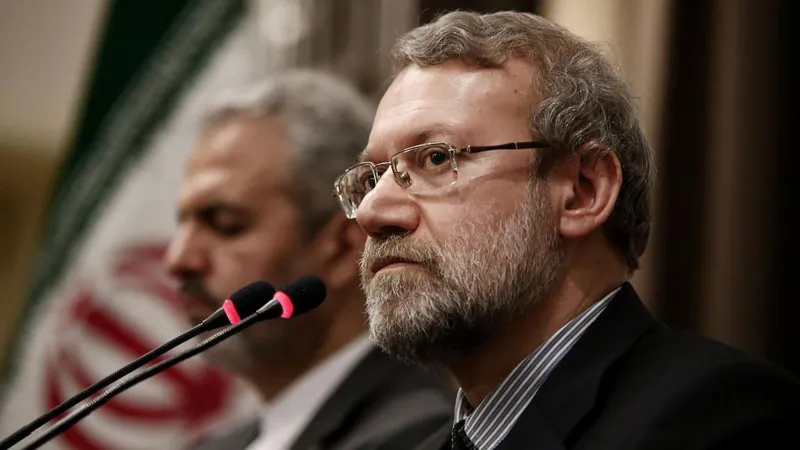

The Israeli air strike that killed Ali Larijani, Iran’s top security chief, has removed one of the Islamic Republic’s most experienced and influential policymakers at a critical juncture in the country’s history. Larijani, who was not a military commander but served as the secretary of Iran’s Supreme National Security Council, played a central role in shaping the country’s strategic decisions on war, diplomacy, and national security. He was a key figure in managing Iran’s confrontation with both the United States and Israel, and his voice carried significant weight across the corridors of power in Tehran.
Following the death of Supreme Leader Ali Khamenei on February 28, Larijani adopted a defiant posture, signaling that Iran was prepared for a prolonged conflict. State media has now confirmed his death, which comes amid a broader pattern in which several senior Iranian officials and commanders have been killed within a matter of weeks, suggesting a sustained effort to weaken the country’s leadership structure during wartime. Analysts say that Larijani’s removal is likely to exacerbate existing challenges in Iran’s political and military hierarchy and could have profound implications for the country’s ability to coordinate its strategic response in a period of heightened tension.
Within Iran, Larijani was widely regarded as a pragmatist who balanced ideological loyalty with a technocratic approach. While he remained deeply skeptical of engagement with Western powers, he was involved in key diplomatic initiatives, including acting as a principal envoy in Iran’s long-term co-operation agreement with China. His approach combined ideological commitment with calculated strategy, favouring measured responses over public rhetoric. At the time of his death, Larijani was managing three critical crises that defined Iran’s domestic and international challenges.
First, he was overseeing the war itself, advocating for preparations for a prolonged struggle and exploring measures such as closing the Strait of Hormuz to assert regional leverage. Second, he was contending with waves of domestic unrest that had initially stemmed from economic grievances but quickly escalated into widespread protests against the Islamic Republic, which were met with violent crackdowns, resulting in thousands of casualties. Third, he was overseeing Iran’s nuclear program and navigating stalled indirect negotiations with Washington, both of which had already been disrupted by a series of military strikes. With his death, all three crises now remain unresolved, placing immense pressure on his successor, whose identity and authority remain unclear, and exposing the country’s leadership to immediate vulnerability from continued military operations.
The absence of Larijani is likely to shift power further toward the military, as suggested by recent remarks from President Masoud Pezeshkian, who indicated that armed forces units may act autonomously if senior civilian leadership is incapacitated. In practice, this could allow for faster operational decisions but carries the risk of reduced central coordination, potentially leading to misaligned or escalating military responses. Iran’s leadership also appears to be struggling with succession, having delayed public announcements and kept some figures, including the new supreme leader Mojtaba Khamenei, largely out of public view.
Observers note that this opacity may reflect either security concerns or internal uncertainty about the chain of command. In the short term, experts predict that these developments could result in a more volatile domestic and regional environment, including a harder military posture in ongoing conflicts and harsher repression of internal dissent. Army chief Amir Hatami has explicitly threatened “decisive” retaliation in response to Larijani’s death, underscoring the potential for an escalation of hostilities in the region. Over the longer term, the continued loss of senior figures may undermine the government’s capacity to govern effectively, especially in a country of over 90 million people, and could deepen an institutional crisis that affects both military and civil governance.
Larijani’s death is more than the loss of a single official; it represents a significant blow to the coherence and stability of Iran’s leadership. Observers emphasize that his combination of strategic influence, diplomatic acumen, and crisis management expertise was central to the functioning of the Islamic Republic’s decision-making apparatus. With him gone, the responsibility for resolving the war, domestic unrest, and nuclear negotiations will fall to an as-yet-unknown successor under conditions of heightened risk and uncertainty.
The attack highlights both the vulnerability of Iran’s leadership structure in wartime and the ongoing challenges the country faces in maintaining authority and continuity. As Iran navigates this period of leadership disruption, the consequences are likely to reverberate across the region, affecting the trajectory of the war, domestic stability, and the broader balance of power in the Middle East. The removal of Larijani marks a pivotal moment that will test the resilience of the Islamic Republic’s institutions and the effectiveness of its response to internal and external threats.