


The Federal Government on Monday confirmed that it is actively finalising administrative procedures and preparing the release of funds to facilitate the evacuation of Nigerians affected by the escalating crisis in parts of the Middle East. The announcement comes against the backdrop of rising regional tensions triggered by missile and drone attacks linked to Iran, which have heightened security concerns across several Gulf nations.
These developments follow coordinated military strikes by the United States and Israel against Iran on February 28, which have disrupted normal travel operations and placed foreign nationals, including Nigerians, in precarious situations. The spokesperson for the Ministry of Foreign Affairs, Kimiebi Ebienfa, told our correspondent that evacuation arrangements are ongoing, emphasising the government’s commitment to ensuring the safe return of its citizens.
“The government is working out the necessary administrative details and the release of funds to commence evacuation,” he said, highlighting that logistical and operational planning is well underway.
The update comes amid growing concern over the safety of Nigerians stranded in countries including Iran, Israel, the United Arab Emirates, Kuwait, and Qatar, where regional hostilities have disrupted flights and complicated travel plans. Last week, the ministry said that its immediate priority was to evacuate Nigerians in the most vulnerable areas, particularly those in Iran and Israel, where the security situation is especially volatile.
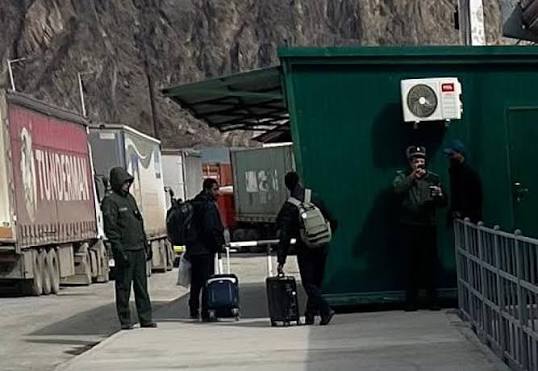
Ebienfa explained that the evacuation process from Iran presents significant logistical challenges, including transporting stranded students from various universities to the Armenian border and complying with entry conditions set by Armenian authorities.
“The situation in Iran remains complicated due to regional hostilities, but we are exploring different evacuation options, including the possible deployment of Nigerian Air Force aircraft,” he said, noting that the volatile security environment has made it difficult to secure and schedule flights promptly.
Regarding Nigerians stranded in Qatar, Ebienfa clarified that most were transit passengers whose flights were disrupted due to the crisis, but they were being assisted by their respective airlines.
“Qatar Airways has started operating flights to Nigeria. There was a flight to Lagos today (Monday) from Doha. So, in a few days, the category of Nigerians stranded due to transit flights that were affected by the crisis will all be in Nigeria. This is in addition to flights to Cairo, Egypt and Nairobi, Kenya, that included some Nigerians,” he added, confirming that the government is closely monitoring the situation and coordinating with international carriers to ensure the safe return of its citizens.
The situation in the region has been further compounded by the UAE Ministry of Defence’s confirmation on Saturday that its air defence systems intercepted multiple ballistic missiles and drones launched from Iran. The ministry reported that its systems engaged nine ballistic missiles and 33 unmanned aerial vehicles on March 14 alone, describing the attacks as part of a broader wave of Iranian aggression. Officials disclosed that the attacks resulted in casualties, including residents and foreign workers from several countries, with six people reportedly killed and more than 140 others sustaining injuries of varying degrees.
Since the beginning of hostilities, the UAE ministry said its air defence systems had intercepted 294 ballistic missiles, 15 cruise missiles, and about 1,600 drones launched from Iran, while maintaining that forces remained on high alert and ready to respond to any threats to national security.
The ministry also provided details of the casualties, noting that the victims included individuals from countries such as Egypt, Sudan, Ethiopia, the Philippines, Pakistan, India, Bangladesh, Sri Lanka, Azerbaijan, Yemen, Uganda, Eritrea, Lebanon, Afghanistan, Bahrain, Comoros, Iraq, Nepal, Nigeria, Oman, Jordan, Palestine, Ghana, Indonesia, and Sweden.
In the midst of these developments, Ebienfa confirmed that a Nigerian who had sustained injuries during the attacks “has been treated and discharged,” offering reassurance that the government is monitoring the welfare of its citizens abroad.
Iran Backs FG
The Ambassador of the Islamic Republic of Iran to Nigeria, Gholamreza Raja, has assured that the Iranian government is fully willing to cooperate with Nigerian authorities to facilitate the safe departure of Nigerian nationals who may wish to leave the country amid ongoing regional tensions.
In an exclusive interview with The PUNCH on Monday, Raja emphasised that Iran remains committed to ensuring the safety and welfare of all foreign nationals, including Nigerians, currently residing within its borders. He highlighted that the Embassy of Nigeria in Tehran has already taken proactive measures to support its citizens and continues to maintain open lines of communication with members of the Nigerian community.
“Naturally, the Nigerian Embassy in Tehran has taken the necessary measures to assist and support its nationals, and it remains in contact with members of the Nigerian community to provide guidance where needed,” the ambassador stated, underscoring the importance of diplomatic coordination in safeguarding the welfare of Nigerians abroad.
Raja further stressed that the Iranian government stands ready to collaborate with relevant authorities to make travel arrangements smoother for those who wish to leave. “At the same time, the Government of the Islamic Republic of Iran is ready to cooperate in facilitating the departure of Nigerian nationals if they wish to leave the country,” he said, noting the practical steps being taken to ensure safe transit. He also provided clarity on the operational status of Iran’s land borders with neighbouring countries, explaining that these routes remain open and are actively being used by foreign nationals for travel.
“Currently, Iran’s land borders with neighbouring countries are open, and normal movement through these routes is ongoing. Many foreign nationals are already using these land routes for travel or departure. Reports indicate that the routes are safe and can be used without difficulty. Nigerian citizens can therefore make use of these routes if they choose to do so,” Raja explained, offering reassurance about the practical options available for those considering evacuation or voluntary departure.
Addressing the presence of Nigerians in Iran, Raja estimated that several hundred Nigerian nationals currently reside in the country, a significant portion of whom are students enrolled in Iranian universities and educational institutions under scholarship programmes. “According to available estimates, several hundred Nigerian nationals live in Iran. A significant number of them are students, some of whom are studying at Iranian universities or educational institutions under scholarship programmes,” he said, adding that the exact number is difficult to determine because not all Nigerians formally register with their embassy.
The ambassador noted that aside from students, many Nigerians are involved in small-scale commercial and business activities, while others may have travelled to Iran for short-term or long-term educational programmes, training courses, or religious pilgrimages before returning to Nigeria.
“In addition, a number of Nigerians are engaged in small-scale commercial and business activities. The exact number may vary, as not all nationals formally register with their embassy. Some Nigerian citizens travelled to Iran for short-term or long-term educational programmes, training courses, or religious pilgrimage, and later return to Nigeria. For this reason, the number of Nigerians present in Iran may fluctuate over time,” Raja explained, providing a detailed picture of the community and reaffirming Iran’s willingness to support their safe movement in coordination with Nigerian authorities.
Emirates Suspends Flights
Emirates Airline has once again announced the temporary suspension of all flights to and from Dubai, urging passengers not to travel to the airport until further notice. In a travel advisory issued on Monday, the airline warned travellers to avoid Dubai International Airport as flight operations remain halted amid ongoing regional tensions.
The suspension followed guidance from the Dubai Civil Aviation Authority earlier the same day, which grounded all flights operating through the airport in response to heightened security concerns in the Middle East. Emirates had initially suspended operations during previous escalations but resumed flights after hostilities from the Israel-Iran conflict subsided.
Dubai, a key global hub, has been among the hardest-hit areas in the ongoing crisis, and the airline emphasised that all incoming and outgoing flights will remain suspended while authorities continue to assess the situation.
The airline stated that it is coordinating closely with aviation authorities and relevant agencies to determine when it would be safe to resume operations. “Customers are reminded not to travel to the airport at this time and to continue checking this page for the latest updates. We thank our customers for their continued patience and understanding. The safety of our passengers and crew remains our highest priority,” Emirates said, highlighting that passenger and crew welfare remains central to its decision-making.
The disruption has created significant uncertainty for thousands of travellers who rely on Dubai as a major international transit hub, including passengers flying between Nigeria and other global destinations. The latest suspension comes in the wake of escalating tensions in the Middle East following United States and Israeli strikes on Iran, described by US President Donald Trump as a “major combat operation.” These hostilities have forced several international airlines to reroute or suspend flights crossing the affected airspace, resulting in widespread disruptions across global aviation networks.
Prior to this latest suspension, Emirates had resumed limited operations on its Dubai–Lagos–Dubai route on March 6, 2026, offering a skeleton schedule after previous disruptions. However, many Nigerian passengers who purchased tickets before the earlier halt were still dealing with unresolved refund requests.
Travel agents noted that numerous refund applications submitted on behalf of affected passengers remain unprocessed, leaving travellers in limbo as they await either refunds or rescheduled flights. The prolonged uncertainty has also begun to impact business activities linked to travel to Dubai, which remains a major destination for conferences, trade events, and tourism for Nigerians.
Several conferences and business meetings scheduled to take place in Dubai have either been cancelled or relocated to other locations, while travellers continue to contact Emirates seeking refunds for unused tickets, highlighting the broader economic and logistical consequences of the suspension.