

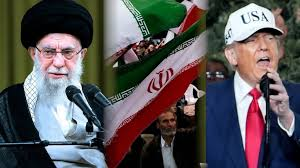

US President Donald Trump’s recent military strikes on Iran, which reportedly killed Supreme Leader Ayatollah Ali Khamenei, have sent shockwaves through the country, as he urged Iranians to “take over your government,” adding, “It will be yours to take. This will be probably your only chance for generations.” The stark call came as the conflict between the US, Israel, and Iran has intensified over the past two weeks, leaving citizens in Iran caught between competing messages about the risks and consequences of taking action against the government. While encouragement from external figures suggests an opportunity for revolt, internal authorities have responded with warnings of severe retaliation and heightened security measures across the nation.
Iran has dramatically increased its security and police presence in major cities. Police Chief Brigadier General Ahmadreza Radan warned that any Iranian who takes to the streets “at the enemy’s request” will be treated as an “enemy,” emphasizing that “all our forces have their fingers on the trigger and are ready to defend the revolution and support their people and their country.” Reinforcing this message, a presenter on Iran’s state television Channel Three addressed potential opponents of the Islamic Republic and prospective protesters, stating: “When the dust of this sedition settles, we will come after you. Confiscating your property will be the least of it. We will make you and your families pay, whether you are inside the country or abroad.”
The threats extend beyond Iran’s borders: on 8 March, the Prosecutor General Office issued a statement warning Iranians living abroad that any cooperation with what it described as “hostile enemies” could result in severe punishment or even the death penalty, referencing the law on “intensification of punishment for espionage and cooperation with Israel and hostile countries.” These warnings are a stark reminder of the risks faced by Iranians who challenge the government, particularly in light of the December–January anti-government protests, during which human rights groups report that at least 7,000 protesters were killed in an unprecedented crackdown.
In sharp contrast to these domestic warnings, exiled figures outside Iran have been calling for action against the clerical establishment. Reza Pahlavi, the exiled son of Iran’s last shah, urged citizens to “obtain essential supplies as soon as possible and wait for what he called his ‘final call.’” He instructed Iranians: “For your own safety, leave the streets and remain in your homes. Continue strikes and do not go to work. To show your unity, keep up the night-time chants [against the authorities] with strength.”
Pahlavi also addressed members of the military and security forces, urging them to reconsider their allegiance to the regime: “This is the final opportunity to separate yourselves from the forces of repression and join the people.” His calls for coordinated civilian and military action come amid an increasingly tense and militarized environment inside the country, highlighting the precarious balance between internal dissent and external encouragement.
The heightened security conditions in Iran reflect the government’s response to both the military threat and the rising calls for civil action. Checkpoints have been established across neighborhoods, streets are closely monitored, and an internet blackout continues to hamper communication among citizens and activists. The combination of these measures underscores the dual pressures facing Iranians: fear of state retaliation on one hand and the encouragement of external actors to seize the moment on the other.
This volatile mix of international military escalation, internal crackdowns, and contrasting calls for action from inside and outside the country has created a tense, uncertain situation, leaving ordinary citizens navigating unprecedented threats while observing an evolving geopolitical conflict unfold around them.