


Iran’s military has intensified operations against Kurdish opposition groups, targeting bases in northern Iraq in a significant escalation of cross-border strikes that extend Tehran’s security operations beyond its own territory.
According to a statement quoted by Iranian state media, the military attacked “Kurdish groups opposed to the revolution in Iraqi Kurdistan with three missiles,” signaling a deliberate campaign aimed at suppressing Kurdish forces it perceives as hostile.
The strikes come amid speculation surrounding the involvement of the United States, with reports suggesting that President Donald Trump may be seeking Kurdish engagement in broader efforts against Iran, as US and Israeli military actions against Iranian targets continue to escalate across the region.
The BBC has confirmed that one person was killed and three others injured in Iranian strikes on Tuesday and Wednesday that targeted the bases of two separate Kurdish opposition groups. Teams from the BBC visited the sites of the attacks and documented the aftermath.
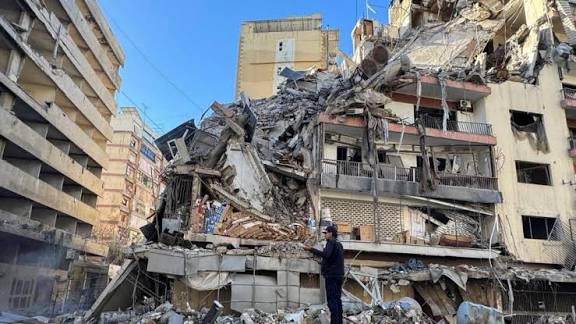
At one base, a ballistic missile struck at approximately 11:00 local time (08:00 GMT) on Wednesday, injuring four Kurdish Peshmerga fighters, one of whom later succumbed to his injuries. Observers described a scene of devastation, with a building at the base crushed into rubble and twisted metal scattered across a wide area, alongside a missile crater gouged into the ground.
At another site, belonging to the Democratic Party of Iranian Kurdistan (KDPI), a double drone strike on Tuesday left one civilian injured, with the BBC reporting from the scene the visible signs of destruction, including structural damage and scorched terrain.
A senior political leader of the KDPI told the BBC that he believed Kurdish fighters were preparing to enter Iran, stating that “the Kurds will be fighting in Iran soon,” though he did not provide a precise timeline for such operations. The leader declined to comment on reports suggesting that President Trump had communicated with him in recent days, leaving speculation about US involvement unresolved.
Speaking from the frontlines, a 25-year-old fighter named Hassan, armed with an AK-47, expressed determination and readiness to join operations in Iran, saying, “We are closer than ever,” highlighting the growing resolve among some Kurdish forces to actively challenge Iranian authorities.
The Kurdish population spans a mountainous region that stretches across Turkey, Iraq, Syria, Iran, and Armenia, comprising between 25 and 35 million people. Despite being the fourth-largest ethnic group in the Middle East, the Kurds have never achieved a permanent, recognized nation state. In Iran alone, approximately 10 percent of the country’s 84 million citizens are Kurdish, predominantly Sunni Muslims residing in north-western provinces.
Amnesty International has documented that Iranian Kurds have “long suffered deep-rooted discrimination” and that “their social, political and cultural rights have been repressed, as have their economic aspirations,” underscoring the historical grievances that fuel the ongoing tensions.
Exiled Kurdish opposition groups, advocating either for an independent state or regional autonomy, have in recent years engaged in repeated armed clashes with Iranian security forces from their bases in Iraqi Kurdistan. Tehran’s current campaign against these groups marks a notable intensification of cross-border operations, further heightening regional instability as the US, Israel, and Iran continue to maneuver militarily and politically in the Middle East.