

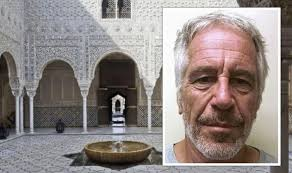

Disgraced financier Jeffrey Epstein attempted to finalise the purchase of a lavish multimillion-dollar palace in Morocco just one day before his arrest in 2019, according to documents released last month by the US Department of Justice. The files show that Epstein had been pursuing ownership of the property, known as Bin Ennakhil, since as far back as 2011, but negotiations were repeatedly delayed by disagreements over price and the structure of the sale.
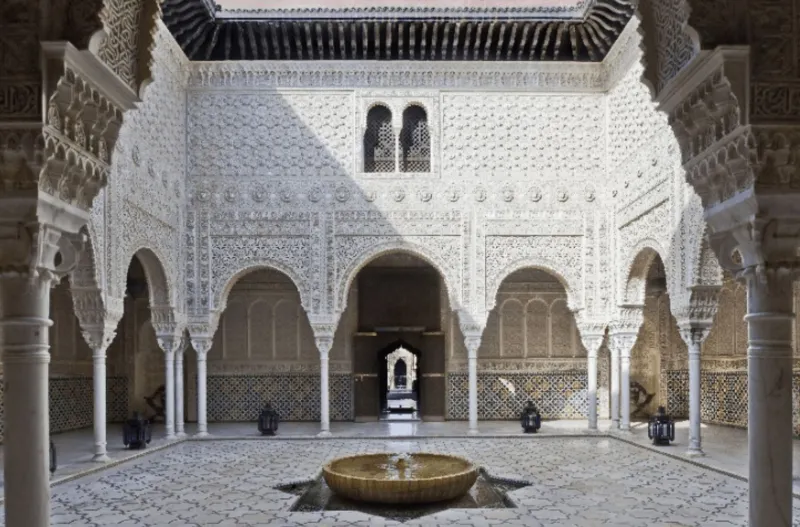
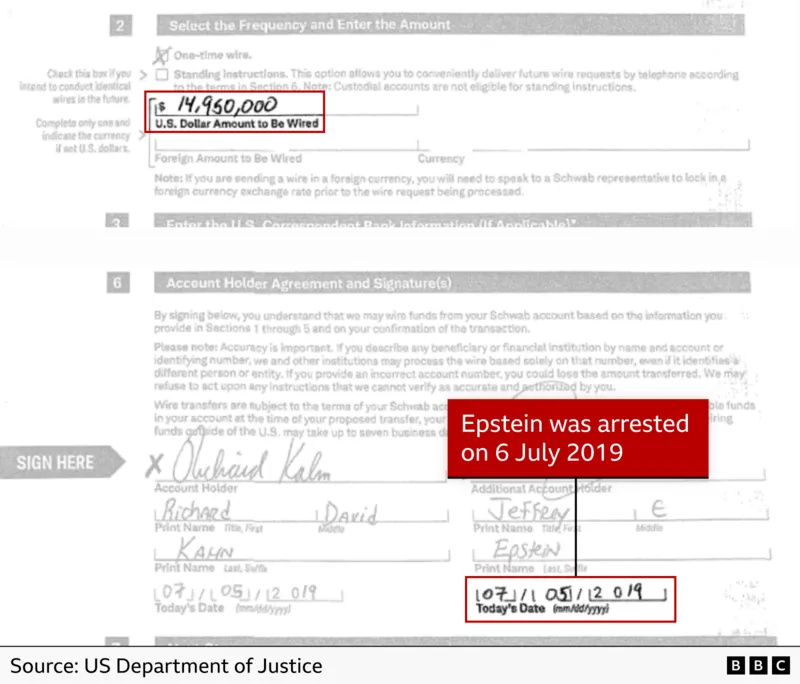
The palace, located in the exclusive Palmeraie neighbourhood of Marrakech, has been widely described as an architectural masterpiece, built by around 1,300 craftsmen and adorned with intricate carvings, mosaics and traditional Moroccan design elements. On 5 July 2019, Epstein authorised a wire transfer of $14.95m (£11m) as part of an agreement to buy the offshore company that owned the property for €18m (£13.3m), marking what investigators say was his final major financial transaction before his arrest the following day on sex trafficking charges after returning to New York.
Speculation Over Motives
According to the newly released documents, the transaction was abruptly halted just days later when Epstein’s long-time accountant, Richard Kahn, cancelled the wire transfer three days after the arrest, meaning the purchase was never completed. Morocco does not have an extradition treaty with the United States, a fact that has fuelled speculation in local media that Epstein may have viewed the country as a potential refuge if further charges were brought against him. However, a former associate of Epstein, who asked not to be named, said the timing of the deal suggested otherwise, arguing that the financier “had no clue” his arrest was imminent. “It would make sense if he was thinking of a potential sanctuary where he could still live like a king,” the associate said, while adding that the released files themselves contain no evidence that Epstein explicitly discussed Morocco as a safe haven from US authorities.
Longstanding Ties to Morocco
The documents also highlight that Epstein’s links to Morocco stretched back many years. One of his most prominent accusers, Virginia Giuffre, wrote in her memoir that Epstein and Ghislaine Maxwell once flew her to Tangier to inspect the interior design of luxury properties, as Epstein was considering redesigning parts of his private island home using Moroccan styles. In 2002, Epstein and Maxwell also attended the wedding of Mohammed VI, having been invited by former US president Bill Clinton. These connections, detailed in the files, underline how Epstein cultivated relationships in Morocco over more than a decade, although officials stress that being named or pictured in the documents does not, in itself, imply wrongdoing.
Epstein’s Connections
After Epstein was convicted in the United States in 2008 of soliciting underage sex and later released from house arrest in 2010, his interest in Morocco appeared to intensify. The files suggest that in the same year he asked Peter Mandelson, a former UK cabinet minister, to help him find an assistant who could “fin[d] a house in Marrakesh” on his behalf. From 2012 onwards, Epstein made repeated visits to the country, frequently staying in the Palmeraie district, an area known for hosting wealthy expatriates. Among them was Jabor al Thani, a member of Qatar’s royal family whom Epstein described in correspondence as his “Arab brother.”
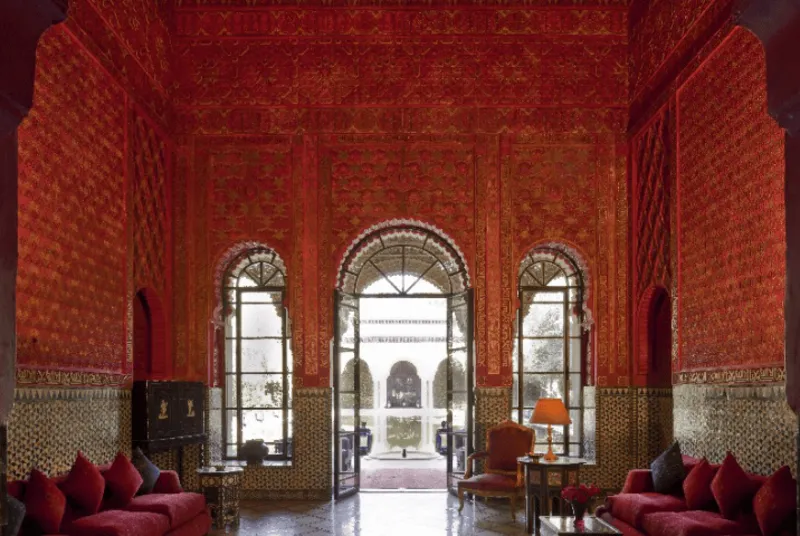
Source: US Department of Justice
Bin Ennakhil and ‘Mr Kiss’
Much of the practical work involved in securing a Moroccan property was later handled by Epstein’s long-term girlfriend, Karyna Shuliak, whose emails show her leading inspections and negotiations in Marrakech. Marc Leon, a partner at Kensington Luxury Properties, told the BBC that Epstein’s attention had settled on Bin Ennakhil as early as 2011.
At that stage, the palace was owned by German waste magnate Gunter Kiss, referred to in emails as “Mr Kiss,” and was valued at €55m. According to a source close to Epstein, the financier believed the property was overpriced and made an initial offer so low that Kiss was offended and initially refused further talks. Negotiations later resumed through intermediaries, with Epstein relying on Shuliak and his local network to continue discussions and inspections. In 2018, Epstein personally visited the palace, after which Shuliak submitted final bids while presenting herself as acting on behalf of billionaire investor Leon Black, a friend of Epstein. Documents show that once it became clear Epstein was the true buyer, Kiss nevertheless agreed to continue negotiations.
Tax Strategy and Final Decision
The released files reveal that at one point Kensington Luxury Properties proposed what it described as a “sale and tax strategy,” under which the property would be officially registered with Moroccan authorities as being sold for €10m, while a separate €20m transaction would cover the shares of the offshore company that owned it. This structure would have allowed Epstein to register his name on the title deeds while significantly reducing the taxes payable in Morocco. The firm, which was at the time the local representative of the UK-based auction house Christie’s, denied any wrongdoing.
“This transaction did not violate any tax regulations,” Mr Leon told the BBC. “Mr Epstein wanted to pay registration fees in Morocco, even though he was under no obligation to do so… in order to own the property in his own name.” Ultimately, Epstein opted to buy only the shares of the offshore company and was still considering how to formally register the palace in Morocco when his arrest in July 2019 brought the long-running deal to an abrupt end.