


I have lived in Asaba for 13 years, and if there’s one thing this city has taught me, it is this:
Culture does not d1e quietly.
In the heart of Asaba sits Ogbogonogo Market.
Noisy, busy, alive with bargaining voices and the scent of pepper, dry fish, and palm oil.
But somewhere between the tomatoes and stockfish, there is a quiet tension.
Ogbono.
In most Nigerian homes, ogbono is comfort. It is Sunday afternoon meal that hits. It is swallow that stretches and laughter around a steaming pot. It is the kind of soup that unites tribes at weddings too, because it is one Nigerian soup that belongs to all tribes and belongs to no tribe.
Yet in Ogbogonogo Market, selling ogbono is a taboo.
Not illegal. Not written on any government notice. But deeply cultural.
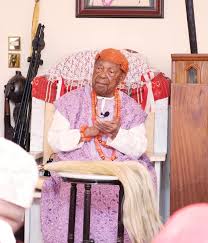
According to traders, the indigenous Asaba people traditionally do not eat, sell, or touch ogbono because it is believed to be associated with ONISHE (The revered mother goddess of Asaba) connected to the River Niger.
Ogbono, according too them is used for spiritual purification. And what belongs to a deity is not for ordinary consumption.
Think about that for a moment.
In a modern city with banks, hotels, smartphones, and social media influencers, there is still a food item that carries spiritual weight strong enough to shape market behavior.
The few women who sell ogbono hide it carefully not because the police will arrest them, not because there is a state law.
But because tradition, especially indigenous tradition can be more powerful than legislation.
And here’s what makes it even more interesting
Non-indigenes who choose to sell it also hide it too.
Why?
Respect? Fear? Avoiding conflict? Or simply understanding that when you trade in another man’s land, you must understand his history?
It makes you realize something powerful:
Markets are not just economic spaces. They are cultural spaces too.
Behind every stall is a story. Behind every product is a belief. Behind every “we don’t sell that here” is a history someone inherited long before you arrived.
And this raises deeper questions though..
How do we balance tradition with modern commerce?
How do younger generations interpret these customs?
What happens when migration, business, and belief collide in the same marketplace?
Whether we see this as preservation or restriction, one thing is undeniable. And it is that culture in Asaba is not theory. It is lived. It is practiced. It influences prices. It influences visibility. It influences behavior.
In a world that is constantly shouting “move on,” Ogbogonogo Market quietly whispers, “remember.”
And maybe, that is the most powerful thing of all.
Because sometimes, the real story of a place is not in what is openly displayed, but in what is carefully hidden.