

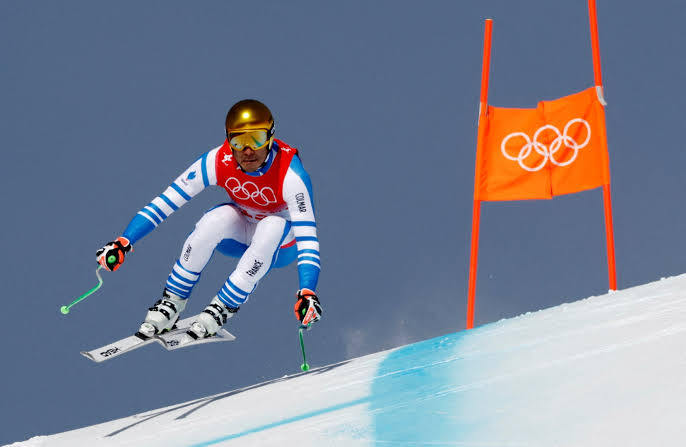

Every four years, the world gathers not on grassy pitches or athletic tracks, but on frozen lakes, steep mountains and icy arenas. The Winter Olympic Games represent one of the most unique spectacles in global sport — a competition where survival-like conditions combine with elite athletic performance.
Unlike the Summer Olympics, which showcase speed and strength in relatively familiar environments, the Winter Olympics push athletes into nature’s harshest settings. Competitors race down mountains at highway speeds, perform acrobatics on ice blades thinner than a coin and ski through freezing winds that can drop temperatures far below zero.
The Games are not just a sporting competition. They are a test of balance, courage and technical precision.
Origins of the Winter Games
The Winter Olympics began in 1924 in Chamonix, France. Initially, the event was not even called the Winter Olympics; it was known as the “International Winter Sports Week” and held alongside the Summer Olympic movement.
At the time, winter sports were largely dominated by European countries where snow and ice were part of daily life. Skiing, skating and sledding were practical transportation methods before they became competitive sports.
The success of the event convinced the International Olympic Committee (IOC) to officially recognise it as the first Winter Olympic Games. Since then, it has grown into a global competition featuring athletes from dozens of countries — including nations without natural snowfall.
What Makes the Winter Olympics Different
The Summer Olympics measure mostly physical abilities — speed, endurance and strength.
The Winter Olympics, however, are heavily dependent on physics and technique.
Athletes must:
- control friction on ice
- manage aerodynamics
- balance momentum
- read snow conditions
In many events, a mistake measured in milliseconds or a shift of body weight by just a few centimeters can cause a crash.
For example, downhill skiers can exceed 130 km/h while navigating narrow courses bordered by trees, cliffs or protective nets. In bobsleigh and luge, athletes lie inches above ice while sliding at speeds comparable to a moving car.
Major Sports in the Winter Olympics
1. Ice Sports
These take place inside arenas or frozen rinks.
- Figure Skating – a blend of sport and artistry, combining jumps, spins and choreography.
- Ice Hockey – one of the most watched events, especially in North America and Europe.
- Speed Skating – pure racing on ice, requiring enormous leg power and stamina.
- Short Track Speed Skating – tighter tracks and frequent collisions make it chaotic and dramatic.
2. Alpine and Snow Sports
Held on mountains and open snowfields.
- Alpine Skiing – downhill racing and slalom events
- Snowboarding – freestyle tricks and racing
- Freestyle Skiing – aerial flips and mogul runs
- Cross-Country Skiing – endurance racing across long snowy terrain
3. Sliding Sports
Often the most dangerous category.
- Bobsleigh
- Luge
- Skeleton
In skeleton, athletes race head-first down an icy track — arguably one of the most extreme Olympic sports.
Why Cold Countries Dominate
Historically, countries like Norway, Germany, Canada, the United States, Sweden and Russia dominate the medal table. The reason is simple: climate and infrastructure.
Winter athletes need:
- mountains
- snow
- ice rinks
- expensive equipment
- year-round training facilities
In tropical countries, including most of Africa, such conditions rarely exist naturally. Training requires travelling abroad, which is costly. This explains why African participation remains small.
However, participation is slowly growing. Athletes from countries like Nigeria, Ghana and Kenya have begun competing in winter sports — especially bobsleigh and skeleton — marking a symbolic expansion of the Games.
The Technology Factor
The Winter Olympics are sometimes described as the most technological Olympics.
Equipment matters enormously:
- skate blade sharpness
- ski wax composition
- suit aerodynamics
- sled engineering
In some events, the difference between gold and silver may depend not only on the athlete but also on the engineering team. Nations invest heavily in sports science, wind tunnels and ice analysis.
This makes the Winter Olympics a combination of sport and applied physics.
Economic and Political Impact
Hosting the Winter Olympics is both prestigious and controversial. Unlike the Summer Games, they require building ski resorts, ice tracks and mountain transport systems, which are extremely expensive.
Many host cities struggle financially after the Games because:
- facilities are hard to reuse
- maintenance costs are high
- tourism benefits are uncertain
Yet countries still compete to host because the event brings global attention, tourism exposure and national pride.
More Than Medals
Beyond competition, the Winter Olympics symbolize human adaptation. Humans were not naturally built to sprint on ice or fly off snow ramps, yet athletes train their bodies and minds to master extreme environments.
The Games also promote international unity. Nations with political tensions often compete peacefully on the same slopes and rinks. For two weeks, global conflict gives way to shared spectacle.
Conclusion
The Winter Olympics are not merely a smaller version of the Summer Games — they are a completely different type of competition. Where the Summer Olympics celebrate human physical capacity, the Winter Olympics celebrate human control over nature.
Athletes face gravity, ice and cold — forces indifferent to nationality or reputation. Victory therefore demands not only strength but bravery, discipline and precision.
Every race down a mountain, every spin on ice and every slide along a frozen track reminds viewers of a simple truth: sport is at its most compelling when humans challenge the limits of their environment.
And nowhere is that challenge colder — or more captivating — than the Winter Olympics.