

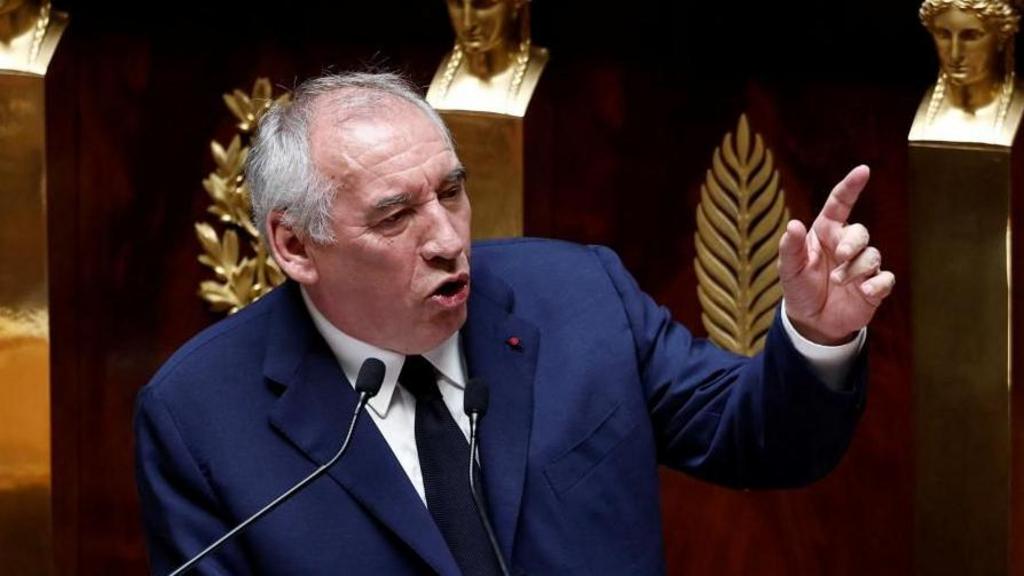

France has been thrown once again into political uncertainty following the collapse of Prime Minister François Bayrou’s government after a decisive no-confidence vote in parliament. The rejection—364 to 194—of Bayrou’s austerity driven budget proposals has triggered yet another search for a prime minister under President Emmanuel Macron, whose second term has been plagued by instability, fractious coalitions, and a widening gap between the Élysée and the French electorate.
The failed austerity plan, aimed at reducing France’s ballooning debt (now estimated at 114% of GDP) included unpopular proposals such as the elimination of national holidays and sweeping public spending cuts worth €44 billion. The plan united both far-right and left-wing deputies in rare alignment, leading to Bayrou’s ouster and intensifying fears of France’s inability to implement coherent fiscal policy. But the domestic political turbulence cannot be understood in isolation; it is a continuation of a deeper crisis in France’s political regime, a legacy of Macron’s disruptive presidency and the steady advance of Marine Le Pen’s populist movement.
Macron’s Fragile Political Legacy
When Emmanuel Macron first rose to power in 2017, he positioned himself as a centrist reformer capable of bridging France’s traditional left-right divide. His party, La République En Marche, initially captured parliamentary majorities and sought to modernize the French economy while reinforcing the country’s role as a leader in the European Union. Yet his reforms often came at significant political cost.
From the Yellow Vest protests of 2018 (sparked by fuel tax hikes and widening economic inequalities) to the mass strikes over pension reforms in 2023, Macron’s presidency has been defined by confrontation with France’s street movements and trade unions. Despite winning re-election in 2022 against Marine Le Pen, his second term lacked the parliamentary majority he once enjoyed. Since then, Macron has relied on fragile alliances and the controversial use of Article 49.3 of the French Constitution, which allows the government to force legislation through without parliamentary approval. These tactics eroded democratic trust and emboldened opposition forces.
The collapse of Bayrou’s government illustrates the limits of Macron’s ability to command parliamentary consensus. It also raises doubts about whether his vision of a centrist, pro-European France can survive beyond his tenure.
Marine Le Pen’s Steady Advance
Meanwhile, Marine Le Pen and her National Rally (Rassemblement National) party have capitalized on Macron’s waning authority. In the 2024 European Parliament elections, Le Pen’s bloc made significant gains, riding a wave of Euro scepticism and disillusionment with austerity politics. Her strategy of “normalizing” the far right (shifting rhetoric from outright populist anger to themes of sovereignty, security, and economic protectionism) has resonated with working-class voters and younger demographics alike.
Le Pen has been particularly effective at exploiting Macron’s foreign policy contradictions. While Macron has positioned France as a defender of European unity and NATO cohesion, domestic critics argue that these commitments have drained resources from urgent internal challenges. Rising inflation, high youth unemployment, and persistent rural discontent have reinforced the perception that Paris prioritizes Brussels over Bordeaux.
Implications for France’s Former Colonies
The collapse of Bayrou’s government also reverberates beyond Europe. France’s relationship with its former colonies in Africa and the Pacific is already under strain. Over the past decade, Paris has faced successive military coups in Mali, Burkina Faso, and Niger—countries once central to its influence in the Sahel. Anti-French sentiment has surged across West Africa, with military juntas pushing out French troops and turning instead to alternative partners such as Russia’s Wagner Group.
The perception of political fragility in Paris risks accelerating this decline in influence. Governments in Africa, already skeptical of France’s reliability, may view the current chaos as confirmation that Paris is too inwardly consumed to project consistent foreign policy. This could further erode France’s ability to shape regional dynamics, from counterterrorism operations in the Sahel to economic agreements within the CFA franc zone.
Moreover, Marine Le Pen’s ascent introduces new uncertainties. While Macron has maintained a rhetoric of global responsibility and European leadership, Le Pen has signaled a more nationalist foreign policy. Her vision emphasizes tightening immigration controls, recalibrating ties with Brussels, and prioritizing French domestic needs over costly external engagements. For African leaders, this could mean a less interventionist France but also a more transactional relationship, one less cushioned by historical or cultural ties.
A Diplomatic Turning Point
For France’s allies and rivals alike, the collapse of Bayrou’s government underscores a broader European dilemma: the rise of fragmented politics undermining stable governance. France is not alone in this trend, but as a permanent member of the UN Security Council and a nuclear power, its instability carries greater weight.
In the context of a shifting global order—where Russia, China, and other emerging powers are asserting multipolar influence—France’s domestic weakness could diminish Western cohesion. Questions will be asked in Brussels, Washington, and African capitals about whether Paris can remain a reliable partner in diplomacy, defense, and development.
As Macron scrambles to appoint yet another prime minister, the deeper issue remains unresolved: France is grappling with a legitimacy crisis, one where the gap between government elites and public sentiment has become untenable. The political collapse is not just about Bayrou’s austerity package; it is a signal of a country in search of new direction, caught between its post-colonial responsibilities, European commitments, and the growing appeal of nationalist alternatives.
France has weathered political storms before, but this moment feels particularly decisive. Whether the country reclaims stability or slides further into fragmentation will determine not only its future but also its role in a rapidly transforming global landscape.