

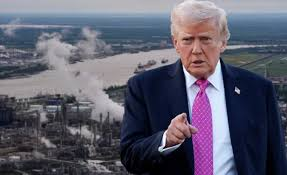

US President Donald Trump has formally reversed a key scientific ruling from the Obama administration that has served as the cornerstone of federal climate regulations for more than a decade, signaling a major shift in US environmental policy. The so-called 2009 “endangerment finding,” issued by the Environmental Protection Agency (EPA), declared that a range of greenhouse gases including carbon dioxide and methane posed a significant threat to public health and welfare, effectively establishing the legal framework for regulating emissions across multiple sectors.
The White House described the move as “the largest deregulation in American history,” emphasizing that it would reduce production costs for automakers by $2,400 per vehicle and save the US economy over $1 trillion, while critics warned it could have devastating public health and environmental consequences.
The 2009 EPA finding was issued during Barack Obama’s first term in response to mounting scientific evidence of climate change and the impact of human activity on the planet. The ruling identified six greenhouse gases, including carbon dioxide, methane, nitrous oxide, hydrofluorocarbons, perfluorocarbons, and sulfur hexafluoride, as a danger to human health. With Congress unable to pass comprehensive climate legislation, the finding became the legal lynchpin for federal action, providing the EPA with authority to regulate emissions from vehicles, power plants, oil and gas operations, landfills, and even aircraft.
“The endangerment finding has really served as the lynchpin of US regulation of greenhouse gases,” said Meghan Greenfield, a former EPA and Department of Justice attorney. “So that includes motor vehicles, but it also includes power plants, the oil and gas sector, methane from landfills, even aircraft. So it really runs the gamut, all of the standards for each of the sectors is premised on this one thing.”
Speaking in the Oval Office on Thursday, President Trump characterized the 2009 ruling as a “disastrous Obama era policy that severely damaged the American auto industry and massively drove up prices for American consumers.” He argued that the regulation had fueled what he called “the Green New Scam, one of the greatest scams in history,” a direct critique of Democrats’ climate agenda.
Administration officials underscored that the policy reversal would cut regulatory burdens on automobile manufacturers, translating into lower production costs per vehicle and broader energy savings. White House Press Secretary Karoline Leavitt told reporters, “Reversing the regulation will reduce automobile manufacturers’ spending by $2,400 per vehicle and is projected to save the economy more than $1 trillion, while lowering costs for American consumers and energy producers alike.”
Former President Obama, responding on his social media platform X, sharply criticized the rollback, warning of serious consequences for public health and climate resilience. “Without it, we’ll be less safe, less healthy and less able to fight climate change all so the fossil fuel industry can make even more money,” he wrote, framing the reversal as a direct threat to the health and security of Americans.
Environmental groups echoed these warnings, emphasizing that the move represents the most significant climate policy rollback in US history. Peter Zalzal of the Environmental Defense Fund highlighted the potential public costs: “It’s going to force Americans to spend more money, around $1.4 trillion in additional fuel costs to power these less efficient and higher polluting vehicles. We’ve also analysed the health impacts and found that the action would result in up to 58,000 additional premature deaths, 37 million more asthma attacks.”
The legal and regulatory implications of overturning the 2009 endangerment finding are profound. By removing the foundational determination that greenhouse gases constitute a danger to public health, the Trump administration effectively eliminates the statutory basis for regulating emissions across virtually all sectors previously under EPA jurisdiction.
Without the finding, new or stricter emission standards could be challenged or rendered unenforceable, affecting transportation, energy, and industrial sectors that have relied on federal oversight to limit greenhouse gas output. Analysts note that such a rollback could set back US climate policy by years, particularly at a time when global efforts to meet targets under the Paris Agreement demand coordinated action.
Critics argue that the policy reversal also undermines decades of scientific consensus and regulatory practice. In the absence of the endangerment finding, federal agencies lack a clear legal mandate to limit emissions, raising questions about the future of climate change mitigation efforts in the US. Meghan Greenfield added, “The endangerment finding served as the legal linchpin not just for cars, but for all major greenhouse gas regulations. Removing it is unprecedented and leaves regulatory frameworks vulnerable to challenge.”
Environmental advocates warn that the decision could embolden state-level rollbacks, weaken industry accountability, and reduce incentives for technological innovation in energy efficiency and emissions reductions.
From the administration’s perspective, the repeal is framed as a necessary relief for American businesses and consumers. Officials argue that compliance with the Obama-era finding imposed significant costs on manufacturers and ultimately on vehicle buyers, contributing to higher prices for cars and trucks.
Trump’s team insists that eliminating the regulatory burden will stimulate production, lower consumer costs, and enhance economic growth. Leavitt explained, “By lifting the regulatory constraints, the cost savings to manufacturers can be passed on to consumers, making vehicles more affordable while fostering a competitive market environment.”
The reversal has already sparked legal and political challenges. Environmental organizations have pledged to contest the move in federal court, citing both procedural and substantive concerns. Legal experts note that overturning a scientifically grounded regulation that has formed the basis for multiple emission standards will likely result in protracted litigation. Observers also emphasize that the decision signals a broader philosophical shift in federal policy regarding climate change, favoring short-term economic relief over long-term environmental and public health objectives.
Historically, the 2009 endangerment finding followed a landmark Supreme Court decision in Massachusetts v. EPA (2007), which affirmed that greenhouse gases qualify as air pollutants under the Clean Air Act. That ruling empowered the EPA to regulate emissions and set the stage for Obama’s climate initiatives, including stricter fuel economy standards and the Clean Power Plan. Trump’s reversal, therefore, does not merely adjust one regulation but dismantles a key legal mechanism supporting nearly all federal climate efforts over the past decade, effectively challenging the United States’ leadership in global climate mitigation.