

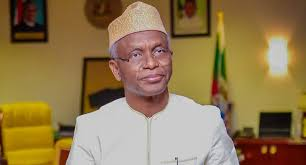

Former Kaduna State Governor, Malam Nasir El‑Rufai, has sounded the alarm that he could be arrested by the federal government, saying recent developments involving the detention of political associates indicate he may be the next target of what he described as political intimidation. In a recent interview with BBC Hausa, El‑Rufai who defected from the ruling All Progressives Congress (APC) to the African Democratic Congress (ADC) framed his warning within a broader debate over governance, political pressure, and insecurity in Nigeria, raising concerns about the treatment of opposition figures as the country heads toward the 2027 elections.
Speaking to BBC Hausa on Wednesday, El‑Rufai expressed clear anxiety about his personal safety and political future, citing the arrests of associates as evidence of a pattern he believes could culminate in his own detention. “Four people we worked together in Kaduna have been arrested; so it’s only a matter of time before they come for me too,” he said, highlighting what he sees as a troubling escalation of tactics aimed at dissenting voices. His comments reflect deepening friction between prominent opposition voices and the APC‑led federal authorities, a dynamic that has drawn widespread attention in political circles and the media.
El‑Rufai also spoke of what he perceives as intense political pressure being exerted on politicians nationwide. He suggested that many are being compelled to align with the APC or stay within its fold as a matter of survival rather than ideological conviction. “Political pressure is being mounted on politicians to defect to the APC or remain within the ruling party, forcing decisions not out of conviction but survival,” he said, portraying Nigeria’s political environment as increasingly coercive for those outside the ruling elite.
The former governor ruled Kaduna State for eight years under the APC platform, serving from 2015 to 2023, and was widely seen as a key figure within the party before his departure. However, in recent times, El‑Rufai has intensified his criticisms of President Bola Ahmed Tinubu’s administration and party leadership, openly challenging policy directions and governance strategies while positioning himself within a broader opposition framework under the ADC.
A significant backdrop to El‑Rufai’s allegations is Nigeria’s ongoing struggle with insecurity, particularly in the northern region, where banditry, kidnappings, and terrorist activity continue to inflict civilian and economic harm. El‑Rufai has been one of the most prominent former governors publicly critical of the federal government’s approach to these challenges. In September 2025, he accused the federal government of empowering armed bandits through what officials describe as “non‑kinetic” security strategies — policies that involve negotiations, incentives, and community engagement rather than purely military action.
“What I will not do is to pay bandits, give them a monthly allowance, or send food to them in the name of non‑kinetic,” El‑Rufai said in a televised interview. “It’s nonsense; we’re empowering bandits.” He argued that monthly stipends and food supplies effectively embolden criminal groups, strengthening their capacity to purchase weapons and sustain attacks rather than dismantling their networks.
El‑Rufai’s stark language — including his view that negotiation and appeasement are counterproductive sparked significant controversy. He urged a more forceful approach to insecurity, asserting that empowering criminal actors undermines broader national security efforts and contributes to the persistence of violence in affected states such as Kaduna, Katsina and Zamfara. “You don’t empower your enemy; you don’t give him money to go and buy sophisticated weapons,” he said, framing the federal policy approach as a mistake that must be corrected.
The government and its security apparatus have publicly rejected El‑Rufai’s assertions. In response, the Office of the National Security Adviser (ONSA) dismissed the allegations as baseless and false, stating that no government arm has engaged in ransom payments or incentives to criminal groups. In a detailed rebuttal, ONSA described its strategy as combining decisive military operations with community engagement to address grievances and improve security outcomes contradicting El‑Rufai’s description of policy.
Critics of El‑Rufai’s commentary have accused him of politicizing insecurity for personal or political ends. The North‑Central APC Forum labeled his claims as propaganda and lies, asserting that insecurity levels have in some areas been reduced through government intervention and warning that such narratives could undermine public trust and national unity. The forum emphasized that the Tinubu administration’s efforts, including military actions and community programs, have delivered tangible progress in parts of the North‑Central region.
Nevertheless, supporters of El‑Rufai’s stance argue that open debate on security policy is essential in a democratic society, especially as Nigeria seeks more effective ways to protect citizens and uphold the rule of law. Civil society groups have also weighed in, suggesting that public dialogue including critique of government strategies — should remain robust and free from attempts to suppress dissenting voices.
Another element of the mounting political tension relates to the arrest and legal challenges facing former Attorney General of the Federation and Minister of Justice, Abubakar Malami, who also defected from the APC to the ADC. Malami has been accused by the Economic and Financial Crimes Commission (EFCC) of offenses including abuse of office and money laundering, and was later rearrested by the Department of State Services on fresh allegations relating to terrorism financing. Malami has denied wrongdoing, describing the charges as a “political witch‑hunt” linked to his opposition stance — a characterization that parallels concerns raised by El‑Rufai.
The African Democratic Congress (ADC), which has drawn a growing number of high‑profile defectors from the APC, is positioning itself as a significant opposition force ahead of the 2027 elections. Political analysts note that defections by figures such as El‑Rufai and Malami not only reflect internal divisions within the ruling party but also illustrate broader shifts in Nigeria’s political landscape, where alternative platforms seek to challenge long‑standing party dominance.
At the time of reporting, neither the Federal Government nor the APC had issued an official response to El‑Rufai’s allegations of possible arrest and political intimidation, leaving a vacuum in official commentary that continues to fuel debate across media platforms and public discourse. This silence has been interpreted variously by supporters as confirmation of underlying tensions, and by critics as a prudent avoidance of escalating political rhetoric.
The broader political climate in Nigeria marked by rising tensions between the ruling party and opposition figures, spirited debate over insecurity strategies, and allegations of selective enforcement of law against critics forms the backdrop to El‑Rufai’s claims.