

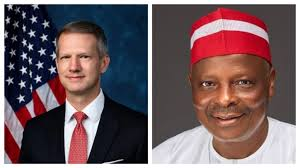

The Kwankwasiyya Movement has expressed grave concern over a proposed bill before the United States Congress, the Nigeria Religious Freedom and Accountability Act 2026 (HR 7457), which allegedly references its leader, Senator Rabiu Musa Kwankwaso, in connection with claims of “severe religious freedom violations.”
The Movement’s spokesperson, Habibu Sale Mohammed, issued a statement on Wednesday night, describing the allegations as “unfounded, misleading, and inconsistent with the verifiable public record of Senator Kwankwaso’s life and service,” emphasizing that the claims are at odds with over three decades of documented public service.
The proposed legislation, HR 7457, is part of a broader initiative by some US lawmakers to monitor and hold foreign officials accountable for alleged human rights abuses, including violations of religious freedom. The bill reportedly recommends targeted sanctions against individuals deemed responsible for such violations in Nigeria.
In its current form, the legislation references Senator Kwankwaso by name, alongside other figures, prompting both domestic and international attention. The Kwankwasiyya Movement and the New Nigeria Peoples Party (NNPP) have expressed shock and concern at this development, noting that the inclusion of Kwankwaso may be politically motivated or based on incomplete information.
Senator Kwankwaso has held multiple high-profile positions in Nigeria, including Deputy Speaker of the House of Representatives, two-term Governor of Kano State, Minister of Defence, Senator of the Federal Republic, and presidential candidate. According to the Movement, throughout these roles, he has consistently promoted peaceful coexistence, religious inclusion, and national unity, and has never been “indicted, prosecuted, or credibly accused of religious persecution, extremism, or human rights violations.”
The statement underscored that constitutional developments involving Sharia-based legal frameworks in northern Nigerian states, including Kano, were neither unique to Kano State nor the initiative of any single individual.
The Kwankwasiyya Movement stressed the broader legal context of such frameworks, noting that “multiple states adopted similar legal frameworks within the ambit of Nigeria’s federal constitution, legislative processes, and judicial safeguards. These systems remain subject to constitutional oversight and appellate review.”
The statement further highlighted, “To single out Senator Kwankwaso while similar constitutional arrangements exist across several states raises serious questions about the basis, consistency, and evidentiary standard behind such a recommendation,” emphasizing the Movement’s concern that the bill unfairly isolates the senator without clear evidence.
The Movement also called on the US Congress to remove Kwankwaso’s name from the bill, suggesting that political motivations may underlie its inclusion. “We believe that the inclusion of Senator Kwankwaso’s name was influenced by certain individuals who are on a mission to settle personal scores with him or by political rivals, or both, and the Congress should not allow its respected chamber to be used for this,” the statement read. The Movement stressed that such allegations must be grounded in verifiable facts rather than generalized assumptions or political rivalry, insisting that fairness and due process prevail.
During his tenure as Governor of Kano State, Senator Kwankwaso reportedly took decisive measures to curtail extremist threats, protect lives across religious divides, and maintain constructive engagement with Christian leaders and minority communities, further solidifying his reputation as a promoter of religious inclusion. The Movement also cited his 2023 presidential ticket, which paired him with Bishop Isaac Idahosa, as a reflection of his enduring commitment to national balance and religious inclusion.
“Senator Rabiu Musa Kwankwaso remains a nationalist, a democrat, and a statesman whose public service has been anchored on justice, unity, and inclusive governance. We are confident that fairness, due diligence, and objective assessment will ultimately prevail,” the statement concluded.
The New Nigeria Peoples Party (NNPP) also expressed shock over the proposed bill, which reportedly names Senator Kwankwaso among individuals recommended for targeted sanctions over alleged religious freedom violations in Nigeria, as reported by PUNCH. The dual concern of the Movement and the party underscores the sensitivity surrounding the bill’s potential impact on Nigeria-US relations and the reputations of prominent political figures.
The Kwankwasiyya Movement further highlighted that international relations and diplomatic engagement require a nuanced understanding of sovereign legal systems. “The United States maintains diplomatic and strategic relationships with several sovereign nations whose legal systems incorporate Islamic jurisprudence. It would therefore be inconsistent to treat Nigeria’s constitutionally grounded legal pluralism differently without clear, individualized evidence of wrongdoing,” the statement said, situating the controversy within broader considerations of international law, constitutional sovereignty, and respect for Nigeria’s federal legal processes.