

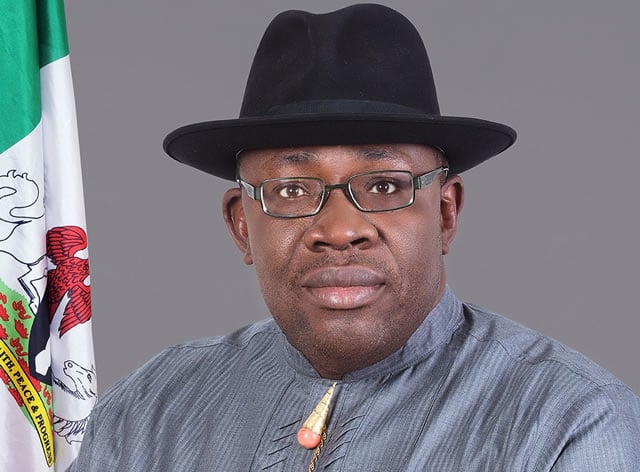

Senator Seriake Dickson, the former Governor of Bayelsa State and a ranking member of the National Assembly, has stated that the country is not yet prepared for real-time electronic voting and that the inclusion of the term real time in electoral transmission discourse does not in itself guarantee transparency in elections.
Senator Dickson made the remarks during an interview in which he addressed the controversy surrounding Clause 60 subsection 3 of the Electoral Act Amendment Bill and the recent deliberations in the Senate on the matter. He argued that the concept of real-time transmission has been widely misunderstood in public discourse and that Nigeria is not yet operating an electronic voting system where votes are cast digitally and instantly recorded on an electronic portal. According to him, the use of the term real time in the context of result transmission is unnecessary and does not automatically translate to transparent elections, stressing that transparency is dependent on a broader set of institutional safeguards and legal frameworks rather than the presence of a single technological feature.
The debate over electronic transmission of election results has been a recurring issue in Nigeria’s electoral reforms over the years, with political parties, civil society organisations, election observers, and technology experts advocating for increased use of digital systems to reduce manipulation and improve public confidence in electoral outcomes. The Independent National Electoral Commission introduced the Result Viewing Portal, known as IREV, to allow the public to view polling unit results uploaded by presiding officers. However, the extent to which electronic transmission should be legally mandated and whether manual collation should remain permissible has remained contentious within the National Assembly and among political stakeholders.
The Senate recently revisited the Electoral Act Amendment Bill during an emergency plenary session following public criticism of an earlier decision perceived as weakening the legal framework for electronic transmission. Lawmakers approved provisions that require presiding officers to transmit results electronically to the commission’s portal while retaining manual collation as a backup in cases of network failure. However, the Senate stopped short of making real-time transmission compulsory, a decision that critics argue could leave room for manipulation of results during the collation process. Senator Dickson maintained that the Senate’s actions should not be interpreted as a setback for democratic development, asserting that the legislative process often involves compromise and incremental progress.
In explaining his position, Dickson emphasised that Nigeria does not yet conduct elections through fully electronic voting mechanisms, where voters cast ballots digitally, and results are instantly collated. He described the insistence on real-time transmission as superfluous in the current context, noting that the absence of such a requirement does not necessarily undermine transparency. He argued that transparency is primarily secured through the integrity of polling unit results and the documentation of votes using the EC8A forms, which are signed by party agents and issued to them as official records of outcomes. According to him, once votes are counted, recorded, and transmitted electronically to the commission’s portal, the fundamental requirements for transparency are met, regardless of whether the transmission occurs in real time.
Dickson also clarified that he was expressing his personal views and not speaking as a spokesperson for the Senate, highlighting his experience as a ranking member of the committee involved in electoral reforms and his participation in the legislative process. He disclosed that discussions on electronic transmission had been ongoing for nearly two years, involving workshops, conferences, and consultations with the Independent National Electoral Commission. He noted that resistance to electronic transmission has historically been linked to political divisions and opposition from certain political interests, particularly within ruling parties in previous legislative assemblies. 
The senator acknowledged that the Senate and the House of Representatives had initially reached a consensus on protecting the IREV system and strengthening electronic transmission requirements, but that the agreement was altered during Senate proceedings, which he described as unfortunate. He stated that the commission had assured lawmakers of its capacity to implement electronic transmission and that he had confronted Senate leadership upon his return from bereavement leave, receiving assurances that a compromise would be reached. Despite his reservations about provisions allowing manual collation in cases of network failure, he conceded that parliamentary decisions are ultimately guided by majority consensus.
Beyond electronic transmission, Dickson raised concerns about other proposed electoral reforms, including suggestions to compel all political parties to adopt direct primaries. He argued that such a provision would amount to undue imposition by the ruling party and could disadvantage smaller parties. On the issue of accountability, he reiterated that the electoral commission remains responsible for ensuring credible elections, noting that existing guidelines already mandate electronic transmission to the result portal even without the proposed amendments. He also defended the Supreme Court’s 2023 ruling, which affirmed that the EC8A forms constitute the primary legal evidence of election results, while the IREV portal serves a supportive but not determinative role.
The controversy over the Electoral Act Amendment Bill reflects broader tensions in Nigeria’s democratic process, where technological innovations are often viewed as potential solutions to longstanding challenges such as electoral fraud, manipulation of results, and public distrust in electoral institutions. While many civil society groups and opposition parties have advocated for real-time transmission as a safeguard against post-polling manipulation, others argue that the emphasis should be on strengthening institutional processes, legal frameworks, and the integrity of polling unit documentation.
Dickson concluded that progress in electoral reform should be gradual and pragmatic, stressing that incremental improvements in electronic transmission represent meaningful progress even if they fall short of the expectations of some stakeholders. He argued that democratic reforms require compromise and sustained institutional development rather than abrupt shifts that may not be supported by the existing technological and administrative infrastructure.
Samuel Aina