

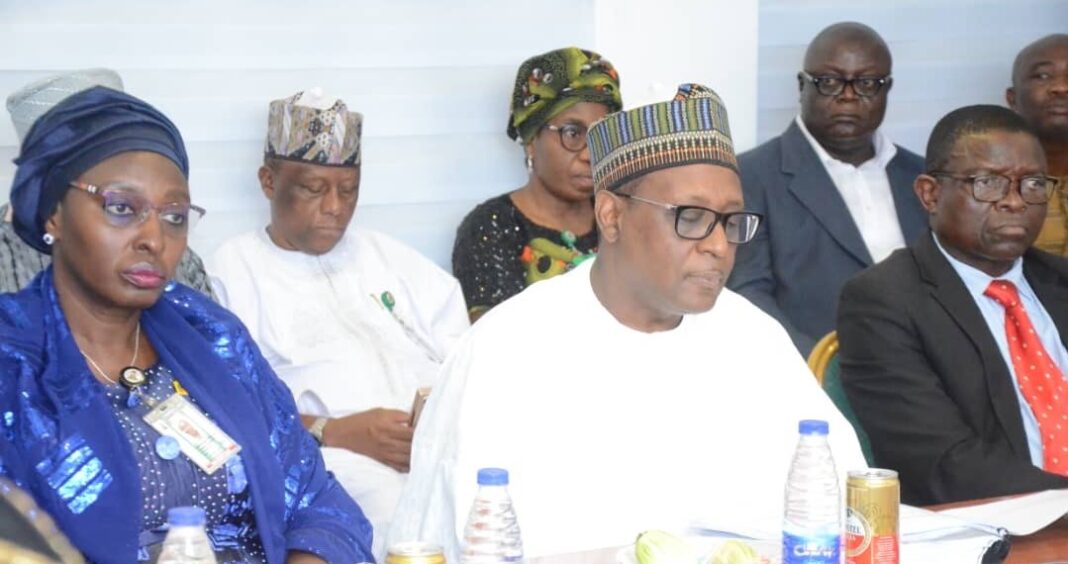

Mohammed Pate, Nigeria’s Minister of Health, has revealed that the Ministry under his watch received only N36 million out of the N218 billion allocated for the 2025 capital budget.
Mr Pate made this disclosure on Monday, 9th February, 2026, before the country’s House of Representative during the defence of the ministry’s 2026 budget.
The poor execution of the 2025 capital budget was said to have stemmed from inadequate cash flows under the Office of the Accountant-General’s bottom-up planning system.
While the personnel budget was fully released and utilized, capital projects faced recurrent setbacks, including delays in Nigeria’s counterpart funding which blocked access to donor-supported funds.
Productive Policies, Poor Implementation
To protect the constitutionally guaranteed rights of all Nigerians to health under Chapter two of Nigeria’s Constitution, numerous frameworks have been developed to ensure adequate health deliveries. Section 17 of the constitution mandates the State to direct its policies towards ensuring that, “there are adequate medical and health facilities for all persons.”
The Nigeria’s Health Ministry operates under frameworks such Vision 20:2020, a program aimed to establish a modern, efficient, and affordable healthcare system, ensuring universal access to quality health services by 2020.
Also, NDP 2021–2025 is a medium–term national development plan designed to accelerate economic growth, reduce poverty, and build a competitive economy across different sectors including health.
The Second National Strategic Health Development Plan is another initiative that provides the strategic roadmap for the health sector, anchored on the 2016 National Health Policy. Through the achievement of Universal Health Coverage (UHC), NSHDP II was introduced to ensure healthy lives and promote well-being for all Nigerians.
Initiatives like the ones above focused on accelerating improvements of healthcare services in the country, reducing maternal/child mortality, combating diseases like HIV/AIDS, TB, and malaria, strengthening primary healthcare (PHC), and enhancing human resources. However, factors such as poor performance stand out among other reasons that paralysed enhanced healthcare deliveries in Nigeria.
Implications of Poor Fiscal Performance
Nigeria has earned a reputation for catastrophic health poverty and expenditure, with over 70 percent of total health expenditure being paid out-of-pocket by citizens, highest figure in the world.
In 2021, the federal government only allocated 5 per cent of its budget to the health sector — a drastic reduction compared to the 15 per cent pledged as part of the 2001 Abuja declaration. This has driven the majority of problems plaguing the healthcare industry such as outbound medical tourism, deteriorating medical infrastructure, low government budget allocation, and poor compensation and subsequent emigration of skilled healthcare workers.
A report by PremiumTimes in 2024 uncovered how the oldest hospital in the country’s richest state (Lagos) was left in poor condition due to underfunding. This underlined that Nigerian governments were not giving the health sector the topmost priority it deserved.
With the fastest global-growing population of 5.5 per cent live births per woman and a population growth rate of 3.2 per cent annually, Nigeria’s population is expected to hit 400 million by 2050, becoming the third most populated country in the world. Yet, the healthcare infrastructure in the country is still underdeveloped and lacks modern medical facilities while medical professionals are in short supply, with only about 35,000 doctors instead of 237,000 needed, according to WHO.
Another causative crisis of the menace is the high infant mortality rate of 71 per 1,000 live births and a maternal mortality rate of 79 per 1,000 live births.
Prepared through the Government Integrated Financial Management Information System, the proposed 2026 budget offered a glimpse of hope, aligning with President Bola Tinubu’s health priorities. The Chairman of the House Committee on Healthcare Services, Amos Magaji, has charged the ministry to submit detailed records of donor funds received and their utilization.