

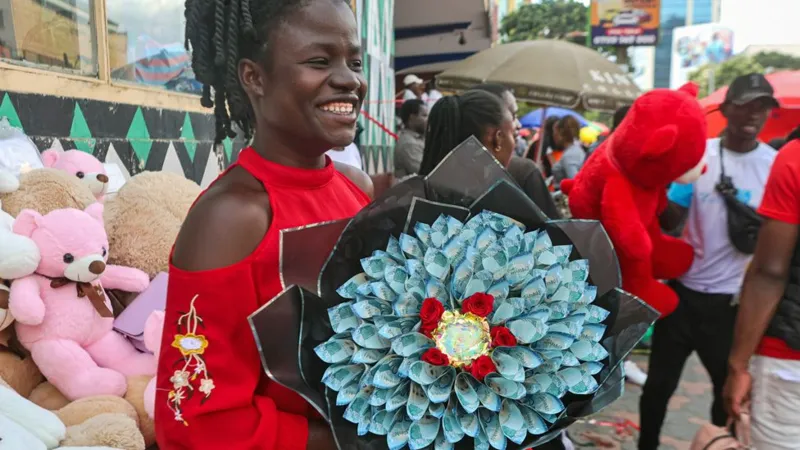

Kenya’s Central Bank (CBK) has issued a stern warning to the public against using banknotes to create floral-like bouquets and decorative arrangements, a trend that has gained popularity across the East African nation. The advisory, released on Monday, comes as Valentine’s Day approaches, a period when such cash bouquets are most in demand. Often showcased by celebrities and social media influencers, the practice involves folding, rolling, and fastening Kenyan currency notes of various denominations into shapes that resemble flowers, which are then presented as lavish gifts.
According to the CBK, the process of creating these cash bouquets constitutes defacement of the national currency and could attract criminal penalties. “Banknotes are being folded, rolled, glued, stapled, pinned, or otherwise affixed using adhesives or fastening materials, compromising their integrity,” the bank stated. The advisory notes that those found guilty of such actions could face up to seven years in prison under Kenyan law, emphasizing that damaging legal tender is a serious offense.
Beyond legal concerns, the CBK highlighted practical problems caused by the trend. The manipulation of banknotes affects the functionality of automated teller machines (ATMs) and cash-counting machines, increasing the frequency of rejected notes. “These practices impose unnecessary costs on both the public and the Central Bank, as damaged notes must be replaced to maintain circulation integrity,” the advisory said. Officials stressed that while the bank does not oppose giving cash as gifts, it urges alternative methods that preserve the quality and usability of the currency.
The popularity of cash bouquets has grown steadily, fueled by social media videos and influencer content showing extravagant displays of rolled and fastened notes. In Kenya, such displays are often associated with celebrations, anniversaries, and Valentine’s Day gifting. Influencers on platforms such as X, Instagram, and TikTok have helped popularize the practice, with some posts showcasing bundles of colorful notes arranged in elaborate “flower” shapes that mimic traditional bouquets.
Cultural and economic context also informs the CBK’s warning. Kenya is a top global producer of flowers, with its floriculture industry contributing significantly to export revenue and employment. Fresh-cut flowers are widely available and traditionally given during occasions like Valentine’s Day. Some observers have suggested that the trend toward cash bouquets not only defaces currency but also undermines the country’s thriving flower industry, which provides a natural and sustainable alternative to synthetic or money-based gifts.
The public reaction to the CBK advisory has been largely supportive, with many Kenyans expressing relief that the trend is being curtailed. On social media, one user commented, “The public notice from the Central Bank of Kenya has saved men ahead of this year’s Valentine’s Day. Back to basics, bouquet of flowers it is.” Others highlighted the financial implications, noting that cash bouquets can be expensive and wasteful, especially when large denominations are damaged in the process.
Experts also note that the trend has broader implications for currency management and financial literacy. Banknotes are legal instruments designed for circulation, not decoration, and mishandling them can erode public confidence and complicate banking operations. The CBK’s warning underscores the importance of responsible handling of national currency and adherence to financial regulations to protect both the integrity of the banking system and public funds.