


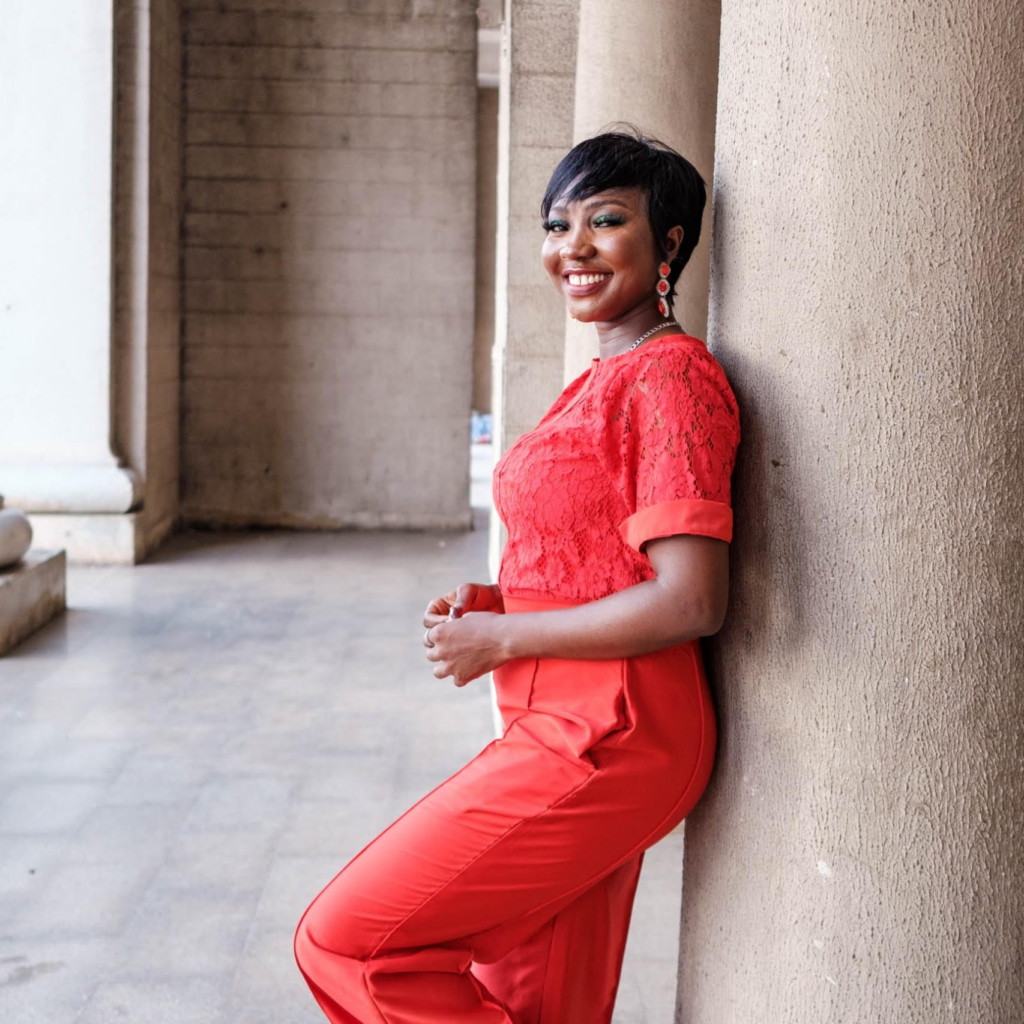
For Tinuade Mary O., every day is a balancing act between her passion for women’s advocacy and the unpredictable demands of Endometriosis. In her early thirties and serving as the Executive Director of the Women Too Africa Foundation, she navigates a world where chronic pain, nerve issues, and societal misconceptions intersect. In this exclusive interview, Tinuade opens up about her journey, the realities of living with an invisible disability, and the resilience that keeps her moving forward.
What Is Endometriosis?
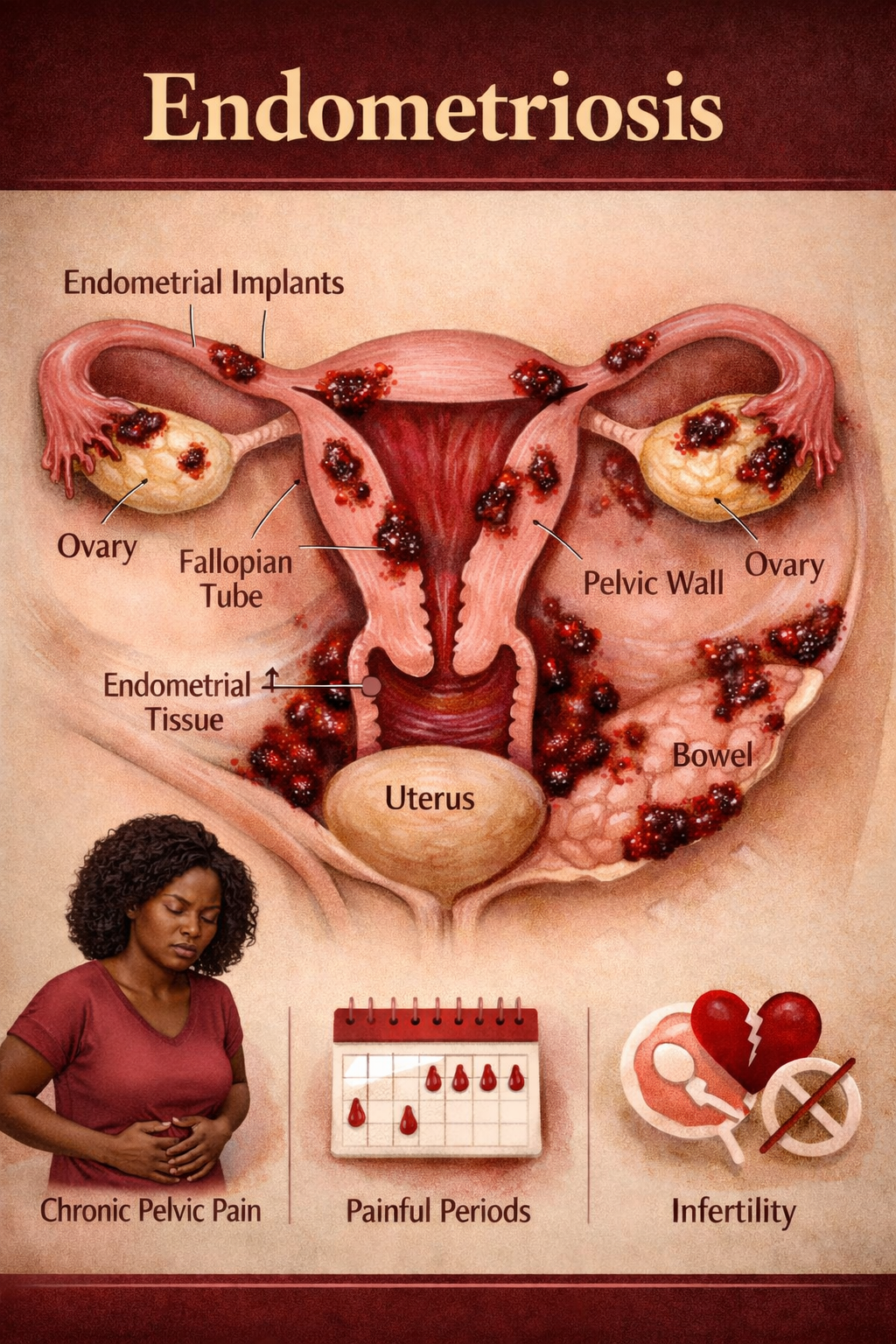
Endometriosis is a chronic, inflammatory reproductive disease in which tissue very similar to the lining of the uterus (called endometrium) begins to grow outside the uterus most commonly on the ovaries, fallopian tubes, pelvic lining, or nearby organs. Unlike the normal endometrial tissue that sheds each menstrual cycle, this displaced tissue has no natural way to exit the body, so it continues to behave like endometrium by thickening and breaking down. This leads to a constant cycle of inflammation, bleeding, irritation, and scar tissue formation in places where endometrial‑like tissue doesn’t belong. Because of this, endometriosis is not simply a painful period; it’s a systemic condition that can affect many aspects of a person’s health from reproductive function to gastrointestinal and urinary systems and can profoundly diminish quality of life over time. Researchers and clinicians often describe it as a full‑body inflammatory condition rather than a limited gynecological issue.
According to the World Health Organization (WHO), Endometriosis affects about 10% of reproductive‑age women and girls worldwide, which is roughly 190 million individuals globally.
The Misunderstood Causes of Endometriosis
The causes of Endometriosis are still not fully understood, and there is no single known origin that explains all cases. Medical science suggests several contributing mechanisms rather than one definitive cause. One widely accepted theory is retrograde menstruation, where menstrual blood containing endometrial cells flows back through the fallopian tubes into the pelvic cavity and implants on organs or tissues instead of exiting the body. Other possibilities involve cellular metaplasia, where certain cells outside the uterus transform into endometrial‑like cells, and the idea that stem cells circulating through blood or lymphatic vessels seed new growths. Hormonal factors, especially elevated or persistent estrogen exposure, seem to fuel the growth and persistence of these tissues, but hormone presence alone doesn’t fully explain why some people develop the disease and others don’t. Genetics also appears to play a role, with individuals having a first‑degree relative with Endometriosis being more likely to develop it themselves, though no single gene has been identified as the sole cause. Finally, immune system dysregulation may contribute, as people with Endometriosis often have altered inflammatory and immune responses, suggesting the body’s ability to clear misplaced tissue may be impaired.
Signs and Symptoms: More Than Just Bad Periods
Global health research shows that Endometriosis is far from rare. According to the World Health Organization (WHO), approximately 10 percent of reproductive‑age girls and women worldwide about 190 million individuals are affected by Endometriosis. This statistic emphasizes that what many dismiss as “normal period pain” can actually be part of a chronic disease that spans continents and cultures. The WHO also notes that early diagnosis and effective treatment remain limited in many regions, including low‑ and middle‑income countries, which contributes to long delays often years between symptom onset and formal diagnosis. These delays can worsen both physical and emotional outcomes for those living with the disease. Additionally, research indicates that Up to 30–50 percent of women with infertility may have Endometriosis, highlighting the disease’s significant impact on reproductive health.
A Diagnosis That Changed Everything
Tinuade’s journey began after surgery for fibroids in 2024. “Within six months, I was hit with this intense abdominal pain. At first, my GP thought it was just a small cyst, but the pain during my periods and ovulation was on another level.”
She remembers vividly how the pain escalated: “I realized I was in deep trouble when I went through three whole sachets of paracetamol in just four days. I literally ran to the hospital, and that’s when scans revealed an Endometrioma a ‘chocolate cyst.’ That was the moment I learned I had Stage 3 Endometriosis.”
This kind of ovarian cyst, known as a chocolate cyst, is filled with old blood and is one of the many manifestations of the disease that can cause severe pain and complications.
Living with an Invisible Burden
For Tinuade, pain is constant and often unpredictable. “Honestly, a ‘typical’ day is just a ‘low pain’ day because the cyst is always there. The biggest challenge is how unpredictable it is; I can go from feeling fine to being consumed by pain in a second.”
Because her cyst affects her left ovary, she also experiences sciatica, where nerve pain travels from her back down to her left foot, making even simple movement a struggle.
Work, Passion, and Personal Growth
Despite the obstacles, Tinuade continues to push forward. “Fibroids already slowed me down in 2021, forcing me to take a career step back… I pivoted my focus to social development, which eventually led to my appointment as the Executive Director of a gender-focused organization. … I recently even went back to school after 10 years!”
She describes her journey as one of disciplined pacing, determination, and learning to give herself grace amid chronic illness.
Medical Misogyny and Healthcare Experiences
Like many with Endometriosis, Tinuade found the healthcare journey frustrating and dismissive. “To be honest, it’s been a journey through full-blown medical misogyny. I’ve been told everything from ‘just get married’ to ‘getting pregnant will cure you’as if a child is a medical treatment.”
Her story highlights a common global issue: women with Endometriosis frequently face disbelief, delayed diagnosis, and stereotypes that make accessing appropriate care even harder.
Coping Strategies and Mental Health
To manage the physical and emotional toll, Tinuade practices self‑care and pacing: “I drink soothing teas, eat healthy, and try to walk when I can. These small things help me feel like I’m doing something for my body, even when the illness feels out of my control.”
Her mental health was significantly affected, leading her to seek therapy in 2025. “When you are constantly fighting your own body, your social battery drains much faster.”
The Power of Community
Support from family and friends helps, but Tinuade says understanding from others living with Endometriosis has been transformative: “I belong to several online communities… Finding that community was so important that I recently co-created a space called The Healing Space NG with a fellow warrior.”
Fellow Endo warriors offer a shared space of understanding, validation, and emotional healing that can be hard to find elsewhere.
Endometriosis affects millions worldwide and presents a complex combination of physical, emotional, and social challenges. With no known cure and often long delays in diagnosis, stories like Tinuade’s shine a light on the real experiences behind the pain. Her resilience, self‑advocacy, and commitment to community not only raise awareness but also offer hope to others navigating similar journeys.