

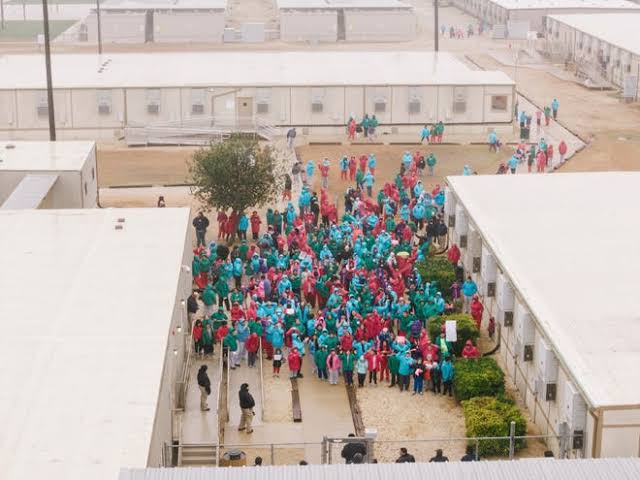

Tensions flared outside the South Texas Family Residential Center in Dilley, Texas on 28 January 2026, as a demonstration calling for the release of a detained five-year-old boy and his father turned confrontational with law enforcement and left several protesters temporarily dispersed by tear gas and other chemical irritants.
The protest ( one of several in recent days ) was driven by national outrage over the boy’s detention in U.S. Immigration and Customs Enforcement (ICE) custody alongside his father, Liam Conejo Ramos and Adrian Alexander Conejo Arias, after their arrest in Minnesota earlier in the month during an expanded immigration enforcement operation. The case gained widespread attention after images and accounts of the young child being taken into custody sparked criticism from immigrant rights advocates, elected officials and civil liberties groups.
Protests Escalate at Dilley Facility
Hundreds of demonstrators marched toward the Dilley detention center on Wednesday, brandishing signs and chanting for the immediate release of the five-year-old and other detainees. Organisers said the protest was intended to draw attention to broader concerns over family detention practices and immigration enforcement under the current federal administration.
As the crowd pressed toward the facility’s entrance, law enforcement officers from the Texas Department of Public Safety (DPS), often deployed alongside U.S. Customs and Border Protection agents at the scene, in some cases ordered demonstrators to disperse. When some protesters remained near the established barriers, officers deployed chemical agents, described by observers as tear gas and pepper balls, to push the crowd back. Several attendees, including elderly demonstrators and journalists, were affected by the irritants, and at least two people were arrested on charges such as resisting arrest and interfering with public duties.
Video and eyewitness accounts show thick clouds of chemical irritant lingering around the protest site in front of the detention center, prompting some demonstrators to assist each other to flush their eyes with water. Despite the deployment of crowd-control measures, dozens of protesters remained outside the facility, insisting they would continue their demonstration.
Calls for Release and Broader Political Pressure
The protest in Dilley took place on the same day that U.S. Representatives Joaquin Castro and Jasmine Crockett visited the facility and met with the detained child and his father. Castro, a Democrat from Texas, used the visit to publicly urge federal authorities to release the family and condemned harsh detention practices. Other lawmakers and advocates have echoed those demands, framing the case as emblematic of broader immigration policy problems — particularly the detention of children and families.
Outside the facility, demonstrators carried signs with phrases such as “Libertad” and “Free the children,” reflecting both frustration with current enforcement actions and solidarity with detained immigrant families. Hundreds of people who had travelled from San Antonio and other areas joined the march, including community leaders and advocates from organisations supporting immigrant rights.
The protest and subsequent law-enforcement response also drew attention to ongoing debates about the Flores Settlement Agreement, a longstanding legal framework that generally limits the time children may be held in immigration detention, particularly when accompanied by their parents. Legal advocates argue that detaining young children beyond brief periods violates both international norms and domestic agreements, while authorities maintain that their actions align with federal law and enforcement procedures.
Law Enforcement Response and Official Statements
According to DPS officials, troopers responded at the request of local authorities after issuing multiple orders to disperse. In a statement, a DPS spokesperson said that some protesters had refused to leave designated protest areas and attempted to breach established barriers, prompting the use of less-lethal measures, including pepper balls and chemical irritants. Law enforcement also emphasised efforts to maintain public safety and protect both officers and property.
National Impact and Ongoing Controversy
The Dilley protests form part of a larger, increasingly visible challenge to current immigration enforcement tactics in the United States. The detention of a young child has galvanized activists and politicians alike, amplifying calls for transparency, humane treatment of families and policy reform. Federal courts have become involved, with a judge in San Antonio temporarily blocking the deportation of the child and his father while their legal challenge proceeds, underscoring the contentious nature of the case.
Observers note that the passionate response — from vigils and marches to clashes with law enforcement — reflects deep divisions in public opinion over immigration enforcement and the treatment of migrants at the U.S.–Mexico border and beyond.