

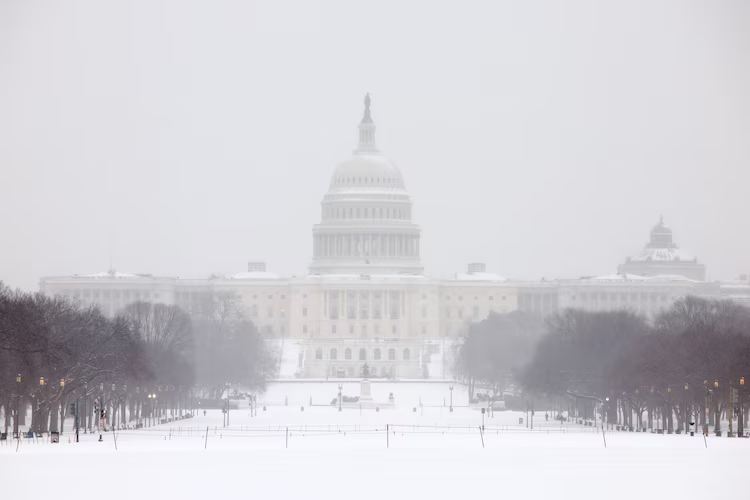

A deadly winter storm that brought massive snowfall across the U.S. has knocked out power to hundreds of thousands of people in the South and is crippling travel in the Northeast
A historic and deadly winter storm sweeping across the United States over the weekend has left communities grappling with heavy snowfall, freezing temperatures, widespread power outages, and significant travel disruptions. The storm, which hit the Plains, South, Midwest, and Northeast regions, has already claimed at least 29 lives nationwide and left hundreds of thousands of residents without electricity. In the South, dangerously low wind chills and icy conditions have compounded the human and infrastructural toll, while in the Northeast, snow accumulation has halted travel and disrupted daily life. Authorities and emergency services across multiple states have been scrambling to respond, emphasizing public safety and the need for extreme caution amid the ongoing hazardous weather conditions.
Confirmed deaths linked to the storm
Officials have confirmed several fatalities attributed to the winter storm, highlighting the deadly impact of extreme cold. In Austin, Texas, Austin-Travis County EMS confirmed that one person was found dead in the parking lot of an abandoned gas station early Sunday morning, with hypothermia suspected as the cause. The identity of the individual has not been released, and authorities noted that only the medical examiner can officially determine the cause of death. In Louisiana, the Department of Public Health reported that two men in Caddo Parish died from hypothermia during the storm. Additional deaths across multiple states include a 16-year-old girl in Frisco, Texas, killed in a sledding accident, a 17-year-old boy in Arkansas struck by a tree while being pulled by an ATV, and three people in Lehigh County, Pennsylvania, who died while shoveling snow. Fatalities have also been reported in New York, New Jersey, Massachusetts, Tennessee, Mississippi, Kansas, Ohio, and South Carolina, underscoring the storm’s widespread human cost.
Brett Carlsen/Getty Images
Snowfall totals and extreme cold across the U.S.
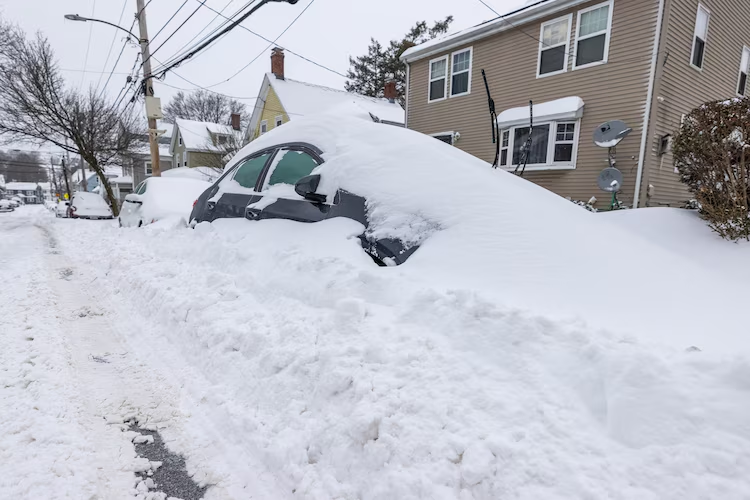
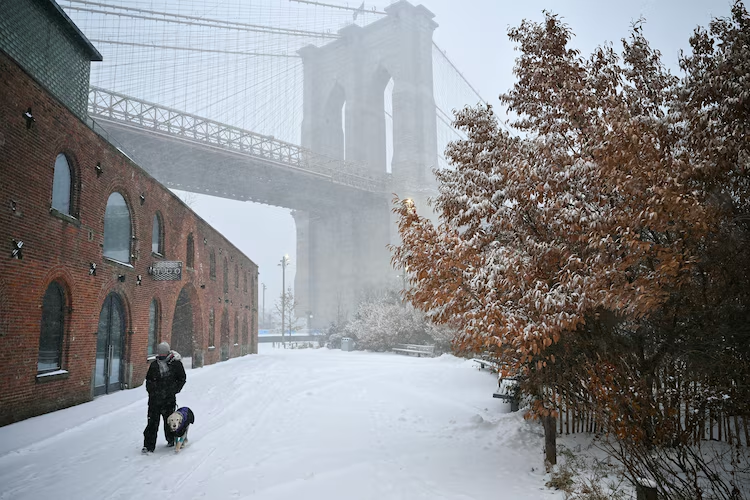
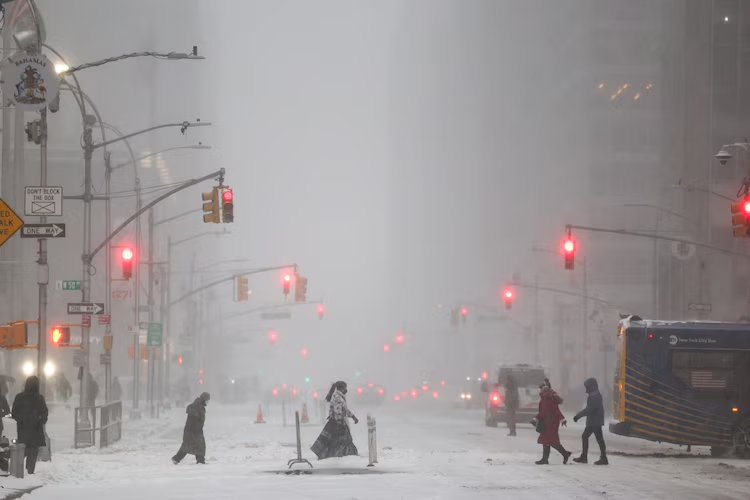
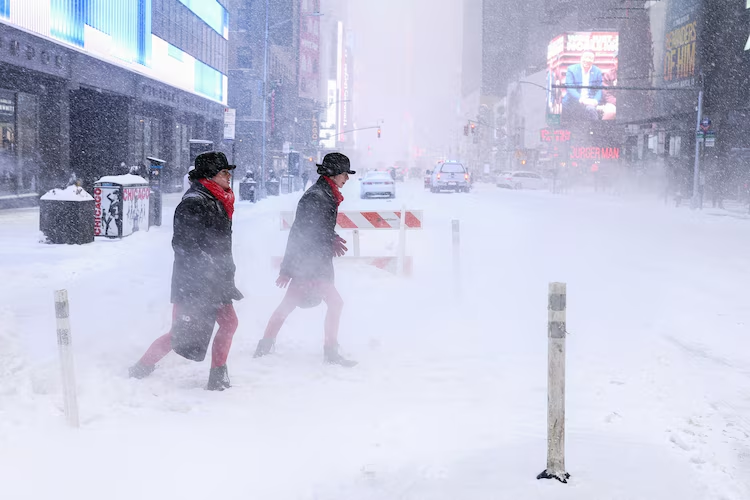
The winter storm brought historic snowfall to multiple cities, disrupting transportation and daily life. New York City recorded more than 11 inches of snow in Central Park, marking the city’s largest snowfall since 2022, while Philadelphia reported over 9 inches, its heaviest in a decade. Boston experienced more than 16 inches of snow, adding to treacherous conditions across the Northeast. The storm also brought dangerously low wind chills, with readings on Monday morning hitting minus 3 degrees in Dallas, 7 degrees in Austin, zero in Little Rock, Arkansas, and 2 degrees in Nashville, Tennessee. In the Midwest, Minneapolis faced a wind chill of minus 27 degrees, and Chicago registered minus 14. Forecasts for Tuesday morning indicated sub-zero wind chills in the Northeast, including minus 4 in Washington, D.C., minus 3 in Boston, and minus 18 in Pittsburgh. Amid the snowy conditions, Olympian Shaun White was spotted snowboarding in Central Park, providing a rare recreational glimpse amid the otherwise hazardous situation.
Scott Eisen/Getty Images
Travel disruptions and flight cancellations
Travel has been severely affected by the storm, with airlines struggling to maintain operations amid snow, ice, and low visibility. Since Friday, more than 20,000 flights across the U.S. have been canceled, including over 11,000 on Sunday alone, marking the highest single-day cancellations since the pandemic. On Monday, an additional 5,100 flights were canceled within, into, or out of the country, with major hubs in Dallas, Boston, and New York City hit hardest. Flight operations resumed at Ronald Reagan Washington National Airport after a complete halt on Sunday due to hazardous weather, as airlines worked to recover and restore normal operations. Officials have warned travelers to expect continued disruptions while airports and airlines attempt to catch up with rescheduled flights and passenger backlogs.
Widespread power outages
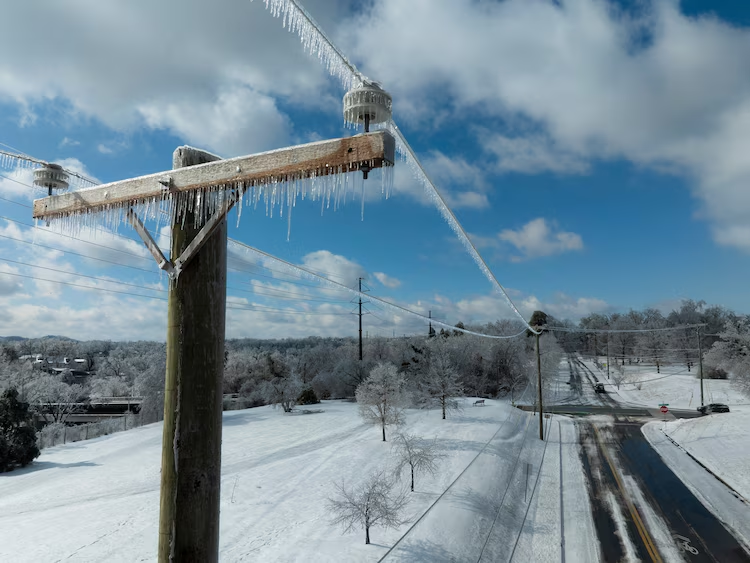
The storm has also caused extensive power outages across the South, affecting hundreds of thousands of customers. As of 2:15 a.m. ET on Tuesday, more than 543,000 customers were without electricity, with Tennessee, Mississippi, Louisiana, and Texas most heavily impacted. Tennessee had the highest number of outages at 182,335, followed by Mississippi with 140,577, Louisiana with 100,118, and Texas with 30,564. The Nashville Electric Service, the hardest-hit utility in the country, announced plans to “double its workforce” to respond to outages and restore power as quickly as possible, highlighting the scale of the infrastructure challenges posed by the storm.

Nick Oxford/Reuters
Impact on public safety and emergency response
Authorities across the affected states have urged residents to exercise extreme caution and avoid unnecessary travel or outdoor exposure. Officials highlighted the dangers of hypothermia, accidents on icy roads, and injuries related to snow removal. In Lehigh County, Pennsylvania, a coroner advised the public to be cautious while shoveling snow, particularly individuals with pre-existing heart conditions. Emergency services in Texas, Louisiana, and Tennessee have been mobilized to assist stranded residents, provide emergency shelter, and respond to accidents and medical emergencies arising from the storm.
Schools and local institutions affected
The winter storm has disrupted education and local services, with many schools across the South and Northeast either closing or operating on limited schedules. Snow-covered roads, icy sidewalks, and power outages have forced administrators to prioritize safety over in-person learning. Local governments have also suspended or limited non-essential services in affected areas, reflecting the severity of the storm’s impact on daily life.
Angela Weiss/AFP via Getty Images
Government and utility coordination
State and local authorities, in coordination with utility companies, have been working to mitigate the storm’s effects. Power companies have deployed additional crews to restore electricity and repair downed lines, while local emergency management agencies have opened shelters for residents facing unsafe conditions at home. Authorities have emphasized that restoring power and ensuring public safety will take time, given the widespread nature of the storm and the continued risk of extreme cold.
Public health warnings and cold-related fatalities
Public health officials have issued repeated warnings about the dangers of prolonged exposure to sub-zero temperatures. Hypothermia and frostbite remain significant risks, especially for vulnerable populations such as the elderly, homeless individuals, and those living in areas without heating. The confirmed deaths across multiple states underscore the deadly consequences of the storm and the importance of heeding safety advisories.
Charly Triballeau/AFP via Getty Images
Transportation infrastructure and road conditions
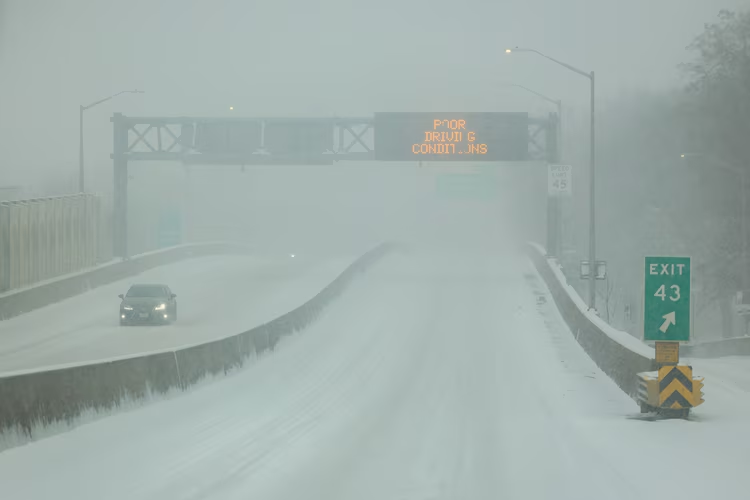
Highways, major roads, and bridges across the affected regions have been rendered hazardous by ice and snow. State transportation departments have deployed plows, salt trucks, and emergency personnel to maintain passable routes, but conditions remain treacherous. Motorists are being advised to avoid travel unless absolutely necessary, and public transportation systems are operating on limited schedules due to delays and safety concerns.
Charly Triballeau/AFP via Getty Images
Economic and logistical implications
The storm’s disruptions extend beyond immediate safety concerns, impacting commerce, supply chains, and daily economic activities. Retailers, businesses, and service providers in affected areas are experiencing closures or reduced operations, while shipping and logistics companies face delays due to hazardous conditions. Airports, in particular, are working to manage the backlog of canceled flights and ensure the safe movement of passengers and cargo.
Charly Triballeau/AFP via Getty Images
Continued monitoring and recovery efforts
Authorities are continuing to monitor the storm’s effects, with snow removal, power restoration, and emergency response operations ongoing. Meteorologists have forecast that while snowfall may end, dangerously low temperatures and wind chills will persist through Tuesday, necessitating continued vigilance.