

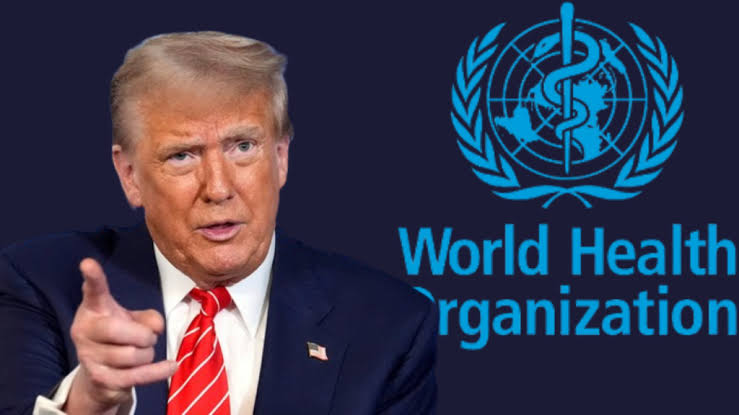

The United States has officially withdrawn from the World Health Organization (WHO), a move that strips the United Nations health agency of one of its largest and most influential donors and marks a significant shift in global health diplomacy. The withdrawal follows an executive order signed a year ago by President Donald Trump, who had repeatedly criticised the WHO for what he described as a “China-centric” posture during the COVID-19 pandemic. The decision, long anticipated after months of strained relations, has now taken full effect, setting off reactions from health experts, diplomats, and international observers concerned about the implications for global disease control and health cooperation.
According to the US Department of Health and Human Services (HHS), the decision to withdraw was based on what it described as the WHO’s alleged mishandling of the COVID-19 pandemic, its inability to implement meaningful reforms, and what US officials called undue political influence from certain member states. In a formal statement, the department argued that continued engagement with the WHO no longer served the strategic health interests of the United States, insisting that the global body had strayed from its core mission of impartial health leadership.
President Trump had, during his second term, repeatedly accused the WHO of failing to hold China accountable for its early handling of the coronavirus outbreak and of issuing guidance that, in his view, did not sufficiently protect American lives. The executive order that initiated the withdrawal process reflected these longstanding grievances, setting in motion legal and diplomatic steps that culminated in the final disengagement from the organization this year.
Reacting to the development, WHO Director-General Tedros Adhanom Ghebreyesus described the withdrawal as a loss not only for the organization but also for the United States and the wider global community. He emphasized that the WHO had worked closely with American scientists and health agencies for decades to combat infectious diseases and improve public health outcomes worldwide. Tedros highlighted the WHO’s critical roles in global polio eradication efforts, HIV/AIDS control, reduction of maternal mortality, and the implementation of the international treaty on tobacco control as examples of initiatives that benefited from US partnership.
The WHO also pointed to the international pandemic treaty agreed upon by member states in April last year, designed to ensure better global preparedness, vaccine equity, and coordinated responses to future health crises. Notably, the United States was the only member state that did not sign on to the agreement. WHO officials expressed concern that the absence of the US from such frameworks could weaken global coordination in responding to future pandemics.
Financially, the impact of the US withdrawal has already been felt within the organization. Washington, traditionally one of the largest contributors to the WHO’s budget, has not paid its assessed contributions for 2024 and 2025. This funding gap has reportedly led to significant job losses and operational adjustments within the agency. WHO lawyers maintain that the US remains obligated to settle its arrears, estimated at $260 million, but US officials have stated that they see no reason to honour those payments following the withdrawal.
In practical terms, the US government has terminated all funding to the WHO, recalled American personnel and contractors from its headquarters in Geneva and offices around the world, and suspended or discontinued hundreds of engagements previously conducted through the organization. These steps signal a complete disengagement from WHO structures, replacing multilateral cooperation with a more bilateral approach to global health issues.
US Health Secretary Robert F. Kennedy and Secretary of State Marco Rubio issued a joint statement sharply criticizing the WHO, asserting that the organization had “tarnished and trashed everything that America has done for it” and had repeatedly acted against US interests. They argued that the WHO had abandoned its core mission and cited what they described as symbolic slights, including the alleged failure to return the American flag displayed at its Geneva headquarters.
The statement further indicated that US engagement with the WHO would now be limited strictly to completing the withdrawal process and safeguarding the health and safety of the American people. Officials added that the United States would pursue direct bilateral partnerships with other countries to maintain disease surveillance and pathogen sharing but were unable to specify which countries such arrangements had been made with so far.
When asked about continued efforts to combat polio and HIV globally, US officials said the government would work with non-governmental organizations and faith-based groups rather than through the WHO framework, although they provided no detailed information about existing partnerships. Similarly, uncertainty remains over whether the US will continue participating in the information sharing required for the development of the annual global influenza vaccine.
The WHO, in earlier correspondence following the signing of the withdrawal order, had expressed hope that the United States would reconsider its decision. The organization noted that collaboration between the WHO and the US had saved countless lives and protected Americans and people around the world from major health threats. WHO officials reiterated that US participation was important for the well-being of millions globally and confirmed that the issue of the withdrawal would be discussed at the organization’s board meeting scheduled for February 2–7.
The withdrawal has also reopened discussions about how various countries, including the United States and the United Kingdom, handled the COVID-19 pandemic. Several studies and expert analyses have criticized the early responses of developed nations, pointing to delays in imposing lockdowns and reluctance to enforce strict public health measures due to political and social considerations. These delays, researchers argue, contributed to the rapid spread of the virus.
Drew Altman, a former US public health official, previously observed that the United States had one of the highest COVID-19 death rates in part because of inconsistent adherence to WHO guidance on mask-wearing and social distancing. In a 2020 article for the BMJ, Altman criticized the federal government’s approach at the time, arguing that the absence of unified national guidance allowed pandemic policies to become politicized across states.
A research paper published in the US National Library of Medicine similarly described the federal response as slow and mismanaged, highlighting how political divisions influenced public health decisions. These critiques form part of the broader historical tension between the US government and the WHO since the onset of the pandemic, tensions that have now culminated in a formal withdrawal from the global health body.