

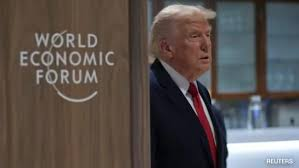

President Donald Trump is set to spotlight his proposed “Board of Peace” at the World Economic Forum in Davos with what the White House described as a forthcoming “charter announcement” on the sidelines of the gathering, as he seeks to build international momentum behind an initiative that has, in recent days, been overshadowed by diplomatic tensions over Greenland and shifting global reactions to his foreign policy posture. Speaking on Wednesday alongside Egyptian President Abdel-Fattah el-Sissi, Trump expressed strong confidence in the project, describing it as poised to become “the most prestigious board ever formed,” and noting that Egypt is among the countries that have already agreed to participate.
The Board of Peace, initially conceived as a compact group of world leaders tasked with overseeing a US-brokered ceasefire between Israel and Hamas in Gaza, has since evolved into a far more ambitious structure with a broader proposed mandate. This expansion has triggered unease among several traditional US allies, who question both the scope of the board’s authority and the implications it may have for existing international institutions. A senior administration official said that about 35 countries have agreed to sign on to the project out of 60 invited, while others have indicated interest but are awaiting parliamentary or internal governmental approvals before committing.
Some European nations have openly declined to participate. France, Norway, Sweden and Slovenia have all said they will not join, citing concerns that the board’s potentially expansive mandate could undermine the United Nations and the global order built around the UN Charter. French officials stressed that while they support efforts aimed at sustaining the Gaza peace plan, they remain wary of any mechanism that could sideline the UN as the primary platform for conflict resolution. Slovenia’s Prime Minister Robert Golob similarly indicated that “the time has not yet come” to accept the invitation, pointing specifically to fears about the board’s breadth of authority.
Other key international actors, including the United Kingdom, the European Union’s executive arm, Canada, Russia, Ukraine and China, have yet to provide formal responses to Trump’s invitations. The diplomatic hesitancy has unfolded against the backdrop of Trump’s abrupt decision to withdraw tariff threats linked to his earlier rhetoric about Greenland, a move that may ease tensions with some allies but has not fully resolved concerns about the broader direction of his foreign policy initiatives.
Russian President Vladimir Putin has taken a cautious approach, saying Moscow is consulting with its “strategic partners” before deciding whether to join the Board of Peace. Putin is also scheduled to host Palestinian President Mahmoud Abbas in Moscow, a meeting expected to include discussions related to Gaza’s recovery and the evolving diplomatic landscape. The prospect of Russia’s involvement has raised further questions among Western diplomats about the board’s membership, particularly regarding the inclusion of leaders from authoritarian governments.
Trump, however, has defended his approach, saying he wants “everybody” with influence to be part of the initiative. Acknowledging that some of the potential members are controversial figures, he argued that they are nonetheless “people that get the job done” and wield significant geopolitical power. His comments reflect a willingness to prioritize perceived effectiveness and influence over traditional diplomatic considerations about governance standards and political systems.
The origins of the Board of Peace trace back to Trump’s 20-point Gaza ceasefire proposal, which received endorsement from the UN Security Council as a transitional arrangement to help oversee the truce. However, invitation letters sent to world leaders ahead of Davos suggested that the board’s work may not be confined to Gaza alone. Trump himself has fueled this perception by suggesting that the board could assume some of the functions currently handled by the United Nations and, in time, perhaps render parts of it obsolete.
When asked earlier in the week whether the Board of Peace should replace the UN, Trump replied that “it might,” while also stating that the UN should continue to exist because “the potential is so great,” even though he believes it “hasn’t been very helpful” historically. These remarks have intensified debate over whether the initiative is intended to complement or compete with existing multilateral structures established after the Second World War.
Trump’s effort received a boost when Israeli Prime Minister Benjamin Netanyahu announced he would join the board after previously expressing reservations about the composition of its Gaza oversight committee. Netanyahu’s decision signaled renewed Israeli support for the initiative at a time when the humanitarian crisis in Gaza continues despite the ceasefire. More than two million Palestinians remain affected by the devastation caused by over two years of conflict, and sporadic violence still occurs even if it is not at pre-ceasefire levels.
A key unresolved issue in sustaining the truce is the disarmament of Hamas, which has governed Gaza since 2007 and has so far refused to lay down its weapons. Israel has maintained that disarmament is non-negotiable, and Trump said on Wednesday that his administration expects clarity within weeks on whether Hamas will agree to the demand. He warned that failure to comply would bring swift consequences, underscoring the fragility of the current peace arrangement.
Trump also linked the success of the ceasefire to past US military actions against Iran, arguing that strikes on Iranian nuclear facilities last year weakened Hamas’ primary backer and helped create conditions for negotiations. Iran had long provided Hamas with financial support, weapons and training, making it central to the broader regional dynamics surrounding the conflict. Trump suggested that without those strikes, “there was no chance of making peace.”
At the same time, Trump has moderated his immediate stance toward Tehran after Iran’s recent crackdown on widespread domestic protests. While he previously threatened military action, he said he has held off on further strikes after receiving assurances from Iranian authorities that planned executions of hundreds of protesters would not proceed. This balancing act reflects the complex regional calculations underlying his broader peace initiative.
Trump is also expected to speak with Ukrainian President Volodymyr Zelenskyy, either at Davos or by phone, as he continues efforts to bring an end to the nearly four-year war between Ukraine and Russia. He expressed frustration with both Zelenskyy and Putin, saying he believes they are at a point where a deal could be reached and criticizing both sides for failing to come to terms.
Taken together, Trump’s push for the Board of Peace forms part of a broader attempt to reshape how global conflicts are managed, moving away from traditional UN-led frameworks toward a new structure built around direct engagement among influential world leaders. As he prepares to unveil the board’s charter in Davos, the initiative stands at the center of a growing international debate over its potential to complement—or challenge—the existing architecture of global diplomacy.