

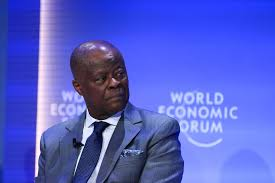

The Federal Government has announced plans to deepen investment in Nigeria’s economy by prioritising domestic resource mobilisation and reducing its reliance on borrowing, as part of broader efforts to strengthen fiscal sustainability. The Minister of Finance and Coordinating Minister of the Economy, Wale Edun, disclosed this during an interview on Bloomberg Television on Tuesday at the 56th World Economic Forum (WEF) in Davos, Switzerland. Edun said the government’s current focus was on boosting revenue generation and harnessing domestic resources to finance development, stressing that excessive dependence on borrowing was no longer sustainable. “The issue now is to focus on revenue, focus on domestic resource mobilisation,” he said, adding that the government hoped to “rely less on borrowing” going forward.
Edun’s remarks come against the backdrop of wide-ranging fiscal and economic reforms introduced by the administration of President Bola Tinubu since taking office in 2023, aimed at stabilising public finances and repositioning the economy for long-term growth. Among the most significant measures have been the removal of the long-standing fuel subsidy, which had placed a heavy burden on government finances, and reforms in the foreign exchange market to ease currency distortions and improve transparency. The administration has also embarked on a comprehensive overhaul of the tax framework, targeting inefficiencies and leakages while expanding the tax base to improve revenue collection across key sectors of the economy.
According to the finance minister, a central goal of the government’s fiscal strategy is to raise tax revenue to 18 per cent of gross domestic product (GDP) by next year, up from about 14 per cent currently. He explained that achieving this target would provide the government with more fiscal space to fund infrastructure, social services, and economic development without excessive resort to external debt. Edun noted that while Nigeria could still access international bond markets if necessary, the priority was to strengthen domestic revenue streams and ensure that borrowing, when undertaken, was done on more sustainable terms. He said the reforms were designed to improve fiscal discipline, enhance transparency, and restore confidence in public finance management.
The minister also emphasised that Nigeria remained open to international capital markets, but only as a complementary option rather than a primary funding source. He said the government was determined to strike a balance between attracting external investment and building a resilient domestic revenue system capable of withstanding global economic shocks. Edun highlighted ongoing strategies to improve tax administration, reduce evasion, and ensure that government spending delivers measurable economic and social outcomes, particularly in an environment of mounting global economic pressures and uncertainty.
International financial institutions have taken note of Nigeria’s reform efforts, with the International Monetary Fund (IMF) recently upgrading the country’s economic growth forecast. The IMF projected Nigeria’s growth at 4.4 per cent in 2026, up from an estimated 4.2 per cent in 2025, despite weaker global oil prices, which affect Nigeria’s top export and major foreign exchange earnings. The Fund said the combination of domestic resource mobilisation and ongoing fiscal reforms was expected to stabilise revenue collection, support fiscal sustainability, and reduce the country’s dependence on debt. It added that Nigeria’s policy direction signalled a commitment to strengthening the economy’s foundations over the medium to long term.
At the World Economic Forum, Edun said Nigeria’s message to global investors was centred on policy consistency, macroeconomic stability, and long-term reform commitment. He noted that discussions in Davos would focus on addressing investor concerns around inflation, foreign exchange stability, and fiscal sustainability, while showcasing the government’s reform agenda. As part of this engagement, Nigeria is debuting its first official national pavilion, Nigeria House Davos, aimed at promoting investment opportunities and strengthening economic partnerships. The government said the initiative underscored Nigeria’s intention to remain actively engaged with the global economy while pursuing reforms that prioritise domestic growth, fiscal resilience, and reduced reliance on external borrowing.