

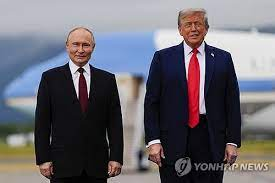

United States President Donald Trump has extended a high-profile invitation to Russian President Vladimir Putin to join a proposed international “peace council,” a body the U.S. leader says would oversee solutions to some of the world’s most pressing conflicts, including governance and reconstruction in Gaza. The invitation, made public on Monday by White House officials, signals a renewed attempt by Trump to position himself as a central actor in global diplomacy, particularly in conflict zones where traditional negotiations have stalled. According to sources in Washington, Trump intends to personally chair the council and has invited leaders from multiple regions, including Belarusian President Alexander Lukashenko, a close ally of Moscow. The announcement comes amid heightened international attention on the humanitarian and geopolitical crises affecting Gaza, Ukraine, and other conflict zones, suggesting that the council could become a focal point of both U.S. foreign policy ambitions and international scrutiny.
The proposed peace council emerges against the backdrop of the ongoing Russia–Ukraine war, now approaching its fourth year with no comprehensive peace agreement in sight. The conflict, which began with Russia’s full-scale invasion in February 2022, has resulted in massive casualties, widespread destruction, and continued geopolitical tension between Russia, NATO, and other global actors. During his 2024 presidential campaign, Trump repeatedly asserted that he could end the war within 24 hours of assuming office, a claim that drew both skepticism and criticism from analysts and foreign policy experts. Despite his assurances, the fighting on the ground has persisted, negotiations have stalled repeatedly, and key diplomatic channels remain limited, raising questions about the feasibility and timing of Trump’s peace council proposal.
The invitation to Putin, confirmed by Kremlin spokesman Dmitry Peskov, has been met with cautious interest from Moscow. Peskov stated that President Putin had received the invitation and that Russian officials were seeking clarification on the objectives, structure, and membership of the council. He did not indicate whether Russia was inclined to accept or reject the offer, emphasizing instead the need for further dialogue with Washington. The announcement coincides with broader U.S. efforts to rally international support for the initiative, which White House officials frame as a platform for multilateral engagement and conflict resolution that could include leaders from Europe, the Middle East, and North Africa.
Belarusian President Alexander Lukashenko has reportedly been invited to participate, reflecting the inclusion of Moscow-aligned states in the council’s initial outreach. Analysts note that including Belarus, alongside Russia, could complicate perceptions of neutrality and raise concerns among Western allies who view both countries as closely aligned on geopolitical objectives, particularly regarding Ukraine. Nevertheless, the Trump administration maintains that the council’s design is intended to bring together conflicting parties and influential actors to achieve practical outcomes in conflict resolution, rather than serve as a platform for ideological alignment.
Russia’s broader relations in the Middle East provide important context for its potential involvement in the council. Historically, Moscow has maintained diplomatic engagement with both Israel and Palestinian authorities, balancing its influence across a region that has grown increasingly complex amid the Israeli-Palestinian conflict and shifting alliances. Since the outbreak of hostilities in Gaza and the ongoing war in Ukraine, Russia has strengthened ties with countries opposed to Israel, including Iran, while simultaneously seeking closer engagement with Gulf Arab states. Experts argue that Moscow’s involvement in the council would likely reflect a combination of strategic interests in the region and a desire to assert relevance in multilateral peace initiatives.
President Putin has previously spoken positively about Trump’s attempts at conflict mediation. In October 2025, he described Trump’s efforts as significant, stating that the U.S. leader had the potential to achieve historic breakthroughs in longstanding international crises. Putin’s remarks highlighted a rare convergence of interest between Washington and Moscow on multilateral diplomacy, though analysts caution that differences over strategic priorities—particularly regarding Ukraine, Iran, and Gaza—may complicate meaningful collaboration. The invitation to join the council can thus be seen as both a diplomatic overture and a test of Russia’s willingness to engage with U.S.-led initiatives outside of traditional bilateral channels.
The humanitarian situation in Gaza has also been a central concern cited by both Trump and Putin in relation to the council. In May 2025, Putin publicly criticized Israel’s military campaign in Gaza, warning of the severe consequences for civilian populations. Russian state media reported that the Kremlin provided assistance to Palestinian communities, underscoring Moscow’s efforts to maintain influence among key actors in the Middle East. The proposed peace council is intended to implement a 20-point framework focused on reconstruction, governance, and humanitarian relief in Gaza, an agenda that reflects the urgent need to address both immediate humanitarian crises and longer-term structural challenges in the territory.
According to White House sources, the council will operate through a three-tiered structure, with representation drawn from the United States, Europe, and Arab countries. Pro-Israel figures are reportedly positioned at higher levels of the council, while Palestinian representatives are expected to occupy lower-tier roles focused on municipal and administrative oversight. This arrangement has drawn criticism from analysts who argue that it risks marginalizing Palestinian political authority and replacing local governance with a model heavily influenced by external actors. Critics caution that such a structure could undermine the legitimacy of the council’s decisions and reduce the potential for sustainable, locally driven solutions in Gaza.
Experts highlight that one of the council’s key challenges will be balancing international influence with on-the-ground realities. While external actors bring resources, diplomatic leverage, and technical expertise, their predominance in decision-making could generate resentment or resistance from local populations. Observers also note that past attempts at multilateral governance in conflict zones have occasionally faltered when external priorities overshadowed local needs, suggesting that careful calibration will be essential to avoid repeating such mistakes.
The U.S.-Russia dimension of the council adds another layer of complexity. The invitation to Putin signals an attempt by Trump to position himself as a mediator capable of bridging divides between major powers, yet skepticism persists about whether Moscow will engage constructively, particularly given ongoing tensions over Ukraine. Analysts note that the council’s success may depend on Russia’s willingness to prioritize humanitarian and governance outcomes over strategic advantage, an objective that could conflict with Moscow’s broader geopolitical interests in the Middle East.
Moscow’s reception of the invitation will likely be influenced by Russia’s historical diplomacy in the region, which has involved simultaneous engagement with opposing parties in conflict, including Israel, the Palestinians, and Iran. Russian officials have stressed that any participation in multilateral initiatives must respect their strategic interests, including the preservation of influence in regional security and political affairs. This balancing act will be critical to determining whether Russia takes an active role in the council or limits its engagement to observer status.
The Trump administration has emphasized that the council is designed not only to address the humanitarian and governance crisis in Gaza but also to provide a platform for wider conflict resolution, potentially including issues related to Iran, Syria, and other regional flashpoints. White House officials argue that multilateral participation could create pressure on parties to negotiate in good faith while offering mechanisms for accountability and oversight. However, some analysts remain concerned that the dominance of certain geopolitical actors within the council may reduce its effectiveness and credibility among local populations.