


In an increasingly diverse and interconnected world, moral values are shaped by both religious beliefs and secular philosophies, often intersecting, competing, and sometimes reinforcing one another. Religious morality is generally rooted in the teachings, doctrines, and sacred texts of faith traditions, such as the Bible, the Qur’an, the Torah, the Vedas, or other spiritual authorities. Within this framework, ideas of right and wrong are believed to originate from a divine source, and moral behavior is seen as obedience to God’s will or alignment with spiritual laws.
Acts such as honesty, compassion, justice, and self-restraint are often framed not only as social responsibilities but as sacred duties with spiritual consequences. For many believers, moral choices are deeply personal yet universal, guided by faith leaders, religious communities, and long-standing traditions that have shaped societies for centuries.
Secular morality, on the other hand, derives its authority from human reason, empathy, shared social experience, and philosophical inquiry rather than divine command. It emphasizes ethical principles that can be debated, tested, and revised through logic, science, and collective agreement. Concepts such as human rights, equality before the law, freedom of expression, and personal autonomy are central to secular moral systems.

Rather than asking what a deity commands, secular morality often asks what actions promote human well-being, reduce harm, and allow individuals and societies to flourish. Modern democratic laws, international human rights frameworks, and many educational systems are largely grounded in secular moral reasoning, aiming to be inclusive of people from diverse religious and non-religious backgrounds.
Despite their different sources of authority, religious and secular morality share significant common ground. Both generally promote values such as kindness, fairness, respect for life, and responsibility toward others. For example, religious teachings that encourage charity and care for the poor align closely with secular ideas of social justice and welfare. In practice, a religious person and a secular humanist may reach the same moral conclusion such as opposing corruption or condemning violence even if their reasons differ.
These shared values have influenced laws and social norms across cultures, from prohibitions against murder and theft to expectations of honesty in public life. This overlap shows that morality, whether religious or secular, often responds to the same basic human needs for trust, cooperation, and social stability.
However, key differences also create tension between the two systems. Religious morality can sometimes be rigid, particularly when interpretations of sacred texts resist change in response to new social realities, such as evolving views on gender roles, sexuality, or scientific advancement. Critics argue that this rigidity may limit individual freedom or exclude those who do not share the same beliefs.
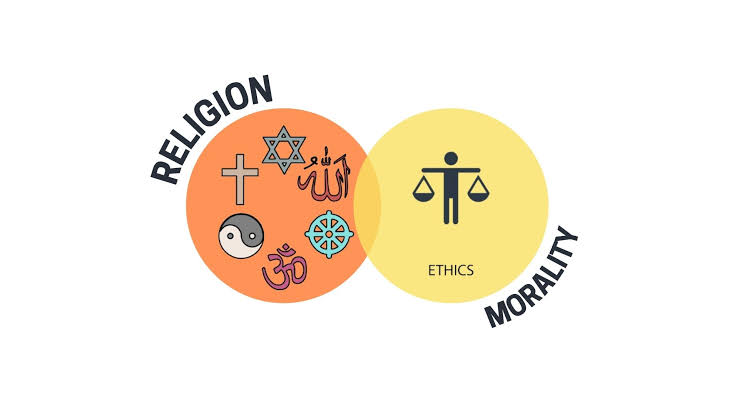
Secular morality, while more flexible and adaptive, is sometimes criticized for lacking a fixed moral anchor, making it vulnerable to moral relativism or shifting social trends that may justify harmful behavior if widely accepted. For instance, debates over bioethics, freedom of speech, or end-of-life decisions often reveal sharp contrasts between religious doctrines and secular ethical reasoning.
In real-world settings, both frameworks strongly influence personal decisions, laws, and social norms. In many societies, religious morality shapes individual choices around marriage, family life, charity, and community responsibility, while secular morality dominates public policy, legal systems, and international relations.
Countries with strong religious traditions may embed faith-based values into their laws, while more secular states prioritize neutrality and individual rights. Globally, discussions around issues such as abortion, same-sex marriage, freedom of religion, and education often reflect an ongoing negotiation between religious convictions and secular principles, highlighting both cooperation and conflict.
Ultimately, religious morality and secular morality are not destined to exist in permanent opposition. In modern global societies, they often coexist and, at times, complement each other by offering different perspectives on what it means to live a good and meaningful life. Religious morality can provide deep moral motivation, community cohesion, and a sense of transcendence, while secular morality offers inclusivity, adaptability, and a common ethical language for diverse populations.

Conflict arises when one framework seeks to dominate or silence the other, but harmony is possible when both are allowed to contribute to moral dialogue with mutual respect. In a pluralistic world, the challenge is not choosing one moral system over the other, but learning how both can inform ethical decisions in ways that uphold human dignity, social justice, and peaceful coexistence.