

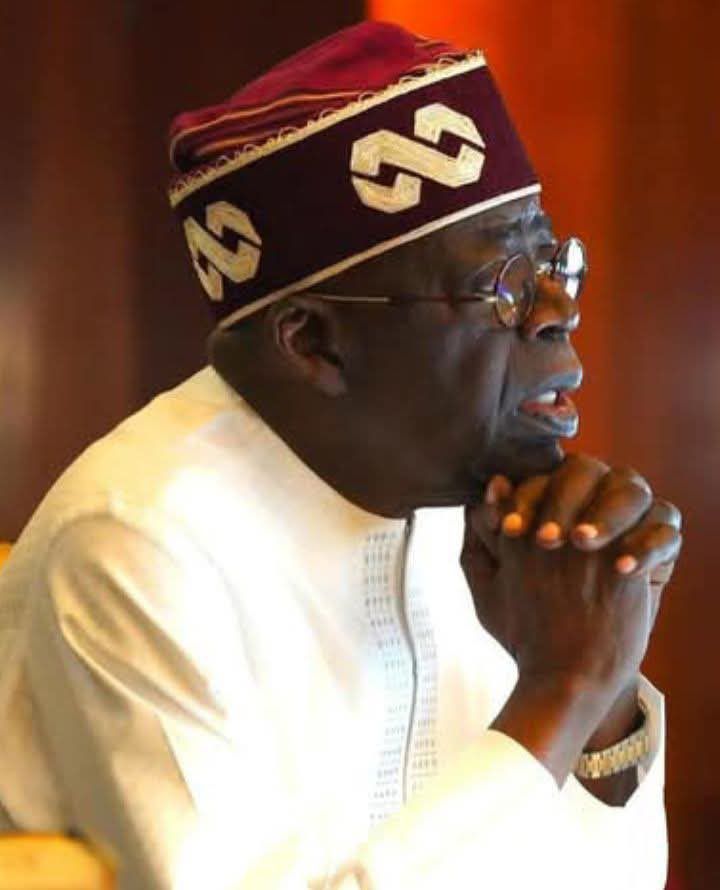

The administration of President Bola Tinubu has approved a controversial $9 million lobbying contract with a Republican-linked firm in Washington as it seeks to placate United States President Donald Trump and avert further military actions and diplomatic measures that could damage Nigeria’s international standing and the All Progressives Congress (APC) ahead of the 2027 elections.
An investigative report published on Tuesday by The Africa Report said Nigeria’s national security adviser, Nuhu Ribadu, facilitated the engagement of the US lobbying firm, DCI Group, through a Kaduna-based law firm, Aster Legal.
The contract is reportedly aimed at persuading the Trump administration and key US lawmakers that Nigeria is taking concrete steps to address insecurity, particularly the killings of Christians in the country’s northern region.
Filings with the US Department of Justice cited in the report show that the Tinubu administration has already paid DCI Group an initial $4.5 million tranche on December 12, 2025.
The payment covers a six-month retainer, with a second $4.5 million instalment due by July 2026, bringing the total value of the deal to $9 million — or $750,000 per month — making it one of the most expensive lobbying contracts ever signed by an African government.
According to the filings, DCI Group was hired to assist the Nigerian government in communicating its efforts to protect Christian communities and to maintain US support in countering West African jihadist groups and other destabilising elements.
The agreement bears the signatures of Oyetunji Olalekan Teslim, managing director of Aster Legal, and Justin Peterson, managing partner of DCI Group. Peterson is a prominent Republican strategist and close ally of President Trump who previously served on Puerto Rico’s fiscal management board during Trump’s first term.
The contract was finalised weeks after President Trump redesignated Nigeria as a “country of particular concern” over what he described as the Nigerian government’s failure to stop what he called widespread and unchecked killings of Christians.
Four days after the lobbying deal was concluded, the United States imposed a partial travel ban on Nigerians, affecting tourist, business and student visa applicants.
The Trump administration cited high visa overstay rates and what it described as the absence of a reliable Nigerian security framework for vetting travellers.
Tensions escalated further on December 25, 2025, when President Trump announced that US forces had carried out a military airstrike in northern Nigeria, specifically in Sokoto State, targeting suspected insurgent hideouts.
Trump later warned that further strikes would follow if the Nigerian government failed to halt violence against Christian communities.
Beyond DCI Group, Nigeria has reportedly engaged additional lobbying channels in Washington. Justice Department records show that US attorney and former congressional foreign policy official Johanna Blanc declared receiving a $5,000 payment to draft a letter addressed to Congressman Chris Smith, chair of the House Foreign Affairs Subcommittee on Africa, ahead of a congressional hearing on Nigeria’s worsening insecurity.
Although the filings listed Blanc as acting under Nigeria’s ministry of finance, she later clarified that the letter was written on behalf of Senate President Godswill Akpabio.
In the letter, Akpabio invited members of the US House subcommittee to visit Nigeria.
“Nigeria would be honoured to host you in Abuja at a mutually convenient date, to continue these discussions and engage stakeholders from across the government, civil society organisations and religious communities,” the letter read.
“Such a visit would further strengthen diplomatic cooperation and provide firsthand insight into ongoing security and interfaith initiatives.”
The multimillion-dollar lobbying arrangement has drawn sharp reactions from analysts and former US officials.
Chidi Blyden, a former Pentagon official who served under President Joe Biden and was reportedly involved in aspects of the engagement, said the scale of the contract underscores the Tinubu administration’s urgency in repairing strained relations with the Trump White House.
“Given the ongoing strikes in northern Nigeria to root out terrorist havens, having open lines of communication across multiple sectors between the two governments is key,” Blyden said.
“It’s a sign that President Bola Tinubu’s administration wants a relationship with the Trump administration, and it is taking steps to do this through the private sector.”