

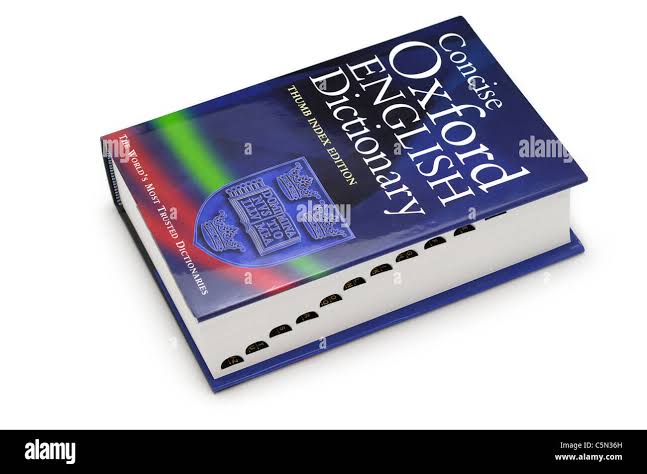

In a notable linguistic milestone, the Oxford English Dictionary (OED) has expanded its global lexicon to include a wide range of Nigerian and West African expressions — a decision that reflects the growing influence of Nigerian English, Pidgin, cuisine, culture and social life on the broader English language.
The update, released in late December 2025 as part of the OED’s quarterly revision, introduced over 500 new words, phrases and senses, including more than 20 terms from West Africa, with a strong representation from Nigeria. This brings voices and vocabulary once confined to local contexts into one of the world’s most authoritative reference works on the English language.
Notable Nigerian Entries and What They Mean
Among the Nigerian expressions now formally recognised are “nyash,” “mammy market” and “amala,” each with its own cultural resonance:
• “Nyash”
Defined by the OED as “a person’s (especially a woman’s) buttocks; the bottom, the backside,” this word has long circulated widely in informal Nigerian English and pop culture contexts. Its inclusion acknowledges how local slang — even humourous or colloquial terms — has carved out space in everyday speech.
• “Mammy market”
This phrase is defined as “a market typically run by women, originally found in military barracks but later also in youth service camps and educational institutions.” The term encapsulates a distinct social practice in Nigerian life and broader West African contexts, where women organise small, vibrant markets that serve as community hubs.
• “Amala”
A staple of Nigerian cuisine, “amala” is now officially defined in the dictionary as “a kind of dough made of yam, cassava, or unripe plantain flour, typically formed into a ball and served as an accompaniment to other dishes.” Its addition recognises how local foods and culinary culture have linguistic as well as cultural significance.
Other Nigerian expressions included in the update encompass everyday speech and food culture — such as “abeg” (an interjection expressing surprise, disbelief or exasperation), “biko” (an Igbo-derived word used as a polite emphasis similar to “please”), “moi moi” (a steamed bean pudding), and “Ghana Must Go” (a name for the distinctive large plastic check-patterned bags common across West Africa).
Global Spread and Linguistic Influence
These additions form part of a broader recognition of world Englishes — varieties of English shaped by regional cultures, languages and social practices. The OED update also included terms drawn from other varieties of English, including West African, Maltese, Japanese and South Korean Englishes.
Language experts note that Nigerian English and Pidgin — enriched by Africa’s dynamic music scene, diaspora discourse, digital communication and pop culture — have accelerated the global circulation of local words. Terms like “Abeg” now appear frequently in social media and informal speech beyond Nigeria, while cuisine words and cultural references have found their way into global menus and conversations.
Importantly, this is not the first significant expansion of Nigerian vocabulary in the OED. In a January 2025 update, the dictionary added about 20 Nigerian words and expressions, including “japa” (referring to emigration), “agbero” (a street tout or rowdy), “eba” (a staple food made from cassava flour) and “419” (a reference to internet fraud). These earlier inclusions similarly underscored how local language patterns seep into global English usage.
Why This Matters
Language evolves with usage, and dictionaries like the OED act as mirrors of that evolution. The formal inclusion of Nigerian expressions demonstrates:
- Cultural visibility: Words rooted in local experience — from food to marketplaces to expressive slang — are increasingly recognised as part of English’s living vocabulary.
- Global interconnectedness: Digital communication, migration, music (like Afrobeats) and cultural exchange have accelerated how local terms are adopted and understood internationally.
- Linguistic diversity: Recognising multiple English varieties helps document how communities around the world adapt and reshape language to reflect their realities.
For many Nigerians and Africans in the diaspora, seeing familiar words enter a prestigious global dictionary carries symbolic weight — a testament to the richness and global resonance of everyday speech and culture.
Quick Definitions of Key Additions
Here are some OED definitions as recognised in the latest update:
- Nyash: Buttocks; the backside.
- Mammy market: Market typically run by women, originally in military and youth camps.
- Amala: A dough of yam or cassava flour, served as a staple.
- Abeg: Interjection expressing a range of emotions.
- Biko: Adverb/interjection for polite emphasis.