

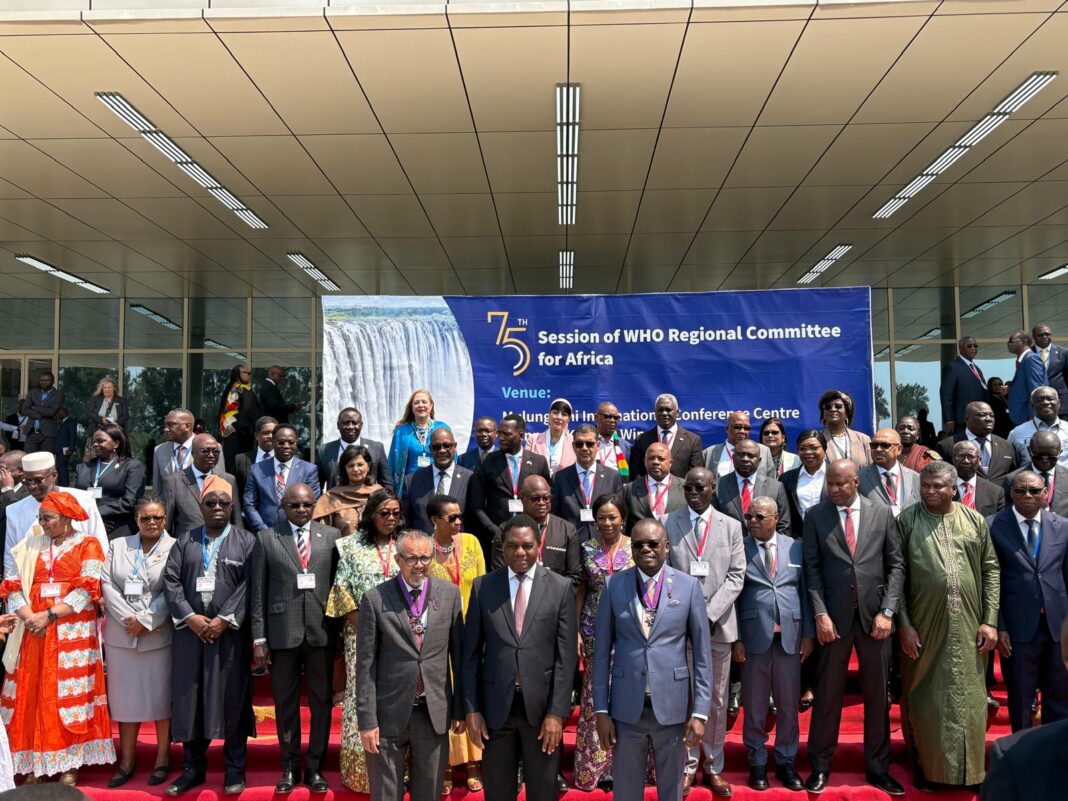

The African Centers for Disease Control and Prevention (Africa CDC), in collaboration with the World Health Organization (WHO), have launched a campaign to evaporate the growing plague of cholera in Africa.
The plan was unveiled on Tuesday, 26th August, 2025, during the 75th WHO Regional committee for Africa, organized in Lusaka, Zambia.
As the continental preparedness and response plan against cholera, the campaign is targeted to eliminate the disease in over 20 countries by year 2030, while aiming to reduce the death burden by 90-percent.
It also aimed at improving vaccination campaigns and strengthening investment in water, sanitation and hygiene (WASH) across the region.
The Africa CDC identified neglected, underserved communities and conflict-affected areas as the places mostly vulnerable to the plague. Accounting for the heaviest burden, the continent registered nothing less than 82-percent of the disease globally, and 93.5-percent of the cholera-related deaths.
Staggering Cholera Figures in Africa
Cholera is an acute diarrheal disease contactable through the intake of food or water contaminated by bacterium Vibrio cholerae. This disease has posed itself as a plague in Africa. With some cases being marked by inability to show symptoms of infection, the disease can lead to death within an hour if left untreated.
Several African countries including Nigeria, have witnessed a surge in the outbreak.
The situation is considered very severe in Nigeria, Democratic Republic of the Congo (DRC) and Ethiopia, as the three countries are categorized as being in acute crisis.
The cases of cholera magically rose to 75-percent within five weeks, from January to February 2025, compared to what was recorded in the same period in 2024, a report by the Nigeria Centre for Disease Control and Prevention (NCDC) disclosed, adding that a shocking 250-percent of death linked to the disease registered in the same timeframe.
As of July 2024, a total number of 399, 508 people have been affected by cholera in Africa, which resulted in 7,023 deaths, the highest to be recorded since January 2022.
Why Africa Accommodates the Highest Burden of Cholera
With over 58.8-percent of the African population lacking access to basic water and sanitation, poor access to WASH services remains the major causative factor, accounting for the cholera burden in Africa; as drinking of surface water, unsanitary environments, and open defecation are waging war on the continent.
In Nigeria where the fatalities of cholera is high, only 26.5-percent of the total population use improved drinking water sources, and 22-percent of the people defecate in the open places.
Between 2000 and 2023, over 2 million cases and more than 63 thousand deaths were recorded from 44 countries in Africa. This represents 94-percent of the 47 countries in the region. Nigeria and Democratic Republic of Congo (DRC) are experiencing the highest burden.
The region experienced the most deadly and severe casualties in 2021, with over 130 thousand cases and over 1,400 deaths being reported. The number of countries affected have been growing since that year, leading to over 193 thousand cases in 2023.
Likely Challenges
During an interview, Zakariya’u Dauda, an advocate of public health from Sokoto, pointed to the existing poor infrastructural WASH facilities, and weak healthcare services as the major obstacle to hamper the plan in achieving its goals. He noted that many communities, especially underserved areas in Africa, lacked access to safe water and sanitation, and “without addressing that, there are still high chances that cholera will still persist.”
Being a long-time project itself, Mr Dauda urged Africa leaders not to turn the project into a political campaign where they will stop investment after some months or a year. He further pleaded to the citizens to uphold their moral responsibility, ensuring that public WASH facilities are well protected at all times.
He encouraged governments to implement structural vaccine access to tackle the outbreak. He added that the government should prioritize strengthening Africa’s vaccine production due to inadequate distribution of global cholera aids.
“The citizens should also help the government in eliminating the disease by accepting proffered solutions. Let’s say the governments produced vaccines and strengthened WASH infrastructures and healthcare systems. And the communities fail to accept the services. Nothing is going to be moved forward.
“So the governments can tackle this problem through the usage of community gatekeepers by gaining the trust of people through their heads.”
What Does the New Initiative Means to Africa
With the new initiative being set into motion, the Africa continent is expected to be free from cholera disease, as the “Continental Task Force on Cholera” was said to be established to coordinate interventions while fighting the outbreak.
This will help the continent to achieve its goal of accomplishing Sustainable Development Goal (SDG) 3. SDG 3 is one of the Global Goals for the sustainable development professed by the United Nations, which focus on replacing ailments with good health and well-being before the year 2030.
Mr Dauda lauded the collaboration as a turning point in wiping out the lingering menace in Africa while changing our reputation in the global space. He explained that with effective implementation of the plan, Africa will benefit from the opportunity of tackling trans-bordering gaps: poor health infrastructural system, weak WASH facilities, rich investments in local medicines production.
“The campaign is very timely and strategic. Having this kind of plan showed how presence of political will can eliminate cholera in Africa. These are what will be needed in Africa to curb the threat of outbreaks.”