

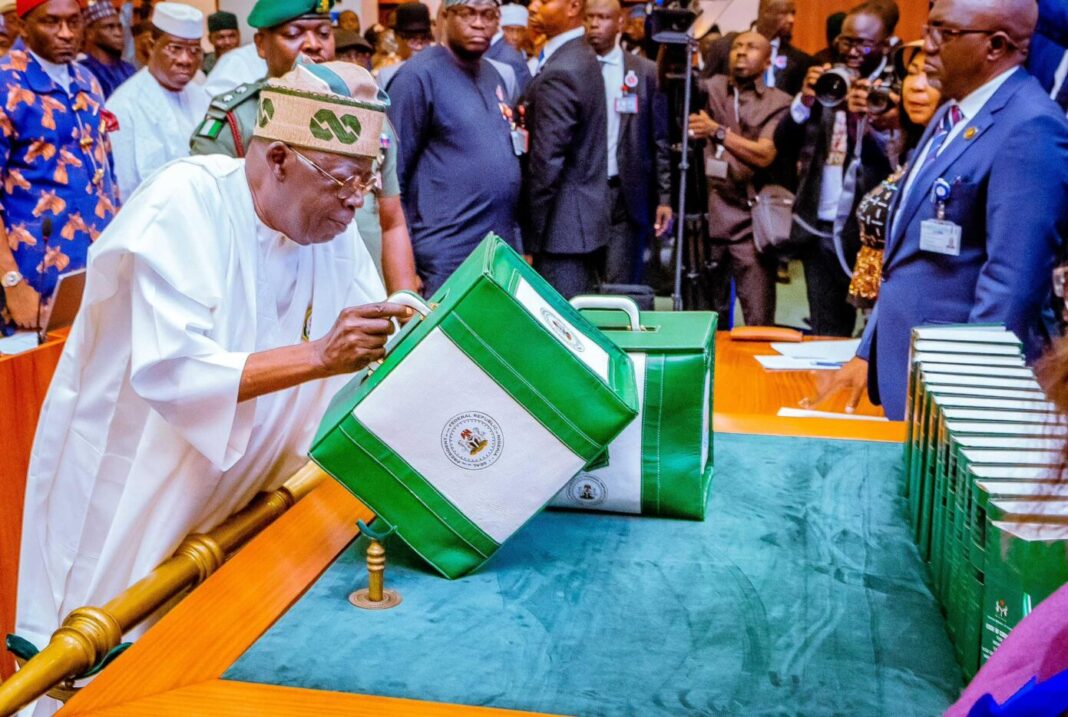

The Federal Executive Council (FEC) has approved #58.47 as Nigeria’s 2026 budget, setting the exchange rate from #1,512 to #1,400 per one US dollar, projecting total federal government revenue at #34.33 trillion for the year.
This marks a significant increase from the 2025 exchange rate of #1,400 per dollar which reflects economic and political considerations ahead of the 2027 general elections.
The budget framework assumes an oil benchmark price of $64 per barrel and targets oil production at 1.8 million barrels per day for budgeting purposes.
Major spending heads include statutory transfers of about £3 trillion, debt service of #15.91 trillion, and non-debt recurrent expenditure of #15.27 trillion.
The projected budget deficit is #20.10 trillion, representing approximately 3.61% of GDP.
The revised exchange rate and revenue projections are based on macroeconomic analysis and input from ministries, the private sector, civil society, and development partners.
The government cited pre-election spending as a factor that could influence the exchange rate and overall fiscal outlook.
Experts have welcomed the move, noting that realistic fiscal assumptions and transparent planning are crucial for macroeconomic stability and public confidence.
The budget framework will be transmitted to the National Assembly for further review and approval.
This new budget framework signals the government’s attempt to balance fiscal prudence with the realities of an election year, aiming to stabilize the economy and rebuild public trust.