

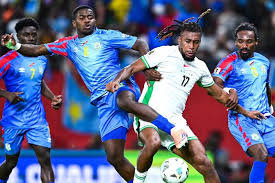

The Democratic Republic of Congo Football Federation has issued a strong warning to Nigeria, cautioning the Super Eagles against attempting to qualify for the 2026 FIFA World Cup through what it described as a “backdoor,” following Nigeria’s petition to FIFA challenging the eligibility of several Congolese players used during the African play-offs. The warning came amid growing controversy over DR Congo’s 4–3 penalty shoot-out victory over Nigeria in Morocco in November, a result that eliminated the Super Eagles from the play-offs and appeared to end their hopes of progressing to the FIFA intercontinental play-off.
The decisive encounter, played at a neutral venue in Morocco, saw both teams battle to a draw in regulation time before DR Congo prevailed in the penalty shoot-out, sealing Nigeria’s exit from the qualification race. The defeat condemned Nigeria to the prospect of missing a second consecutive FIFA World Cup after failing to qualify for the 2022 tournament in Qatar, intensifying scrutiny around the circumstances of the match and the players fielded by the Congolese side during the tie.
Following the victory, DR Congo was handed a bye into the final of the intercontinental play-off tournament, where it is scheduled to face the winner of the semi-final between New Caledonia and Jamaica. However, that progression has now come under question after the Nigeria Football Federation submitted a formal petition to FIFA, alleging that between six and nine DR Congo players who switched national allegiance may not have fully complied with eligibility requirements under Congolese law before representing the country at the play-offs.
According to the NFF, while FIFA reportedly cleared the players on the basis that they possessed valid DR Congo passports, the federation argues that the players may have failed to formally renounce their previous citizenships. The Nigerian body maintains that this runs contrary to the DR Congo constitution, which does not permit dual nationality, and has raised concerns that domestic legal requirements were not satisfied at the time the players were fielded.
In response, the DR Congo Football Federation dismissed the allegations and accused Nigeria of attempting to overturn the result through administrative means rather than on the pitch. In a post shared on the national team’s official X account on Wednesday, the Congolese body warned against what it described as legal manoeuvres to alter the outcome of the contest. “If you can’t win on the pitch, don’t try to win from the back door. The World Cup must be played with dignity and confidence not with legal tricks. Bring it on,” the post read.
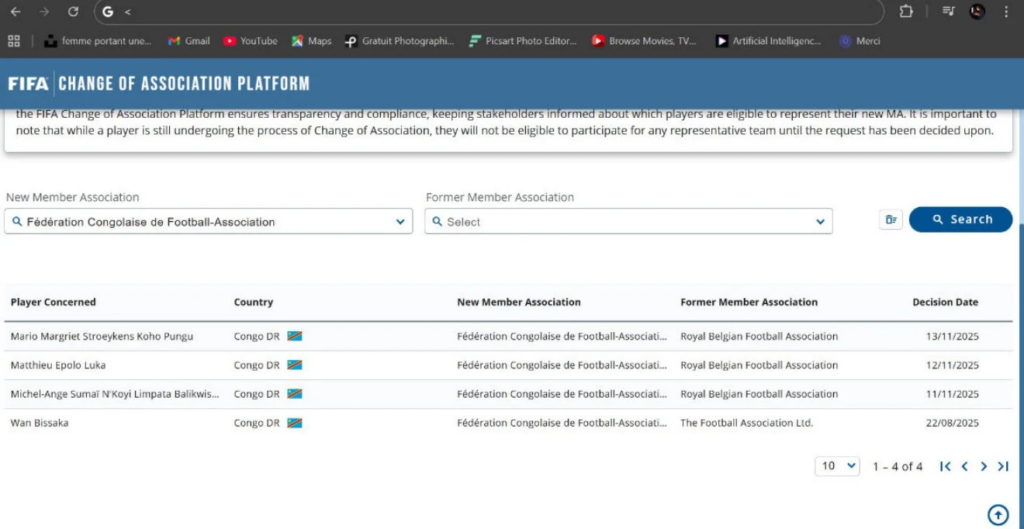
The Congolese federation also shared additional posts aimed at countering Nigeria’s claims, including photographs showing meetings between some of the players who switched nationality and the President of DR Congo, Félix Tshisekedi. Among those referenced was defender Aaron Wan-Bissaka, one of several players whose eligibility has been questioned. The federation further pointed to documentation from FIFA’s “Change of Association” platform, which lists the players involved, their previous national associations, and the dates on which their switches were finalised.
Nigeria Football Federation officials, however, have stood by their petition, confirming that the matter has been formally submitted to FIFA for review. A member of the NFF executive board said the federation had “done the needful” by forwarding relevant documents and legal arguments to the world governing body. He stated that Nigeria was examining what it considers a loophole, given DR Congo’s constitutional prohibition of dual citizenship and the alleged status of several players at the time of the play-off match.
NFF General Secretary, Dr Mohammed Sanusi, also confirmed that the federation had faulted the players’ switch of nationality, insisting that the issue goes beyond FIFA’s general eligibility rules. Sanusi said that while FIFA considers possession of a valid passport sufficient for eligibility, Nigeria’s concern is that FIFA may have been misled during the clearance process. He argued that enforcing domestic citizenship laws falls outside FIFA’s remit and that the responsibility lies with national associations to ensure that all legal requirements are properly fulfilled.
Sanusi further alleged that some of the players involved retained European passports, including French and Dutch citizenships, at the time they represented DR Congo, which he said contradicts the country’s laws. He added that Nigeria is alleging fraud in the process that led to FIFA’s approval of the nationality switches and maintained that the petition seeks a review of whether the correct procedures were followed.
The dispute has revived Nigeria’s hopes of keeping alive a path to qualification for the expanded 2026 World Cup, which will be hosted jointly by the United States, Canada and Mexico. For DR Congo, the controversy comes at a critical stage of the qualification process as the team prepares for the intercontinental play-off final. Historically, DR Congo has appeared at the FIFA World Cup only once, in 1974, when the country competed under the name Zaire, a fact that adds further significance to the current qualification campaign.