

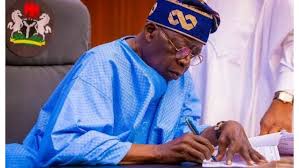

President Bola Tinubu on Wednesday expressed deep dissatisfaction over the persistent backlog of unpaid federal contractors, describing the situation as unacceptable and a threat to national development. The reaction came during the Federal Executive Council (FEC) meeting at the Presidential Villa, Abuja, where the President was informed that thousands of contractors who had completed government projects remained unpaid. According to the Special Adviser on Information and Strategy, Bayo Onanuga, the Bureau of Public Procurement (BPP) reported that about 2,000 contractors are owed, prompting the President to call for immediate action to resolve the issue.
The contractor payment crisis has been building for months, if not years. Many contractors reported that projects executed under the 2024 capital budget had not been fully settled, with some noting that payment releases from ministries and agencies had not even reached 50 percent. Contractors claimed they were forced to borrow funds to complete government projects, leaving them in financial distress, and in some cases, leading to bankruptcies, layoffs, and even deaths linked to the hardship. By mid-2025, over 5,000 contractors under various coalitions had formally appealed to the government for redress.
Growing frustration among contractors led to frequent protests in Abuja. Groups such as the All Indigenous Contractors Association of Nigeria (AICAN) staged demonstrations at the Ministry of Finance, the National Assembly, and other federal institutions, demanding payment for fully executed projects. In one high-profile protest, the contractors claimed that over ₦4 trillion was owed for 2024 capital-budget projects. Later reports suggested that even after warrants for payment were issued, substantial sums estimated at ₦760 billion for some projects—remained unpaid.
Legislators also weighed in as the crisis escalated. The House of Representatives summoned the Finance Minister, the Accountant-General of the Federation, and other relevant officials to explain why contractors were not being paid despite completion and certification of their projects. Lawmakers demanded transparency, accountability, and concrete timelines for the settlement of outstanding obligations, highlighting the risk that delayed payments posed to infrastructure delivery, contractor viability, and public trust in government.
Civic and advocacy groups joined the chorus of concern. The Centre for Economic Justice and Social Equity (CEJSE) condemned the government’s failure to honour verified obligations, describing the delays as a “silent but deadly virus” undermining small and medium enterprises (SMEs), causing mass layoffs, and destabilising communities that depend on government projects. Such delays, the groups argued, were not just administrative lapses but systemic failures threatening Nigeria’s economic stability.
Structural challenges have exacerbated the payment backlog. Even when contracts were awarded and projects executed, actual cash releases to ministries often lagged, leaving contractors to finance works on borrowed money. Combined with inflationary pressures, rising material costs, and macroeconomic instability, these delays inflicted severe financial strain on contractors. Analysts noted that the backlog of unpaid obligations contributed to stalled or abandoned projects and eroded public confidence in government procurement systems.
The situation reached a tipping point in 2025. Repeated protests, intensifying public pressure, and legislative scrutiny highlighted the urgent need for government intervention. Contractors warned that unless payments were made promptly, they might withdraw from future government contracts, a move that would have serious repercussions for infrastructure delivery and economic activity. Civic groups and oversight bodies further emphasised that long-standing neglect of contractor payments was undermining investor confidence and the credibility of Nigeria’s public procurement processes.
In response, President Tinubu set up a high-level inter-ministerial committee tasked with resolving the backlog of unpaid contractors. The committee comprises the Ministers of Finance; Works; Budget and Economic Planning; Education; Housing and Urban Development; and Marine & Blue Economy, alongside the heads of the Budget Office and the Federal Inland Revenue Service. The President directed the committee to examine the root causes of payment delays, verify outstanding obligations, identify funding sources, and present a comprehensive repayment plan. Onanuga said the President wants a one-stop solution to the crisis and even suggested that borrowing could be considered if necessary to meet obligations.
The contractor payment backlog reflects broader fiscal and administrative challenges. Overlapping budgets, carry-over of 2024 capital projects into 2025, and cash-release inefficiencies have compounded the problem. The government’s recent borrowing activities—including approval of N1.15 trillion in domestic loans and a $2.35 billion Eurobond issuance illustrate the tight fiscal environment in which these obligations must be met. Analysts argue that systemic reforms are required to prevent a recurrence of this crisis and restore confidence among local contractors.
President Tinubu’s intervention, framed as “grave displeasure,” signals a commitment to addressing a long-standing challenge that has impacted livelihoods, stalled development projects, and undermined trust in government. By establishing the inter-ministerial committee, the administration aims to not only clear existing arrears but also implement structural reforms to ensure timely payment of contractors in the future. For many contractors and stakeholders, this move represents a critical step toward stabilising Nigeria’s public procurement system and restoring confidence in the government’s commitment to honour contractual obligations.