

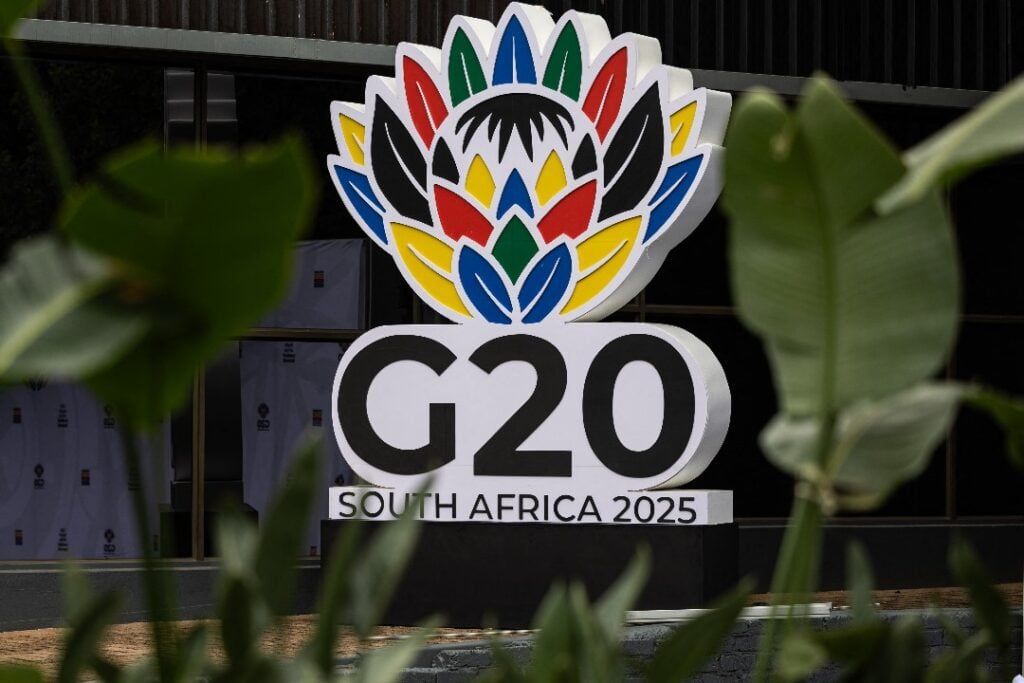

South Africa has announced it will not participate in the 2026 G20 meetings, after being formally excluded by the United States, a move Pretoria describes as a “commercial break” until the presidency rotates to another country.
The decision follows a dramatic breakdown in diplomatic relations between Washington and Pretoria. The U.S., having assumed the G20 presidency for 2026, confirmed that South Africa would not receive an invitation to next year’s summit in Florida. The decision came after the U.S. in effect boycotted the G20 Leaders’ Summit hosted by South Africa in Johannesburg in November 2025. 
The root of the standoff lies partly in the handover of the rotating presidency. At the close of the Johannesburg summit, South Africa, led by Cyril Ramaphosa, formally offered the presidency to the U.S., as protocol requires. However, when the U.S. declined to send a senior state-level official and instead provided a lower-ranking embassy representative, South Africa refused to cede the presidency under those conditions.
U.S. President Donald Trump subsequently announced that South Africa would not be invited to the 2026 G20 summit. In his statement, he claimed Pretoria had refused to hand over G20 leadership properly, accusing the South African government of human-rights abuses against its white minority, allegations that Johannesburg strongly rejects as unfounded and politically motivated.
In response, Ramaphosa reaffirmed that South Africa remains a founding and full member of the G20 and condemned the U.S. move as “regrettable,” arguing that no single country has the authority to unilaterally expel another from the forum. He insisted South Africa will remain engaged and constructive within G20 processes, just not under the U.S. presidency.
As of now, South Africa appears resolved to wait out the U.S. presidency. There is no indication it will seek behind-the-scenes pressure or lobbying from other G20 members to reverse the exclusion. Instead, it bets on restoring its role when leadership passes to a more neutral chair. 
The world will be watching whether the G20 survives this fracture, or whether it begins to resemble a club where power politics trumps institutional norms.
Samuel Aina