

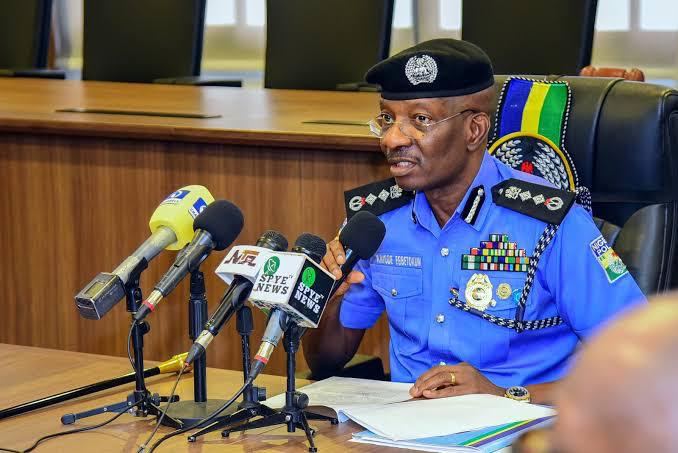

The Nigeria Police Force has entered a decisive new phase in the ongoing security reforms directed by President Bola Ahmed Tinubu, as the Inspector General of Police, Kayode Egbetokun, issued a sweeping nationwide order for the arrest of any police officer found escorting private individuals contrary to the new policy of withdrawing officers from Very Important Person (VIP) protection duties. The order, which became public on the 1st of December, emerged through a wireless message circulated to all state commands, zonal headquarters, and specialised tactical units. The message conveyed that any officer caught providing escort duties to VIPs without lawful authorisation is to be apprehended immediately, while supervising commanders who allow such deployments will also face internal disciplinary measures for violating operational directives.
This escalation follows President Tinubu’s earlier instruction that all police officers attached to individuals, including politicians, business people, and other private citizens, must be withdrawn so that the Nigeria Police Force can redirect its manpower to core policing functions such as patrol, investigations, public safety operations, and intelligence-based interventions. The government has explained that this policy is designed to strengthen national security by ensuring that thousands of armed officers who had been acting as private bodyguards return to active service within communities where policing gaps have widened over the years. The new enforcement directive, therefore, signals that the Federal Government is intent on closing loopholes that previously allowed VIPs to retain escorts in defiance of guidelines, a recurring problem identified in earlier withdrawal attempts.
According to the communication issued by the Inspector General, the directive applies to all branches of the police, including the Mobile Police Force, the Counter Terrorism Unit, the Special Protection Unit, the Police Mobile Squadrons, and other specialised formations. It instructs officers from the monitoring unit and the commissioner of police X-Squad to conduct strict enforcement operations and make immediate arrests of any violators found in the course of duty. The message was clear that no further reminders would be issued, and commands must take responsibility for full compliance.
An earlier IG revelation showed that more than 11,000 police officers had been deployed to VIPs and non-essential duties around the country, significantly reducing the manpower available for public policing. In the days following the presidential directive, the Inspector General confirmed that 11,566 officers were identified for immediate withdrawal and reassignment to operational units covering patrol, response, special operations, and intelligence gathering. Police authorities acknowledged that the long-term use of officers as private escorts deprived communities of needed protection and contributed to slow response rates and low police visibility in many regions. The latest order, therefore, represents the enforcement phase of a broader reform designed to strengthen the operational capacity of the force.
The renewed clampdown is also informed by previous experiences in which directives on VIP withdrawals were only partially obeyed. In recent weeks, public outrage had emerged, as many VIPs continued to retain police escorts despite the president’s announcement. Some senior legislators in the Senate criticised the lack of full compliance and pointed out that inconsistent enforcement undermined the credibility of the policy. That public criticism appears to have heightened pressure on the Nigerian Police to demonstrate seriousness and to prevent further circumvention of the order.
The coming weeks will reveal whether the Nigeria Police Force (NPF) can maintain the momentum of this reform and how well those who have taken advantage of this scheme for years will refrain from attempting to undermine or reverse the policy. For now, the Inspector General’s order stands, as directed by the President.
Samuel Aina