

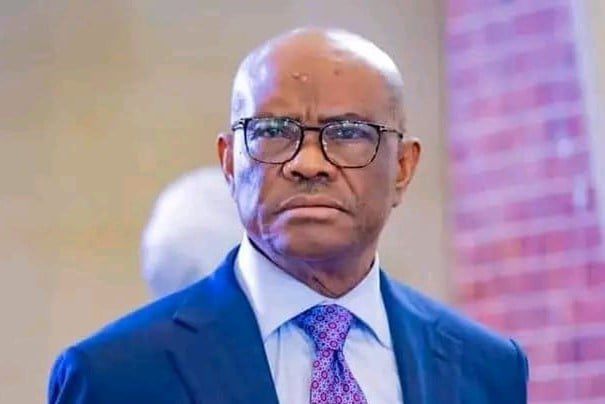

The Peoples Democratic Party (PDP) finds itself at a breaking point after a senior party figure, Umar Sani, told Arise Television on Monday that Nyesom Wike’s only condition for reconciliation was that the PDP agree not to field a presidential candidate in the 2027 election. According to Sani, this was the non‑negotiable demand: no ticket, or Wike would wage a “fight to the finish.”
Sani, a longtime PDP chieftain and former media adviser, framed Wike’s stance as existential. He said that if the reconciliation committee failed to accept Wike’s demand, the minister would not accept peace; his threat, he claimed, was very real. The comment comes amid heightened tensions in the party, which last week expelled Wike, along with Samuel Anyanwu, Ayodele Fayose, and other key figures, following a controversial national convention in Ibadan.
The PDP’s internal conflict reflects deeper fractures. Wike has in recent months accused party leaders of betrayal and unfaithfulness to past agreements, especially in meetings involving key stakeholders at the national level.  He has expressed dismay over what he describes as a decline in trust among party elites, and publicly threatened further crisis if his conditions are not met. 
In his appearance on Arise TV earlier this year, Sani had accused Wike of plotting to undermine the party so that President Bola Tinubu could run unopposed in 2027. He argued that Wike’s actions amount to working against the PDP’s survival, rather than strengthening it.
Meanwhile, the PDP’s national leadership has pushed back firmly. The party’s National Publicity Secretary, Debo Ologunagba, has said the PDP will not entertain conditions from any individual, asserting that loyalty to the party is non-negotiable and must be rooted in the constitution, not personal demands. The party insists it demands “100 percent loyalty” from all its members.
Some governors, however, are trying to steer the party away from a full-blown crisis. Adamawa State Governor Ahmadu Fintiri, who chaired the recent PDP convention, issued a statement rejecting the expulsion of Wike and others. He called for reconciliation, stating that peace and stability should be the guiding principles, and warned that factionalism could irreparably damage the PDP.
The breakdown in reconciliation comes after months of mediation attempts. A committee had been established to bring feuding party actors together, but Sani’s revelation suggests that Wike’s demand was a stumbling block no one was willing to concede.  Wike, for his part, has lamented what he calls repeated violations of agreements once reached, especially those involving his political faction. 
If Wike’s condition is taken seriously, it might mean forgoing the presidency, an unthinkable concession for a party that has long viewed the 2027 poll as its chance to regain power. Accepting such a demand could also set a dangerous precedent, giving outsized influence to individual party members. However, Wike remains a political heavyweight, and his grievances resonate with many within the party who feel marginalized. The recent expulsion of his allies has only sharpened those divisions.
At this moment, the PDP stands at a crossroads. One path leads to a fragile unity under terms that some see as surrender. The other leads to a protracted internal war, possibly toxic to the party’s future. How the leadership responds to Wike’s ultimatum could determine not just the party’s cohesion but also its chances of mounting a credible challenge in 2027.
The next few days will be critical. If the reconciliation committee refuses, Wike may double down on his threat. If the party caves, it will have to explain to its base why it abandoned its right to contest. For now, the PDP’s soul is on the table, and the consequences could echo across Nigeria’s political landscape in the years ahead.
Samuel Aina