


The Federal Government is set to commence full implementation of a $552.18 million education reform initiative aimed at overhauling Nigeria’s basic education system, a move officials say will significantly enhance learning outcomes and strengthen the capacity of teachers and schools nationwide. The programmes, named HOPE for Quality Basic Education for All (HOPE-EDU) and HOPE-Governance (HOPE-GOV), are being executed in partnership with the World Bank and the Global Partnership for Education, reflecting a multi-stakeholder approach to tackling long-standing systemic gaps in governance, teacher development, and school infrastructure.
At the core of the programmes’ objectives is the ambition to improve learning outcomes for over 29 million children, empower 500,000 teachers, construct 13,000 classrooms across the country, and bring millions of out-of-school children back into formal education. The initiatives are also designed to strengthen the quality of teaching and learning materials, enhance the capacity of education administrators, and address persistent inequities in access to education, particularly among vulnerable populations.
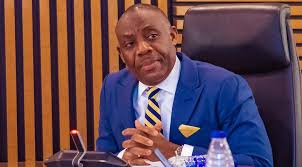
Executive Secretary of the Universal Basic Education Commission (UBEC), Aisha Garba, disclosed these plans on Wednesday during the opening of a three-day sensitisation workshop in Ikeja, Lagos, which convened Commissioners of Education, Chairmen of State Universal Education Boards, and heads of key implementing departments of both the HOPE-EDU and HOPE-GOV programmes. Garba described the programmes as “a movement that will echo through classrooms, communities, and generations to come,” stressing the critical importance of state-level implementation in ensuring the initiatives’ success.
She noted that while the Federal Ministry of Education and UBEC would provide resources and technical support, “the real work happens at the grassroots. You will lead needs assessments, community mobilisation, and on-the-ground execution.” According to Garba, the programmes aim not only to improve infrastructure and resources but also to enhance learning outcomes and teacher capacity nationwide. She further highlighted that the initiatives are “aligned seamlessly with President Bola Tinubu’s Renewed Hope Agenda” and represent a direct response to the nation’s urgent challenges in basic education.
Garba emphasised that inclusivity must be central to programme execution, urging participants to focus on marginalized groups, including girls, children with special needs, vulnerable children, and those living in conflict-affected areas. She stated, “Their education is not charity; it is the cornerstone of our democracy and economy.” Garba urged participants to actively engage in discussions, deliberate on challenges, and leave the workshop with concrete action plans, noting that the success of the programmes hinges on effective collaboration and community-level mobilisation.
“As we embark on this sensitisation journey today, I call on each of you to discuss, deliberate, and depart with concrete action plans. Share your challenges openly so we can co-create solutions,” she said, adding, “Let us work our way to a Nigeria where learning is strengthened to track progress and outcomes, improve quality, enhance continuous teacher capacity development and career advancement, and improve availability and quality of TLMs for schools. With all these in place, quality education is guaranteed for every Nigerian child. Education for all is the responsibility of all.”
The HOPE-EDU and HOPE-GOV programmes were officially unveiled in December 2025 under the $552 million Human Capital Opportunities for Prosperity and Equity–Governance initiative, a federal government effort in partnership with the World Bank aimed at strengthening financial and human resource management in basic education and primary healthcare across the country. The initiatives adopt a result-based financing model anchored on three key result areas: increasing the quality of education, improving access, and strengthening systems. Under this model, states receive incentives upon achievement of verifiable outcomes linked to disbursement indicators.
The programmes are being rolled out in multiple phases to ensure coverage across all regions of Nigeria. The first phase, focused on South-South and South-East states, was held in Uyo, Akwa Ibom, while the current phase covers South-West and North-Central states through the Lagos workshop. A third phase targeting North-West and North-East states is planned for Kano.
UBEC has stressed that consistent monitoring, accountability, and stakeholder collaboration will be vital, with digital dashboards introduced to track every Naira, activity, and milestone of the programmes. Garba urged multi-stakeholder partnerships involving local governments, civil society organisations, parents, and the private sector to ensure the programmes’ success, describing the rollout as “a historic turning point for Nigeria’s basic education sector.”
The launch of HOPE-EDU and HOPE-GOV comes against the backdrop of Nigeria’s long-standing educational challenges. The country has one of the highest numbers of out-of-school children globally, while many primary healthcare centres remain underfunded, understaffed, and poorly equipped, exacerbated by weak public financial management at the sub-national level. Analysts and education experts note that systemic inefficiencies, inadequate infrastructure, and disparities in resource allocation have contributed to poor learning outcomes, teacher attrition, and unequal access to education, particularly in rural and conflict-affected areas.
In this context, the $552.18 million programmes are designed not only to improve physical infrastructure but also to strengthen teaching capacity, enhance learning materials, and ensure accountability through digital monitoring systems. By focusing on inclusivity, grassroots engagement, and result-based outcomes, the Federal Government aims to create a sustainable framework for quality basic education, addressing both immediate gaps and long-term systemic deficiencies.
As Garba emphasised, “This is a historic turning point for Nigeria’s basic education sector,” underscoring the urgency of coordinated action at all levels to ensure that the objectives of HOPE-EDU and HOPE-GOV are fully realised and translate into tangible benefits for every Nigerian child.