

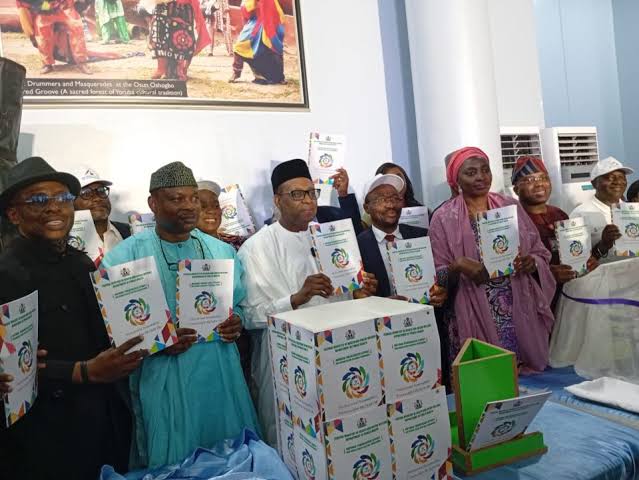

The Federal Government has announced plans to commence self-financing for HIV and tuberculosis programmes as part of a long-term strategy aimed at ending Nigeria’s reliance on donor funding for major public health interventions. The Coordinating Minister of Health and Social Welfare, Prof. Muhammad Pate, disclosed this in Abuja during the official launch of the Multisectoral Accountability Framework for Tuberculosis and the long-acting injectable HIV pre-exposure prophylaxis.
The event was organised by the National AIDS, Viral Hepatitis and STIs Control Programme of the Federal Ministry of Health and Social Welfare and brought together government officials, development partners, civil society organisations and other key health stakeholders to discuss the future of disease control and health financing in Nigeria.
The minister explained that the move toward domestic financing was part of broader efforts to ensure sustainability of critical health programmes, particularly as global funding for health interventions continues to decline and countries are increasingly expected to take ownership of their healthcare systems.
Speaking at the event, Pate stated that Nigeria was already making plans to gradually exit donor dependency and begin funding priority diseases using domestic resources, particularly HIV, tuberculosis and malaria, which remain major public health concerns in the country. He said, “We want to exit dependency over time. By 2030, Nigeria should be able to put its own domestic resources toward the priority diseases that affect our people so that it is not consistently looking for this grant or that grant.”
He noted that the global health financing landscape was changing rapidly and that countries like Nigeria must begin to rely more on domestic resources to sustain critical health programmes. According to him, “We are in a world that is far different from where we were 10 or 15 years ago in this fight. Financing has become limited globally, and in such times it is innovations that will allow us to get ahead,” stressing that the integration of programmes would help the country use limited resources more efficiently and improve service delivery.
The minister also explained that the government was already taking steps to increase budgetary allocations for health and strengthen accountability in the use of funds, while working with state governments and development partners to gradually replace donor funding with domestic contributions in order to ensure the sustainability of tuberculosis, HIV and malaria programmes beyond external support.
Earlier, the Minister of State for Health and Social Welfare, Dr. Iziak Salako, said the dual launch of the tuberculosis accountability framework and the long-acting injectable HIV prevention tool reflected a shift toward a more integrated and innovative health system in Nigeria.
He explained that the introduction of the long-acting injectable HIV prevention drug represented a major breakthrough in HIV prevention efforts, particularly for individuals who face stigma or difficulty adhering to daily medication, noting that innovations such as long-acting prevention tools could significantly improve Nigeria’s HIV prevention strategy and reduce new infections over time.
Also speaking, the Permanent Secretary in the ministry, Daju Kachollom, said the event marked two major milestones in Nigeria’s public health response to tuberculosis and HIV. She said, “Today’s gathering is more than a ceremonial observance. It marks two significant milestones in Nigeria’s public health response — the national launch of the long-acting injectable for HIV prevention and the unveiling of the multisectoral accountability framework for TB.”
She added that the ministry remained committed to strengthening surveillance systems, improving access to diagnosis and treatment, and expanding community-based screening programmes across the country to ensure that no one is left behind in the fight against tuberculosis and HIV.
Nigeria currently has the second-largest HIV epidemic in the world, with an estimated 1.9 million people living with HIV, according to government data, making the disease a major public health concern despite progress recorded in recent years. Although HIV prevalence has declined, new infections continue to occur at a concerning rate, posing a challenge to the country’s health system and treatment programmes.
Experts say prevention remains the weakest link in Nigeria’s HIV response, noting that while oral pre-exposure prophylaxis has been available, uptake has remained low due to stigma, access barriers, and the difficulty many people face in adhering to daily medication.
Health economists have also warned that without stronger and more innovative prevention strategies, Nigeria risks maintaining a steady pipeline of new infections, which could place additional pressure on already limited treatment resources and funding.