

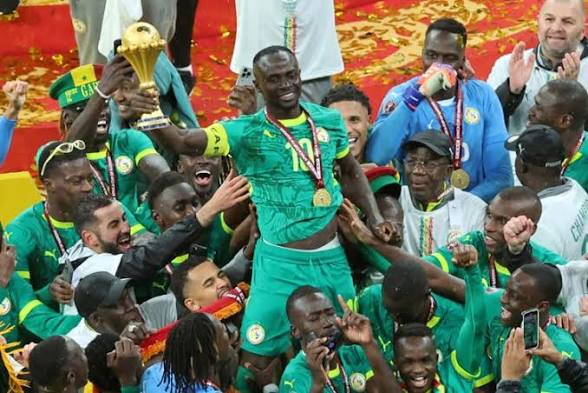

The Court of Arbitration for Sport has said it will deliver a ruling “as swiftly as possible” on Senegal’s appeal after the country was stripped of its Africa Cup of Nations title in a decision that has sparked widespread debate across African football.
The controversy stems from the final of the Africa Cup of Nations held on January 18, where Senegal initially secured a 1-0 victory over Morocco to claim the continental crown. However, that result was later overturned following disciplinary proceedings, with the scoreline amended to a 3-0 victory in favour of Morocco, effectively handing the title to the North African side under contentious circumstances that have since drawn scrutiny from stakeholders, analysts, and fans across the continent.
The dramatic turn of events originated during the closing stages of the final, when Senegal’s players walked off the pitch in protest after hosts Morocco were awarded a stoppage-time penalty, a decision that triggered immediate outrage from the Senegalese team.
Although the players eventually returned to complete proceedings, the incident proved pivotal, as it led to a formal complaint by the Royal Moroccan Football Federation to the Confederation of African Football. After reviewing the circumstances, CAF ruled that Senegal’s actions constituted a breach of competition regulations, declaring that the team had effectively forfeited the match.
In its decision, CAF stated that the “result [would be] recorded as 3-0 in favour” of Morocco, a ruling that not only reversed the outcome of the match but also stripped Senegal of the title they had appeared to win on the pitch.
In response, Senegal swiftly filed an appeal with CAS, seeking to overturn CAF’s decision and have the original result reinstated. The move has placed the Lausanne-based tribunal at the centre of one of the most high-profile disputes in recent African football history, with significant implications for both teams and for the integrity of the tournament itself.
Speaking on the matter, CAS Director General Matthieu Reeb acknowledged the urgency and global attention surrounding the case, stating: “We understand that teams and fans are eager to know the final decision, and we will ensure that arbitration proceedings are conducted as swiftly as possible, while respecting the right of all parties to a fair hearing.”
Despite this assurance, a formal statement from CAS clarified that there is currently no fixed timeline for when a final decision will be delivered, leaving the matter unresolved for the foreseeable future.
The dispute highlights the critical role of CAS as the highest authority for resolving international sports conflicts, particularly in cases involving governing bodies such as CAF. Established in 1984 and based in Switzerland, CAS serves as the ultimate arbitration body for disputes in global sport, including football, athletics, and the Olympics, and its rulings are binding on all parties.
The case also underscores the complexities of tournament regulations, especially concerning disciplinary actions like match forfeiture, which can dramatically alter outcomes long after games have been played.
According to former CAF disciplinary panel head Raymond Hack, the arbitration process could be prolonged, potentially stretching up to six months, meaning the case may still be ongoing during major global competitions such as the FIFA World Cup.