

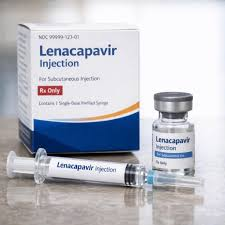

The Director-General of the National Agency for the Control of AIDS, Temitope Ilori, has clarified that the newly introduced long-acting HIV prevention injection, Lenacapavir, also known as LenPrEP, is not recommended for use among pregnant women due to insufficient evidence on its effects in pregnancy, a development that comes as Nigeria prepares to roll out thousands of doses of the drug as part of efforts to strengthen HIV prevention in the country.
Ilori made this known on Monday during a media parley organised by the National HIV, Viral Hepatitis and STDs Control Programme under the Federal Ministry of Health and Social Welfare in Abuja, where she explained that although global clinical studies have shown a high safety margin for the drug, its use among pregnant women remains restricted because there is not yet enough scientific evidence to confirm its safety for that category of patients, stressing the importance of using the drug strictly as approved within national guidelines and medical recommendations. She said, “Even though LenPrEP is considered very safe based on global studies, it is not recommended for pregnant women. It is important to emphasise that this is a preventive intervention, not a treatment.”
Ilori also warned that while Lenacapavir represents a major step forward in HIV prevention, it does not protect against other sexually transmitted infections, including hepatitis, and therefore should not be seen as a replacement for other preventive measures such as condoms and regular testing, emphasising the need for comprehensive prevention strategies rather than reliance on a single method. She said, “We must stress that it does not prevent sexually transmitted infections or other infections like hepatitis. People must continue to take comprehensive precautions,” highlighting concerns among public health officials that new technologies are sometimes misunderstood by the public as complete protection, which could lead to increased risky behaviour if proper education is not carried out alongside the rollout of the drug.
Also speaking at the event, the National Coordinator of the National AIDS and STDs Control Programme, Adebobola Bashorun, disclosed that the Federal Government was already working toward expanding access to the drug across more states and was exploring catalytic funding and partnerships to increase the number of doses available and extend coverage to populations most at risk of HIV infection, noting that the introduction of Lenacapavir was part of a broader HIV prevention strategy and would complement, not replace, existing HIV prevention methods such as oral pre-exposure prophylaxis (PrEP).
He said, “As we scale up, we are exploring catalytic funding to increase the number of doses and extend coverage to populations most at risk,” and added, “We already have multiple prevention options. Individuals can still use oral PrEP. National policy guidelines will determine how best to integrate this new option into existing programmes.” Bashorun also addressed safety concerns and possible side effects, explaining that the reported side effects had so far been mild and largely limited to injection-site reactions. He said, “The common side effects include pain at the injection site, which is expected. We are actively monitoring for any adverse reactions, and so far, the outcomes are encouraging.”
Earlier, the Minister of State for Health, Iziaq Salako, highlighted that the introduction of Lenacapavir in Nigeria was being facilitated through support from the Global Fund, adding that the Federal Government had already secured about 52,000 doses of the injectable drug to support the initial phase of implementation, which is expected to begin in selected states before expanding nationwide. He said, “This drug is being made available through a partnership with the Global Fund. Over time, we expect to engage manufacturers directly and explore pathways for local production,” and added that the rollout formed part of Nigeria’s broader strategy to end HIV/AIDS as a public health threat by the year 2030 through improved prevention, treatment, and care services across the country.
He said, “The government of Nigeria under President Bola Ahmed Tinubu remains committed to ending HIV/AIDS as a public health threat by 2030 through a comprehensive and multi-sectoral approach that prioritises the expansion of prevention, treatment, and care services,” while also noting that discussions around technology transfer and domestic manufacturing would be critical in ensuring long-term sustainability and reducing dependence on external donors.
Lenacapavir, developed by Gilead Sciences, has recently gained global attention as a potential breakthrough in HIV prevention because unlike daily oral PrEP, it is administered as an injection twice a year, making it a more convenient option for individuals who struggle with taking daily medication, particularly among high-risk populations where adherence to daily pills has been a major challenge for HIV prevention programmes worldwide, and public health experts believe that long-acting injectable prevention drugs like Lenacapavir could significantly reduce new HIV infections if properly funded, distributed, and integrated into existing health systems.
Nigeria continues to carry one of the largest HIV burdens in the world, with an estimated 1.9 million people currently living with HIV, according to data from the National Agency for the Control of AIDS, and although significant progress has been made in expanding access to antiretroviral therapy and improving survival rates among people living with HIV, prevention gaps still persist, particularly among key populations and young people, making the introduction of new prevention technologies an important development in the country’s HIV response, though experts have warned that the success of Lenacapavir in Nigeria will depend on equitable access, sustained funding, health system readiness, and effective public education.
Despite the optimism surrounding the new drug, public health experts have raised concerns about affordability, long-term financing, and Nigeria’s continued dependence on donor funding for HIV programmes, warning that sustainability could become a major challenge if international support declines in the future, while there are also ongoing discussions among policymakers and health experts about ensuring that the rollout of new technologies such as Lenacapavir does not divert resources from other critical health priorities such as malaria control, maternal health services, and routine immunisation programmes, which remain major public health concerns in Nigeria.