

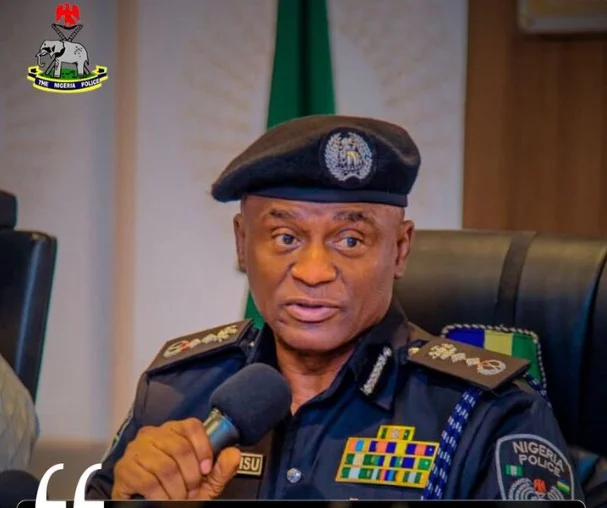

The Inspector General of Police, Olatunji Disu, has ordered a nationwide reduction in the number of tactical teams across police formations as part of a broad move aimed at strengthening supervision, improving accountability, and addressing growing public complaints about the operations of tactical units.
The directive affects formations at the zonal, state, area command, and divisional levels, with the police hierarchy now placing a cap on the number of tactical teams permitted at each level. Under the new directive, tactical teams at zonal and state command levels are to be limited to a maximum of five teams, while area commands and divisions are restricted to a maximum of three teams.
The move is expected to significantly restructure how tactical units are deployed across the country and is part of a wider reform effort intended to improve policing efficiency and restore public confidence in the Force.
The announcement was disclosed by the Force Public Relations Officer, Anthony Placid, in a statement issued in Abuja, where he explained that the decision followed concerns over the proliferation of tactical teams and allegations of excesses by poorly supervised units.
According to him, the rapid increase in the number of tactical teams over time had created supervision challenges and contributed to public complaints about misconduct and operational excesses. He explained that the reduction in the number of teams would not be abrupt but would be implemented through administrative restructuring at the formation level.
Specifically, he noted that the reduction could be achieved through the merging or disbandment of teams, depending on what heads of formations consider most appropriate for their commands.
Quoting directly from the statement, he said: “The IGP directed the reduction of the tactical teams at zonal and state command levels to a maximum of five, and area command and divisional levels to a maximum of three. This can be achieved by merging or disbanding teams, at the heads of formations’ discretion.”
The police authorities were also careful to clarify that the directive does not apply to state government-created security outfits that operate alongside the police in various states. These include the Lagos Rapid Response Squad, the Oyo Special Response Squad, and Operation DOO-AKPOR, as well as other similar outfits across the country.
Emphasising this clarification, the police spokesperson quoted the IGP’s position in the statement, saying: “The teams referred to exclude state government-created outfits like Lagos’ Rapid Response Squad, Oyo’s SRS, and Bayelsa’s Operation DOO-AKPOR and other similar outfits across the country.
The IGP expects this move to free personnel for police stations and reduce complaints about tactical team excesses.” The clarification was considered necessary to avoid confusion and reassure state governments that their locally established security outfits were not affected by the directive.
Further explaining the rationale behind the decision, the Force stated that the move is specifically aimed at strengthening supervision within the police structure, improving accountability among tactical units, reducing complaints from members of the public, and boosting policing at the grassroots level, particularly at police stations and divisions that have experienced manpower shortages.
The statement emphasised that the Inspector General had, in his maiden address to Nigerians, already stressed the need for accountability and a more people-friendly police force, and that the reduction of tactical teams is part of fulfilling that commitment.
As stated in the official communication: “Having emphasised accountability and a people-friendly Force in his maiden address to Nigerians, the IGP took this step to enhance supervision of existing teams, strengthen Police Divisions, and remove causes of complaints against the Force by members of the public.”
The police also addressed confusion arising from an earlier media report which claimed that the Inspector General had ordered the immediate dissolution of tactical units across state commands nationwide.
According to the Force spokesman, that report was a misrepresentation of the directive, as the IGP did not order a dissolution but rather a reduction in the number of tactical teams. The clarification was issued to correct public misunderstanding and to ensure that officers and the general public properly understood the scope of the directive.
Placid explained that the police chief recognises the important role tactical teams play in crime-fighting operations across the country but is concerned that their proliferation has had unintended consequences, including draining manpower from police divisions and posts, and creating supervision challenges that ultimately affect the integrity and effectiveness of the Force.
The restructuring, therefore, is intended to strike a balance between maintaining effective tactical response capabilities and strengthening conventional policing at the community level, where many Nigerians interact daily with the police.