

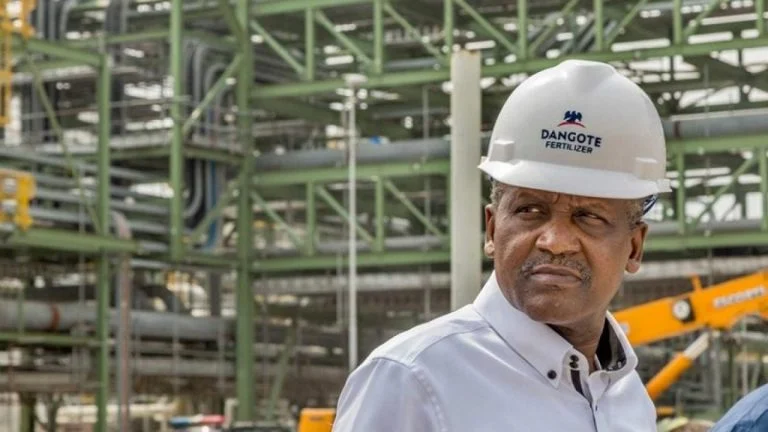

As South Africa grapples with a persistent energy crisis marked by fuel supply constraints and rolling power outages, the country is increasingly turning its attention to Africa’s largest refinery—the Dangote Refinery—as a potential lifeline.
The move signals a broader shift in Africa’s energy dynamics, where intra-continental partnerships are beginning to replace long-standing dependence on imported refined petroleum products from Europe and the Middle East.
South Africa’s Energy Struggles
South Africa’s energy challenges have intensified in recent years. While much of the crisis has been associated with electricity shortages driven by the struggling state utility Eskom, the country is also facing refining capacity constraints and rising fuel import costs.
Several domestic refineries have either shut down or are operating below capacity, forcing Africa’s most industrialized economy to rely heavily on imported refined fuels. This has exposed the country to:
- volatile global oil prices
- supply chain disruptions
- currency pressures affecting import costs
The situation has prompted policymakers to explore alternative and more stable sources of refined petroleum within Africa.
The Dangote Refinery Advantage
Located in Lagos, Nigeria, the Dangote Refinery—owned by Aliko Dangote—is a game-changer for the continent’s energy landscape.
With a refining capacity of 650,000 barrels per day, it is the largest single-train refinery in the world and has the potential to:
- meet Nigeria’s domestic fuel demand
- supply surplus refined products to other African countries
- reduce Africa’s dependence on fuel imports
For South Africa, a deal with Dangote Refinery could provide a reliable and geographically closer source of petrol, diesel, and aviation fuel.
Talks and Strategic Interests
Reports indicate that South African officials and energy stakeholders are exploring supply agreements with the Dangote Refinery as part of efforts to stabilize fuel availability.
Such a deal would offer several strategic benefits:
1. Reduced Import Costs
Sourcing fuel from within Africa could lower shipping costs and reduce exposure to global freight volatility.
2. Energy Security
A stable supply arrangement would help cushion South Africa against disruptions in international markets.
3. Continental Trade Boost
The partnership aligns with the goals of the African Continental Free Trade Area (AfCFTA), promoting intra-African trade and economic integration.
A Shift in Africa’s Energy Map
The potential deal highlights a broader transformation in Africa’s energy ecosystem. Historically, many African countries exported crude oil only to import refined products at higher costs.
The emergence of large-scale refining capacity in Nigeria is beginning to reverse that trend, positioning the country as a regional hub for refined petroleum products.
For South Africa, this represents an opportunity to diversify supply sources and reduce reliance on traditional global partners.
Challenges and Considerations
Despite the promise of such a partnership, several challenges remain:
- Logistics and infrastructure: Transporting refined products efficiently across long distances will require strong maritime and distribution systems.
- Pricing agreements: Negotiations must ensure competitive pricing compared to global suppliers.
- Regulatory alignment: Both countries will need to harmonize standards and trade policies.
Additionally, South Africa must balance short-term fuel needs with its long-term transition toward renewable energy sources.
A Continental Opportunity
The discussions between South Africa and the Dangote Refinery represent more than just a commercial deal—they reflect a growing vision of African self-sufficiency in energy.
If successful, the partnership could:
- strengthen economic ties between two of Africa’s largest economies
- reduce the continent’s dependence on external fuel markets
- set a precedent for future intra-African energy cooperation
Conclusion
As South Africa navigates its energy crisis, the Dangote Refinery offers a compelling solution rooted within the continent. The potential deal underscores a shifting narrative—one where African nations increasingly look inward for solutions to shared challenges.
In a time of global uncertainty, such collaborations may prove crucial in shaping a more resilient and self-reliant African energy future.