


In a striking revelation that has underscored the depth of geopolitical distrust between long‑standing allies, reports have emerged that the Kingdom of Denmark made secret contingency plans earlier this year to sabotage critical aviation infrastructure in its vast Arctic territory of Greenland amid fears that the United States, under the leadership of former President Donald Trump, might attempt to seize control of the strategically vital island by force.
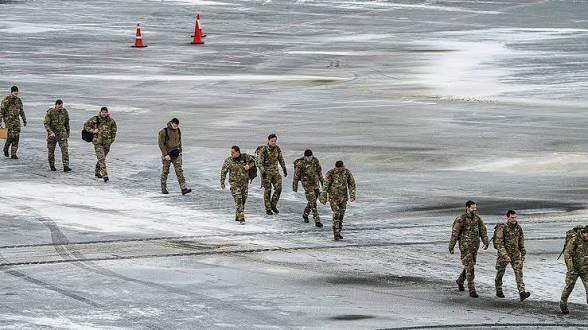
According to reporting by Denmark’s public broadcaster DR – citing multiple senior officials within the Danish government, military, and European allies – Danish troops deployed to Greenland in January were not merely participating in what was publicly described as routine military exercises, but were secretly equipped with explosives and tasked with a stark, worst‑case‑scenario mission to destroy key airport runways in Nuuk and Kangerlussuaq.
The reported intention behind this drastic measure was to prevent potential US military aircraft from landing on the island in the event of a full‑scale invasion, essentially making Greenland inaccessible by air to any forces that might move to occupy it by force.
The measures taken went beyond demolition plans. As part of the covert preparations, Danish forces transported blood supplies to Greenland – an indication that planners were bracing not just for symbolic defences but for the possibility of actual combat casualties should tensions escalate into open conflict.
The level of secrecy surrounding these preparations was such that only a small cadre of military leadership and government officials were reportedly privy to the details, with Denmark’s defence ministry declining to offer public comment and a senior military official confirming that “only a limited number of people would have been aware of the operation for security reasons.”
The backdrop to this extraordinary scenario is a period of heightened tension tied to repeated statements by Trump expressing interest in acquiring Greenland, a semi‑autonomous territory that sits astride key Arctic maritime routes and houses strategically critical facilities, including US early‑warning missile radar systems.
While Trump’s overtures were met with firm rejection by both Denmark and Greenland’s leadership, the prospect of a forceful attempt however unlikely was sufficiently alarming to prompt Copenhagen and European allies to contemplate dramatic countermeasures.
These developments followed a tense spiral of geopolitical events in early January, notably a bold operation by elite US forces that saw Venezuelan President Nicolás Maduro briefly seized in Caracas, alarming European governments about the potential for renewed American assertiveness overseas.
Such incidents reportedly pushed Danish officials to consider various worst‑case scenarios, including direct military moves on Greenland. In response, Denmark sought both political and military backing from key partners across Europe, including France and Germany, as well as Nordic allies such as Norway and Sweden.
Under the banner of what was publicly termed Operation Arctic Endurance a multinational exercise involving Danish, French, German, Norwegian, and Swedish troops forces officially deployed to Greenland, accompanied by air and naval assets in the North Atlantic. While the exercise was presented as a demonstration of NATO’s collective defence capabilities, sources familiar with the matter indicated that its true purpose was to signal unequivocally to Washington that any unilateral action to seize Greenland would be met with a coordinated and robust military presence.
Rather than directly opposing US forces in full combat, the strategy appeared designed to raise the stakes to such an extent that even a superpower like the United States would be deterred from attempting a unilateral takeover.
One senior Danish defence source was quoted saying, in essence, that the goal was not necessarily to defeat the United States militarily – an implausible prospect given the imbalance of power, but to make any attempted takeover so costly and politically explosive that it would serve as a deterrent.
“The US would have to carry out a hostile act to get Greenland,” the official said, acknowledging both the seriousness of the planning and the scale of the potential confrontation.
Tensions appeared to abate later in January after Trump, speaking at the World Economic Forum in Davos, publicly ruled out the use of military force to take Greenland and signalled a willingness to negotiate, a remark that temporarily eased fears of an imminent crisis.
Despite this apparent de‑escalation, the episode has laid bare serious divisions within the Atlantic alliance and raised larger questions about NATO’s cohesiveness and the strategic importance of the Arctic in global geopolitics. Greenland’s geographic position straddling sea lanes and air routes between Europe and North America has made it an increasingly prized and sensitive piece of territory as climate change opens new Arctic passages and global powers vie for influence.
The fact that Denmark would contemplate destroying crucial infrastructure on its own territory to deny it to an ally highlights the depth of concern among European officials about preserving sovereignty and deterring even the remotest possibility of coercive acquisition, even when the potential adversary has been a longstanding partner.
The incident also points out broader tensions not just between Denmark and the United States, but within NATO itself, bringing to the forefront questions about alliance unity, national sovereignty, and the evolving strategic calculus in a rapidly changing geopolitical landscape.