

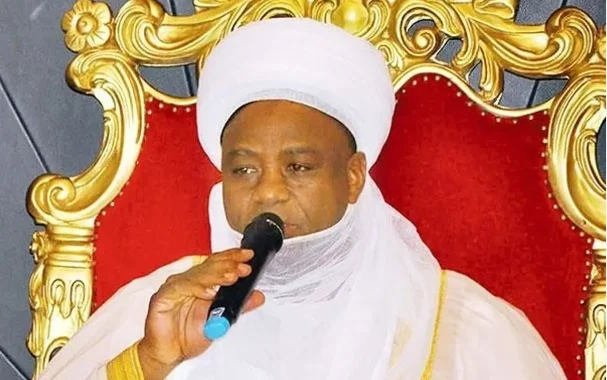

The Sultanate Council of Sokoto has officially declared Friday, March 20, 2026, as the first day of Shawwal 1447AH, marking the nationwide celebration of Eid-el-Fitr, the festival that concludes the Muslim holy month of Ramadan. The announcement was made on Wednesday through a press statement issued by Sambo Wali Junaidu, Chairman of the Advisory Committee on Religious Affairs of the Sultanate Council, Sokoto.
The declaration followed the non-sighting of the Shawwal 1447AH crescent moon on Wednesday, the 29th day of Ramadan. In accordance with Islamic practice, when the new moon is not sighted on the 29th day of Ramadan, the month is completed as 30 days, with Eid-el-Fitr observed the following day. This method of determining the end of Ramadan and the beginning of Shawwal is rooted in the teachings of the Prophet Muhammad and remains a critical practice for Muslims worldwide.
The statement noted, “No report was received from various Moon Sighting Committees across the country confirming the sighting of the new moon of Shawwal 1447AH on Wednesday, March 18, which corresponded with the 29th day of Ramadan. Therefore, Thursday, 19th March 2026, is the 30th day of the month of Ramadan 1447AH.”
Acting on these observations, the Sultan of Sokoto and President-General of the Nigerian Supreme Council for Islamic Affairs, Muhammad Sa’ad Abubakar, accepted the report and accordingly declared Friday, March 20, 2026, as the first day of Shawwal 1447AH, designating it as Eid-el-Fitr. The Sultan extended felicitations to Muslims across Nigeria, urging continued prayers for national peace and development. “His Eminence felicitates with the Nigerian Muslim Ummah and wishes them Allah’s guidance and blessings,” the statement read. He further prayed that the spiritual benefits of Ramadan would continue beyond the fasting period, asking that “Allah (SWT) accept our religious deeds.”
Ahead of the Eid celebrations, security agencies across the country have put in place comprehensive measures to safeguard residents and ensure a peaceful festival. The Nigeria Police Force, alongside the Nigeria Security and Civil Defence Corps (NSCDC), has deployed hundreds of personnel nationwide. The deployment, according to directives, covers potential flashpoints including shopping malls, mosques, churches, Eid prayer grounds, motor parks, recreational centres, and other public spaces, with a focus on preventing crimes typically associated with festive periods such as phone snatching, pickpocketing, and traffic violations.
On Tuesday, the Federal Government declared Thursday and Friday as public holidays to mark the Eid-el-Fitr celebrations. The NSCDC reported that over 53,500 personnel have been mobilized across the country to maintain law and order. In a statement by the NSCDC spokesperson Babawale Afolabi, the Commandant-General, Abubakar Audi, confirmed that tactical operatives and intelligence squads were strategically positioned across all 36 states and the Federal Capital Territory. He directed personnel to address emerging threats, protect critical national assets, and ensure that security coverage was maintained in collaboration with community leaders and other stakeholders.
“Identified flashpoints such as shopping malls, Eid prayer grounds, mosques, churches, motor parks, recreation centres and other public spaces are to be closely monitored and manned by both uniformed and undercover operatives to nip any criminal activity in the bud. The Commandant-General further emphasised the need for intensified routine patrols and sustained synergy with other security agencies through effective information sharing and swift response to emergencies reported by members of the public,” the statement added.
In Gombe State, NSCDC Commandant Jibrin Idris highlighted that the deployment was particularly targeted at Eid prayer grounds, Hawan Durbar venues, recreational centres, markets, motor parks, and other critical public locations. Meanwhile, the Nigeria Police Force has similarly intensified security arrangements.
Adamawa State’s Assistant Inspector-General of Police in charge of Zone 3, Akinwale Adeniran, directed commissioners of police in Adamawa and Taraba states to implement proactive security measures. “These measures include the deployment of both kinetic and non-kinetic assets, enhanced visibility policing, increased surveillance, and strategic positioning of personnel at Eid grounds and other worship centres, recreational facilities, motor parks, markets and other public places,” Adeniran said, urging residents to report any suspicious activity promptly.
Niger State Commissioner of Police, Adamu Elleman, deployed 5,000 personnel to monitor black spots across the metropolis. Operational assets including anti-riot water cannons, gun trucks, and patrol vehicles were mobilized for intelligence-led policing and tactical support. “Following the forthcoming Eid-el-Fitr celebration, the Commissioner of Police has directed officers to deploy for intelligence-led policing and raid black spots within their areas of responsibility for a seamless and peaceful Sallah celebration.
In addition, tactical teams such as the Police Mobile Force, Counter Terrorism Unit, Explosive Ordnance Disposal Unit, Tactical Support Team, Monitoring Unit, Crack Squad, Anti-Thuggery Unit and Anti-Kidnapping Unit have been deployed to all major Eid grounds and strategic public places,” the statement read, warning that troublemakers would face consequences under the law.
Sokoto State Police Command also confirmed strategic deployments and visible policing across the state. Through spokesperson Ahmad Rufa’i, the command stated that area commanders, divisional officers, and tactical commanders had been instructed to intensify patrols and scale up intelligence-led operations, while collaborating with other security agencies and community leaders to maintain law and order throughout the celebrations. In Gombe, the police reiterated robust security arrangements, urging motorists to obey traffic regulations and parents to monitor their children. Kaduna State Command similarly deployed personnel across major public spaces, including Eid grounds, markets, highways, and recreational centres, while maintaining a strict ban on knockouts, fireworks, and similar explosives, warning violators of prosecution.
In Kano State, Commissioner of Police Ibrahim Bakori announced collaborative security measures with other agencies to ensure a peaceful celebration, warning that unlawful and disorderly conduct would not be tolerated, and advising parents to caution their children against being used by subversive elements. Kebbi State police emphasized patrols, surveillance operations, and safe driving practices during the festive period. Katsina State authorities introduced specific restrictions for the Sallah Durbar, banning individuals bearing dangerous weapons from participating, and urged the public to remain vigilant.
Edo State deployed 5,000 personnel to maintain security across Eid prayer grounds, major roads, and motor parks, with Explosive Ordnance Disposal (EOD) teams conducting preventive sweeps. Adamawa State announced a robust combination of operational and manpower assets, including specialized tactical units, to cover urban and rural areas. Ogun State focused on highways, markets, prayer grounds, and other critical infrastructure, with personnel deployed in advance to strategic locations, while Osun State police emphasized vigilance, traffic regulation compliance, and monitoring of youths to ensure safe festivities.
Collectively, the coordinated efforts of the Sultanate Council, federal and state security agencies, and local stakeholders aim to ensure that Muslims across Nigeria can observe Eid-el-Fitr safely, reflecting both the spiritual significance of the festival and the government’s commitment to maintaining peace and public order during a period of nationwide celebration.