

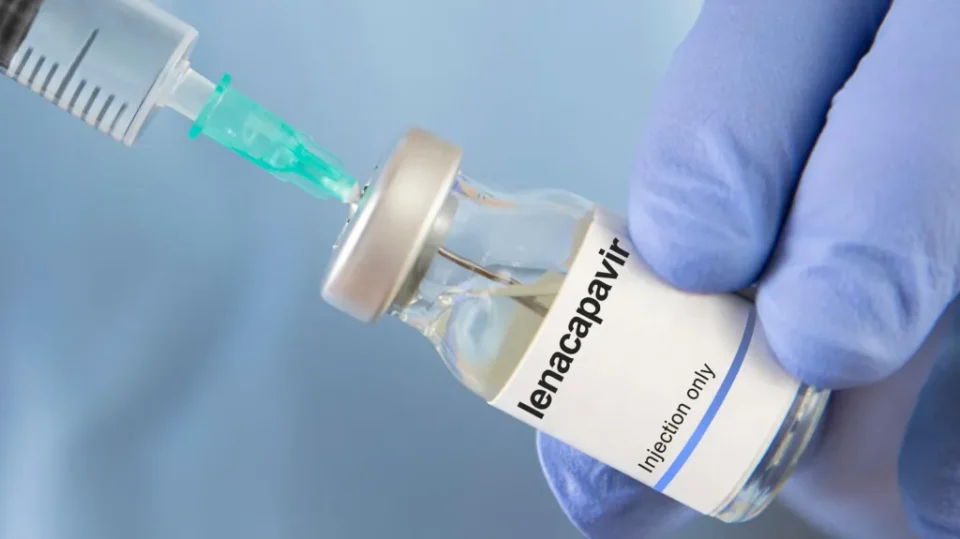

Nigeria has taken a significant step in its fight against HIV/AIDS with the delivery of the first batch of 11,520 doses of Lenacapavir injection, a new twice-yearly injectable drug for HIV prevention, generously donated by the Global Fund. The handover took place on Wednesday at the Federal Central Medical Stores in Oshodi, Lagos, marking a historic moment in the country’s efforts to expand and diversify HIV prevention strategies.
Health experts and policymakers hailed the delivery as a critical development in strengthening Nigeria’s multi-pronged approach to HIV prevention, providing people with a convenient, long-acting option that complements existing pre-exposure prophylaxis (PrEP) methods and has the potential to increase uptake across key populations.
Lenacapavir is a long-acting, six-monthly injectable antiretroviral medicine recommended by the World Health Organization as an additional HIV prevention option under combination prevention approaches. Unlike daily oral PrEP, Lenacapavir offers a more convenient schedule, which is expected to reduce adherence challenges and protocol burdens commonly associated with tablet-based regimens.
Public health officials emphasize that this innovation could significantly improve HIV prevention outcomes by allowing individuals to choose a prevention method that fits their lifestyles and circumstances, particularly for populations at higher risk of infection. The introduction of this drug reflects a broader global commitment to ending the HIV/AIDS epidemic through accessible, safe, and effective interventions.
Receiving the drug on behalf of the National Coordinator of the National AIDS, Viral Hepatitis, and STIs Control Programme (NASCP), Mohammed Patiko, Head of Procurement and Supply Chain Management, expressed optimism about the arrival of Lenacapavir in Nigeria. Patiko highlighted that Nigeria is among the first nine countries worldwide to have access to the injectable, marking a pioneering role in global HIV prevention efforts.
He also provided details on the country’s expected total supply of 52,000 doses, noting that subsequent batches are scheduled to arrive in May and October. “We are expecting three batches. We have received the first batch. The second batch is scheduled to arrive in May, and the third batch is expected to arrive in October. We are expecting 52,000 doses in total. Today, we took delivery of 11,520 doses,” Patiko said, underscoring the strategic significance of this rollout.
The targeted population for Lenacapavir includes sero-discordant couples and individuals at higher risk of HIV infection, such as sex workers and other vulnerable groups. Patiko explained that the injection will be provided free of charge to all clients enrolled in a pilot study coordinated by the National HIV Programme, ensuring equitable access and close monitoring of its implementation. The injection will initially be made available in eight pilot states, including four supported by the Global Fund – Kwara, Gombe, Anambra, and Ebonyi as well as the Federal Capital Territory, Akwa Ibom, Cross River, and Benue.
“The injection will be available at health facilities in the eight pilot states,” Patiko said, adding that distribution to these facilities would commence the following week. He further highlighted the advantages of the injection over daily oral PrEP, noting, “Lenacapavir injection is convenient for clients. We have four PrEP options, but this one is unique because it is taken twice a year. For compliance, it is easier for clients to come and take the injection twice a year.”
HIV remains a major public health challenge in Nigeria, with recent estimates from the National Agency for the Control of AIDS indicating that approximately 1.9 million to two million Nigerians are living with the virus. Lagos State AIDS Programme Coordinator, Dr. Oladipupo Fisher, stressed that the introduction of Lenacapavir strengthens the country’s multi-pronged prevention strategy and reinforces Nigeria’s commitment to achieving global HIV targets by 2030. “Nigeria is on track to eliminate HIV/AIDS by 2030.
These prevention products are crucial to achieving global targets; they will help reduce new infections and contribute to epidemic control by 2030. For those already infected, treatment reduces viral load, making transmission less likely. Increased testing and treatment enrollment remain key strategies. The goal is to reduce both new and existing infections,” Fisher said, highlighting the complementary role of treatment and prevention in the country’s HIV response.
Safety and adherence remain central to the rollout of Lenacapavir, with experts assuring the public that the drug has undergone rigorous national and international approval processes. Chiagozie Mgbemena of the Institute of Human Virology Nigeria affirmed the robustness of these safeguards, stating, “For any drug to be approved, it must meet safety standards.
Adherence is critical. Patients will receive counselling and education to ensure proper use and minimise risks. Continuous monitoring, documentation, and reporting will ensure any issues are addressed promptly.” Her comments reflect a concerted effort by public health authorities to combine innovative treatment and prevention tools with strong patient support systems, ensuring optimal outcomes and public confidence in the new intervention.
The arrival of Lenacapavir in Nigeria represents a milestone in the country’s HIV prevention strategy, combining scientific innovation, international collaboration, and targeted public health policy to reach vulnerable populations effectively. By offering a long-acting, convenient preventive option, authorities hope to overcome longstanding adherence challenges, reduce new infections, and accelerate progress toward national and global HIV/AIDS targets, contributing to the vision of an HIV-free generation by 2030.