

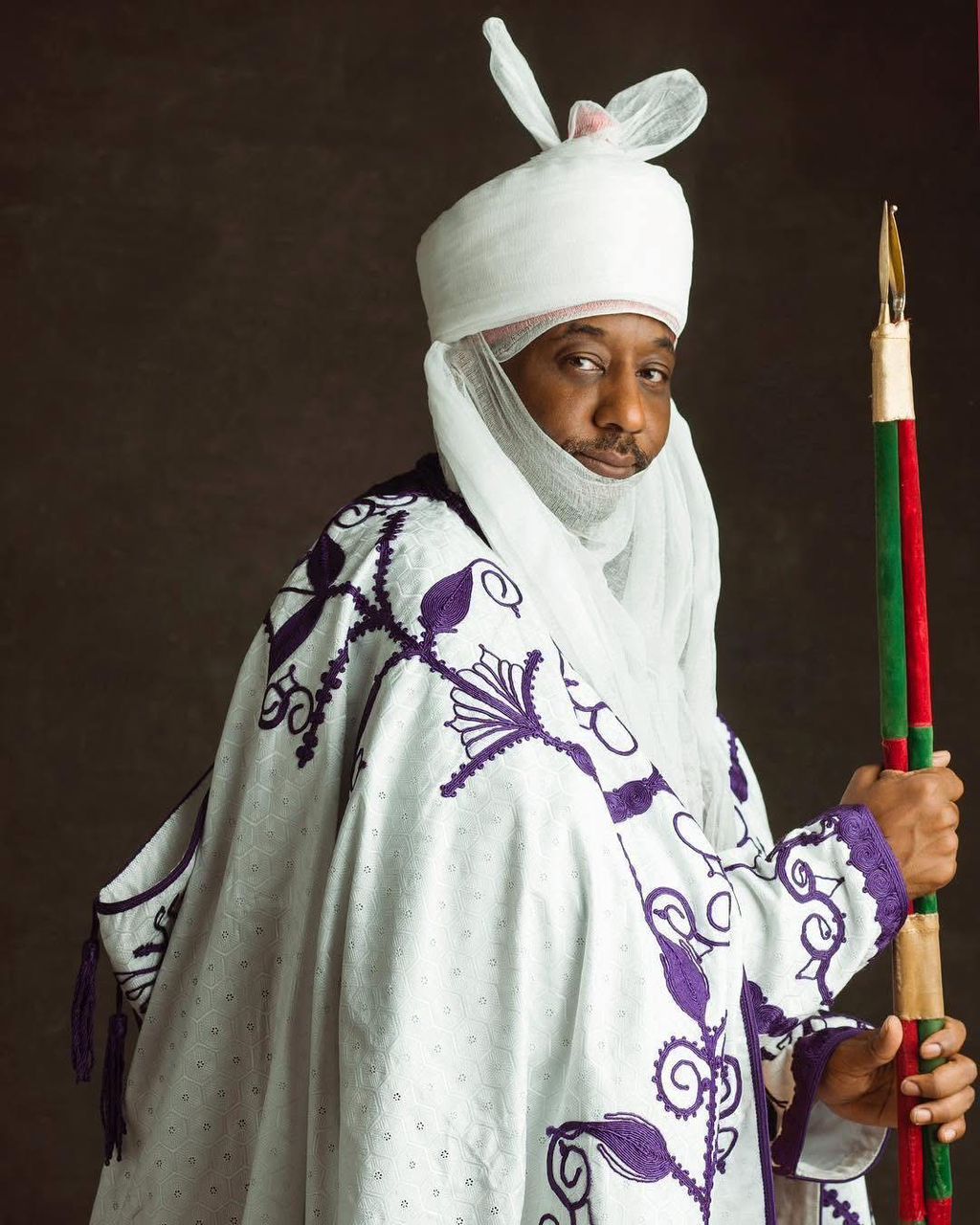

The Kano State Government has announced that Muhammadu Sanusi II will lead the 2026 Eid-el-Fitr durbar, even as authorities introduce strict security measures and suspend several traditional activities following intelligence reports of planned disruptions.
The announcement, made on March 18th, 2026, confirms the government’s decision after consultations with the Kano Emirate Council and other key stakeholders. The durbar, a centuries-old cultural and religious procession marking the end of Ramadan, remains one of the most significant public displays of heritage in northern Nigeria, drawing large crowds and symbolising the authority of the emirate.
In a statement issued by the Commissioner for Information and Internal Affairs, Ibrahim Waiya, the government disclosed that security agencies had uncovered credible intelligence suggesting that some individuals were planning to disrupt the Sallah celebrations. 
The state government emphasised that while it remains committed to preserving Kano’s cultural heritage, it would not compromise on the safety of residents or the protection of lives and property. Authorities therefore approved a modified version of the durbar, striking a balance between tradition and heightened security precautions.
According to the official plan, the central event, known as Hawan Idi, will be led by Emir Sanusi from the Kofar Mata Eid praying ground, proceeding through designated routes to Gidan Shettima and terminating at Kofar Fatalwa within the emir’s palace. 
However, several other traditional durbar activities have been either altered or suspended. The Hawan Nasarawa procession will take place in a modified format without the customary horseback display, while key events such as Hawan Daushe, Hawan Fanisau, and Hawan Dorayi have been completely suspended due to security concerns. 
Security agencies across the state have been placed on high alert and directed to intensify surveillance operations before, during, and after the celebrations. The government has also instructed law enforcement to ensure full compliance with the newly introduced guidelines, signalling a zero-tolerance stance toward any attempt to breach public peace.
Residents have been urged to remain calm, law-abiding, and vigilant throughout the Sallah period. Authorities specifically cautioned against the spread of unverified information, noting that misinformation could heighten tensions and undermine security efforts. 
Muhammadu Sanusi II, who was originally deposed in 2020, was reinstated in 2024, a move that reignited disputes over the emirship and created divisions within traditional and political circles in the state.
The emirate tussle has, over time, contributed to heightened sensitivities around major public events such as the durbar, which traditionally serves not only as a cultural celebration but also as a visible assertion of royal authority and legitimacy.
In recent weeks, uncertainty had surrounded who would lead the durbar, with competing claims and legal disputes adding to public tension. The government’s confirmation of Sanusi as the sole leader of the 2026 procession appears to settle that question, at least for the duration of the Sallah festivities.
Despite these tensions, the Kano State Government reiterated its commitment to ensuring that the durbar remains a symbol of unity rather than division. Officials emphasized that cultural preservation remains a priority, but it must be pursued within the framework of peace and public safety.
The durbar itself has deep historical roots, dating back hundreds of years as a traditional display of horsemanship, loyalty, and royal pageantry. It typically features elaborately dressed horsemen, palace officials, and community leaders paying homage to the emir in a grand procession through the city.
As preparations continue, the Kano State Government has assured residents and visitors that all necessary measures are in place to guarantee a peaceful and hitch-free Eid-el-Fitr celebration.
The statement concluded with goodwill messages to Muslims in the state, expressing hope that the Sallah period would be marked by peace, unity, and spiritual reflection despite the underlying tensions.
Samuel Aina