


In an age where smartphones buzz constantly with notifications and information spreads across social media platforms within seconds, it might appear that the ancient practice of oral tradition has lost its place in human society. The digital era has created vast archives of knowledge that can be stored, searched, and shared instantly. Artificial intelligence can summarize centuries of information in moments, and videos, podcasts, and online articles dominate how people learn about the world. Yet long before the internet or written records became widespread, human societies relied on something far more personal and immediate: the spoken word.
Oral tradition—stories, songs, proverbs, folktales, and spoken histories served as the primary method through which communities preserved their experiences, values, and identities. Despite the rapid advancement of technology, this tradition continues to matter because it carries something that digital systems cannot easily replicate: the emotional, cultural, and communal depth that comes from people sharing their stories directly with one another.
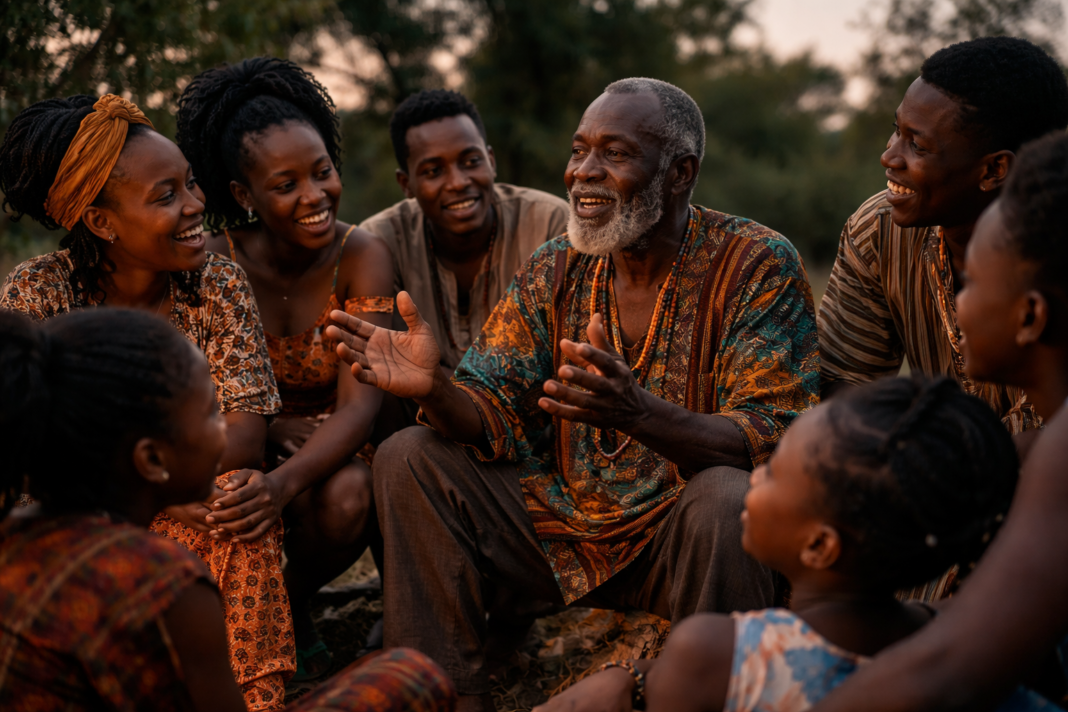
Oral storytelling remains one of the most powerful ways through which cultural identity is formed and sustained. When elders tell stories about their ancestors, migrations, struggles, and triumphs, they are not merely recounting events; they are shaping how younger generations understand who they are and where they come from. In many communities around the world, including across Africa, oral narratives have long explained the origins of clans, the meaning behind traditions, and the lessons embedded in everyday life.
A proverb told by a grandmother or a folktale narrated during a family gathering often carries layers of wisdom about patience, courage, humility, and responsibility. These lessons are rarely delivered as abstract theories; instead, they are wrapped in memorable narratives that stay with listeners throughout their lives. Even in the digital age, such stories remain vital because they help people anchor their identities in a cultural lineage that technology alone cannot provide. The warmth of a voice, the pauses in a storyteller’s speech, and the shared laughter or reflection among listeners create a living connection between past and present.
Beyond shaping identity, oral tradition also plays a crucial role in preserving heritage in ways that written or digital records sometimes fail to capture. Many cultural practices such as traditional songs, rituals, chants, and historical accounts are deeply tied to performance and memory. These expressions often rely on tone, rhythm, gestures, and audience interaction, elements that cannot be fully conveyed through text alone. In communities where written documentation was historically limited or disrupted by colonization, migration, or conflict, oral history has served as a resilient archive of collective memory.
Stories about community leaders, historical events, environmental knowledge, and social customs continue to survive because they are repeatedly shared and adapted. Even today, as technology offers new ways to record and store information, oral storytelling ensures that heritage remains dynamic rather than static. Each retelling allows a story to evolve slightly, reflecting current realities while still preserving its core message. This adaptability keeps traditions alive rather than locking them into rigid historical records.
Oral tradition also strengthens the bonds between generations in ways that digital communication often struggles to replicate. Modern technology has undoubtedly made it easier for people to communicate across distance, yet it has also introduced new forms of isolation. Many young people consume information individually through screens rather than through collective experiences. Storytelling, by contrast, is inherently social. It brings people together in shared spaces around dinner tables, in community gatherings, during festivals, or in quiet moments between parents and children.
When elders pass down stories directly to younger listeners, they transmit not only knowledge but also affection, authority, and lived experience. These interactions foster respect for older generations and provide younger people with a sense of continuity. In a rapidly changing world where cultural practices can easily fade under the pressure of globalization, such personal exchanges help maintain a bridge between the wisdom of the past and the curiosity of the present.
Interestingly, the digital age has not necessarily replaced oral tradition; in many cases, it has expanded its reach. Podcasts, audiobooks, spoken-word performances, and storytelling videos have revived the ancient art of spoken narratives in new formats. Social media platforms allow storytellers to share folktales, personal histories, and cultural lessons with audiences far beyond their immediate communities. Rather than eliminating oral storytelling, technology often amplifies it, enabling voices that were once confined to local gatherings to resonate globally. However, even in these digital forms, the essence of oral tradition remains the same: a human voice conveying meaning, emotion, and experience to other human beings. The difference lies in the scale and speed of distribution, not in the fundamental value of storytelling itself.
Ultimately, oral tradition continues to matter in the digital age because it preserves something deeply human the need to connect through shared narratives. Technology can store vast amounts of information, but it cannot fully replace the experience of hearing a story told with emotion, memory, and cultural context.
Through storytelling, communities remember their past, teach moral values, and reinforce the bonds that hold them together. In a world driven by algorithms and constant digital updates, the spoken word remains a reminder that knowledge is not only about information but also about relationship, identity, and belonging. Oral tradition endures not because society lacks technology, but because human beings still crave the authenticity and meaning that come from stories passed from one voice to another across generations.